The Cassowary: Australia’s Ancient Bird with Claws That Can Slash Through Hard Objects


Animal Information
The Cassowary: Australia’s Ancient Bird with Claws That Can Slash Through Hard Objects

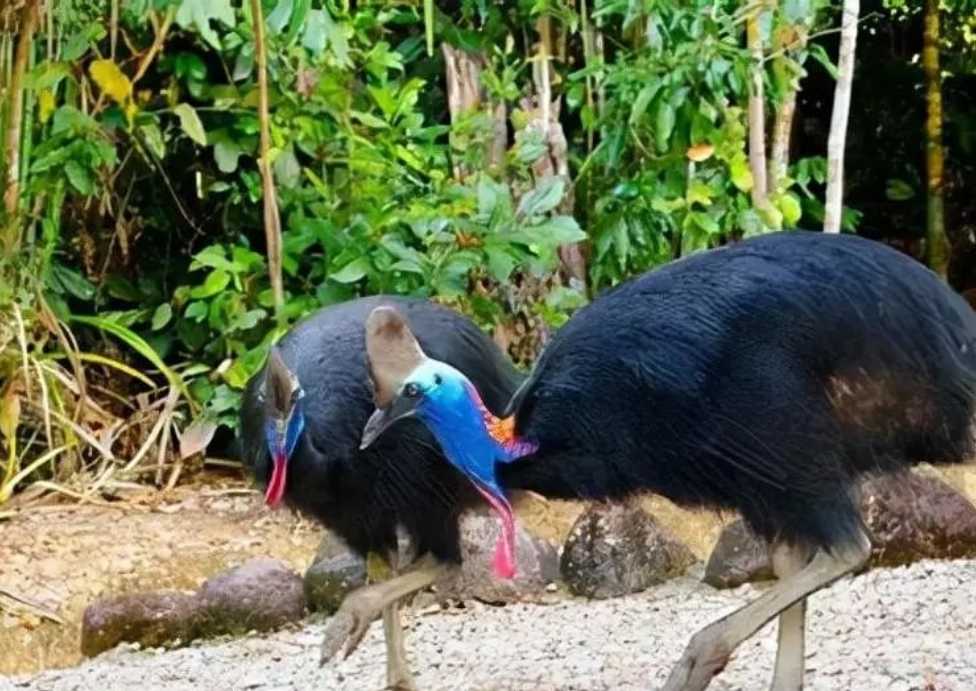
Native to the rainforests of Australia and New Guinea, the cassowary (Casuarius casuarius) stands as one of the world’s oldest bird species, renowned for its prehistoric appearance and formidable defensive capabilities. This flightless bird, often called the "rainforest dinosaur," has survived for millions of years, and its sharp claws have earned it a reputation as one of the most dangerous birds on the planet.


Ancient Heritage and Physical Prowess

The cassowary’s lineage dates back to the time of the dinosaurs, making it a living relic of avian evolution. Standing up to 1.8 meters tall and weighing over 60 kilograms, it boasts a distinctive blue head, a bony casque on its crown, and a vibrant red wattle hanging from its neck. But its most fearsome feature is the pair of dagger-like claws on each foot, specifically the inner toe, which can grow up to 12 centimeters long. These claws are razor-sharp and curved, designed to slash through dense vegetation, defend against predators, or tear apart hard-shelled fruits and small prey.

Powerful Claws: Tools for Survival and Defense

In the wild, cassowaries use their claws primarily for foraging and self-defense. They scratch the forest floor to uncover seeds, fungi, and insects, and their powerful legs allow them to kick with incredible force—capable of breaking bones or tearing through tough materials like tree bark and thick foliage. When threatened, a cassowary can lunge forward and deliver a slashing kick that has been known to injure humans and other animals. Despite their aggressive reputation, they are generally shy and only attack when provoked, such as when defending their nests or chicks.

Conservation and Ecological Role

Listed as Vulnerable by the IUCN, cassowaries face threats from habitat loss, vehicle collisions, and human interference. Their rainforest homes are being destroyed by deforestation, and climate change is altering their food sources. As important seed dispersers, cassowaries play a crucial role in maintaining forest health, helping to spread the seeds of native plants across their range. Conservation efforts in Australia, including habitat protection and public education, aim to safeguard both the species and its ancient ecosystem.


The cassowary’s existence is a testament to the resilience of prehistoric life, proving that some of Earth’s oldest creatures still roam the planet. Its fearsome claws, evolved over millions of years for survival, serve as a reminder of the raw power of nature and the urgent need to protect these living links to our planet’s distant past. As we strive to preserve Australia’s unique biodiversity, the cassowary stands as a symbol of the wild, untamed beauty that still thrives in our world’s last great rainforests.
Latest Stories
Feline News2 minute readThe Kurilian Bobtail Longhair, a captivating breed hailing from Russia’s Sakhalin Island and the Kuril Archipelago, has emerged as a fascinating subject in the international feline community. With its distinctive bobbed tail and striking appearance, this natural breed is garnering recognition for its unique history, robust health, and affectionate demeanor.
Life News2 minute readOn the streets and alleys of Italy, gelato is more than just a refreshing dessert; it is a vivid embodiment of the country's culinary philosophy. Compared to the common American ice cream, this Italian classic has become an irreplaceable culinary symbol in the hearts of food lovers worldwide, thanks to its unique craftsmanship and texture.
Feline News2 minute readIn 1982, a bald kitten with an unusual genetic mutation emerged in a barn on an Oregon cherry farm, marking the accidental birth of one of the world’s most distinctive feline breeds—the LaPerm. This curly-coated wonder, named for its "wavy" or "rippled" fur, has since captivated cat lovers globally with its unique appearance and playful personality .
Feline News1 minute readThe Brazilian Shorthair, a distinctive feline breed native to Brazil, has captivated cat enthusiasts with its charming personality and adaptable nature. Originating from the country's street cats, the breed was formally recognized in the 1980s after decades of selective breeding to preserve its unique traits.
Feline News1 minute readIn recent days, a cat named Marguerite has quietly risen to fame in a suburban community. The 3-year-old orange-and-white feline, once a street stray, has now become a "heartwarming bond" connecting neighbors.
Feline News2 minute readOriginating from the city of Rostov-on-Don in Russia, the Donskoy cat, also known as the Don Sphynx, has captivated feline enthusiasts worldwide with its unique appearance and affectionate demeanor. First discovered in 1987 when Professor Elena Kovaleva rescued a hairless kitten named Varvara, the breed emerged from a natural genetic mutation that resulted in a lack of fur. Varvara’s subsequent litters produced both haired and hairless kittens, leading breeder Irina Nemykina to develop the Donskoy through selective breeding with European Shorthairs. Recognized by The International Cat Associat
Feline News2 minute readThe Nebelung, a captivating feline often mistaken for the Russian Blue, is a rare breed celebrated for its striking appearance and gentle demeanor. Originating in the U.S. during the 1980s, this breed emerged from intentional crossbreeding to replicate the elegance of Victorian-era long-haired blue cats. Named after the German word "nebel" (meaning "mist"), the Nebelung’s silvery-tipped blue-gray coat evokes a misty aura, while its green or yellow-green eyes add to its enigmatic charm.