The Long-Eared Jerboa: A Desert Dweller with Ears Larger Than Its Body


Animal Information
The Long-Eared Jerboa: A Desert Dweller with Ears Larger Than Its Body

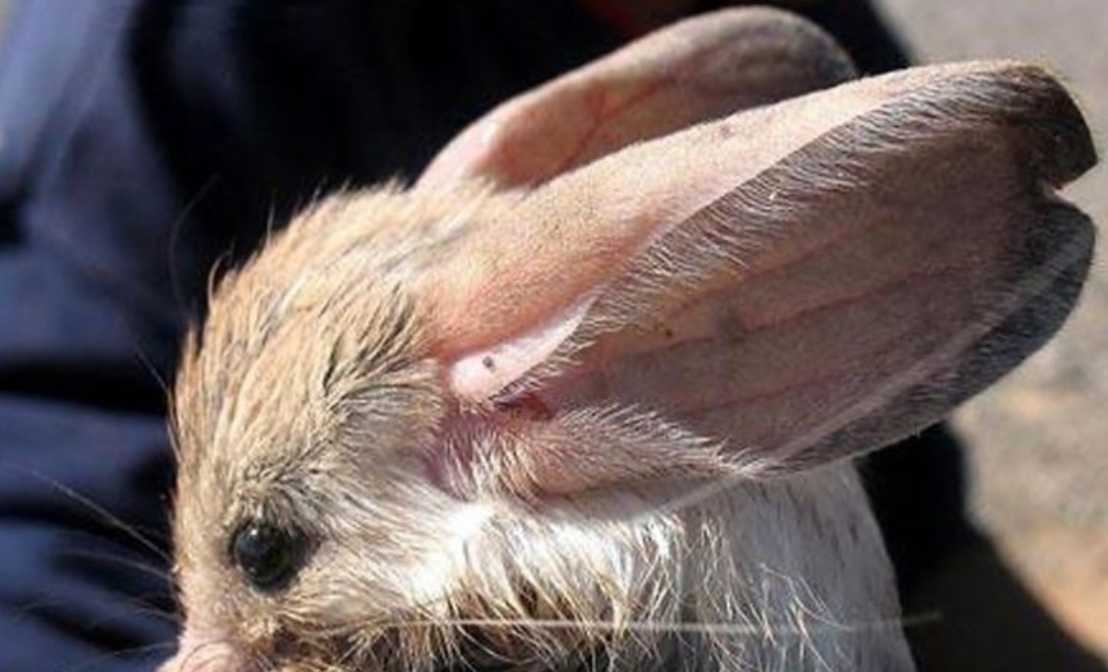
Native to the arid deserts of Mongolia and northern China, the long-eared jerboa (Euchoreutes naso) defies expectations with its disproportionately giant ears, which can reach up to 6 centimeters—longer than its entire head and body combined. This mouse-sized rodent, adapted to survive in harsh desert environments, has captivated scientists and animal enthusiasts alike with its bizarre appearance and unique behavioral traits.


A Tiny Body with Giant Ears: Adaptations for Survival

The long-eared jerboa’s most striking feature is its oversized ears, which serve a dual purpose: they enhance hearing to detect predators and prey in the desert silence, while also radiating body heat to keep the rodent cool in scorching temperatures. Weighing just 30–40 grams and measuring 7–9 centimeters in length, it has long hind legs adapted for bipedal hopping, allowing it to navigate sandy dunes with the agility of a miniature kangaroo. Its soft, sandy-colored fur provides camouflage against desert sands, while a tufted tail helps with balance during its rapid jumps. Nocturnal by nature, it spends the day in burrows to avoid extreme heat, emerging at night to forage for insects like beetles and grasshoppers.

Vulnerable Existence in a Harsh Habitat

Endemic to the Gobi and Taklamakan Deserts, the long-eared jerboa faces significant threats from habitat degradation and climate change. Mining, agriculture, and infrastructure development fragment its desert home, while droughts and shifting sand dunes disrupt its food sources. Listed as "Data Deficient" by the IUCN, little is known about its population size, but scientists believe it may be declining due to human activities. Conservation efforts focus on studying its ecology and raising awareness about the importance of desert ecosystems, which are often overlooked in biodiversity protection initiatives.


The long-eared jerboa’s existence in one of the world’s harshest environments highlights nature’s extraordinary ability to craft specialized adaptations. Its giant ears and hopping gait, evolved over millennia, serve as a testament to the resilience of life in extreme conditions. As climate change and human expansion threaten its desert home, this tiny rodent with disproportionately large ears stands as a symbol of the fragile balance between adaptation and survival in Earth’s most unforgiving landscapes.
Latest Stories
Feline News2 minute readThe Kurilian Bobtail Longhair, a captivating breed hailing from Russia’s Sakhalin Island and the Kuril Archipelago, has emerged as a fascinating subject in the international feline community. With its distinctive bobbed tail and striking appearance, this natural breed is garnering recognition for its unique history, robust health, and affectionate demeanor.
Life News2 minute readOn the streets and alleys of Italy, gelato is more than just a refreshing dessert; it is a vivid embodiment of the country's culinary philosophy. Compared to the common American ice cream, this Italian classic has become an irreplaceable culinary symbol in the hearts of food lovers worldwide, thanks to its unique craftsmanship and texture.
Feline News2 minute readIn 1982, a bald kitten with an unusual genetic mutation emerged in a barn on an Oregon cherry farm, marking the accidental birth of one of the world’s most distinctive feline breeds—the LaPerm. This curly-coated wonder, named for its "wavy" or "rippled" fur, has since captivated cat lovers globally with its unique appearance and playful personality .
Feline News1 minute readThe Brazilian Shorthair, a distinctive feline breed native to Brazil, has captivated cat enthusiasts with its charming personality and adaptable nature. Originating from the country's street cats, the breed was formally recognized in the 1980s after decades of selective breeding to preserve its unique traits.
Feline News1 minute readIn recent days, a cat named Marguerite has quietly risen to fame in a suburban community. The 3-year-old orange-and-white feline, once a street stray, has now become a "heartwarming bond" connecting neighbors.
Feline News2 minute readOriginating from the city of Rostov-on-Don in Russia, the Donskoy cat, also known as the Don Sphynx, has captivated feline enthusiasts worldwide with its unique appearance and affectionate demeanor. First discovered in 1987 when Professor Elena Kovaleva rescued a hairless kitten named Varvara, the breed emerged from a natural genetic mutation that resulted in a lack of fur. Varvara’s subsequent litters produced both haired and hairless kittens, leading breeder Irina Nemykina to develop the Donskoy through selective breeding with European Shorthairs. Recognized by The International Cat Associat
Feline News2 minute readThe Nebelung, a captivating feline often mistaken for the Russian Blue, is a rare breed celebrated for its striking appearance and gentle demeanor. Originating in the U.S. during the 1980s, this breed emerged from intentional crossbreeding to replicate the elegance of Victorian-era long-haired blue cats. Named after the German word "nebel" (meaning "mist"), the Nebelung’s silvery-tipped blue-gray coat evokes a misty aura, while its green or yellow-green eyes add to its enigmatic charm.