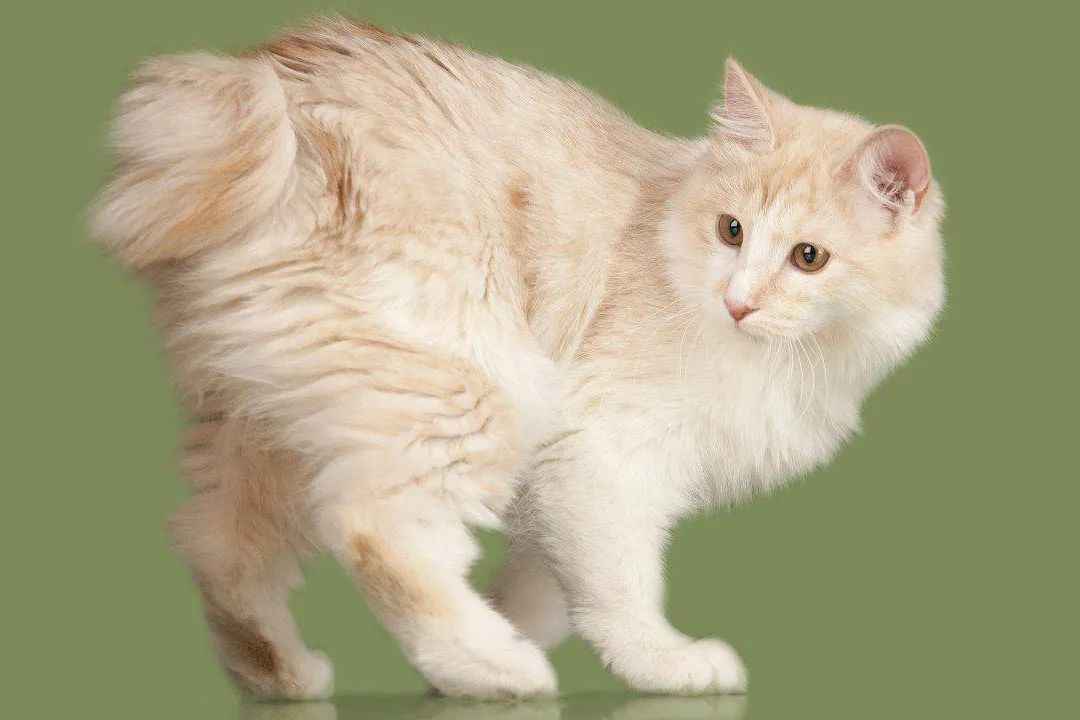
The Kurilian Bobtail Longhair, a captivating breed hailing from Russia’s Sakhalin Island and the Kuril Archipelago, has emerged as a fascinating subject in the international feline community. With its distinctive bobbed tail and striking appearance, this natural breed is garnering recognition for its unique history, robust health, and affectionate demeanor.
Origins Rooted in Rugged Wilderness
The breed’s origins trace back over 200 years to the harsh volcanic islands of Sakhalin and the Kurils, where it evolved in isolation. Thought to be a cross between Japanese Bobtails brought by settlers and local wild cats, the Kurilian Bobtail developed traits suited to its environment—including a short, kinked tail and dense, weather-resistant fur . For centuries, these cats thrived as skilled hunters, controlling rodent populations in remote Russian villages. Their existence remained largely unnoticed until the mid-20th century, when military personnel and scientists introduced them to mainland Russia .
Distinctive Features and Temperament
The Kurilian Bobtail Longhair is celebrated for its semi-cobby build, muscular frame, and plush, low-maintenance coat. Males can weigh up to 15 pounds, while females average 8–11 pounds . Its most iconic trait is the tail—a fluffy, pom-pom-like appendage formed by 2–10 vertebrae twisted into unique shapes, such as spirals or hooks . This feature, combined with walnut-shaped eyes and a broad-chested physique, gives the breed a wild yet elegant appeal.
Known for high intelligence and trainability, Kurilian Bobtails are gentle, sociable companions. They adapt seamlessly to households with children, dogs, and other pets, often seeking close interaction with their human caregivers . Their playful nature and curiosity make them excellent climbers, often perching on high vantage points to observe their surroundings .
Recognition and Conservation Efforts
Despite its ancient lineage, the breed gained formal recognition relatively recently. The World Cat Federation (WCF) acknowledged it in 1995, followed by The International Cat Association (TICA) in 2012 . However, outside Europe, particularly in North America, the Kurilian Bobtail remains rare, with fewer than 100 registered in the U.S. . Breeders and conservationists are working to preserve its genetic diversity and promote its unique heritage, emphasizing its resilience and adaptability .
Health and Longevity
Developed in the wild, Kurilian Bobtails boast robust health, with lifespans ranging from 15 to 20 years . Unlike some short-tailed breeds prone to spinal issues, such as the Manx, the Kurilian’s tail deformity does not appear linked to severe genetic disorders . This hardiness, combined with its amiable disposition, makes it an ideal choice for families seeking a loyal, low-maintenance pet.
As interest in rare feline breeds grows, the Kurilian Bobtail Longhair stands out as a symbol of Russia’s untamed wilderness and the enduring bond between humans and cats. With its striking appearance and endearing personality, this enigmatic breed is poised to captivate cat lovers worldwide.
For more updates on unique feline breeds, follow our coverage of international pet trends.
Word count: 500
Format: Overseas news 资讯 style, including a headline, structured sections, and a concluding call to action. The text emphasizes factual accuracy, cultural context, and global relevance, aligning with TICA’s breed standards and conservation efforts
Format: Overseas news 资讯 style, including a headline, structured sections, and a concluding call to action. The text emphasizes factual accuracy, cultural context, and global relevance, aligning with TICA’s breed standards and conservation efforts