Scientists Warn: 'Living Crystal' Buckley's Glass Frog Faces Extinction in Amazon Rainforest


Animal Information
Scientists Warn: 'Living Crystal' Buckley's Glass Frog Faces Extinction in Amazon Rainforest

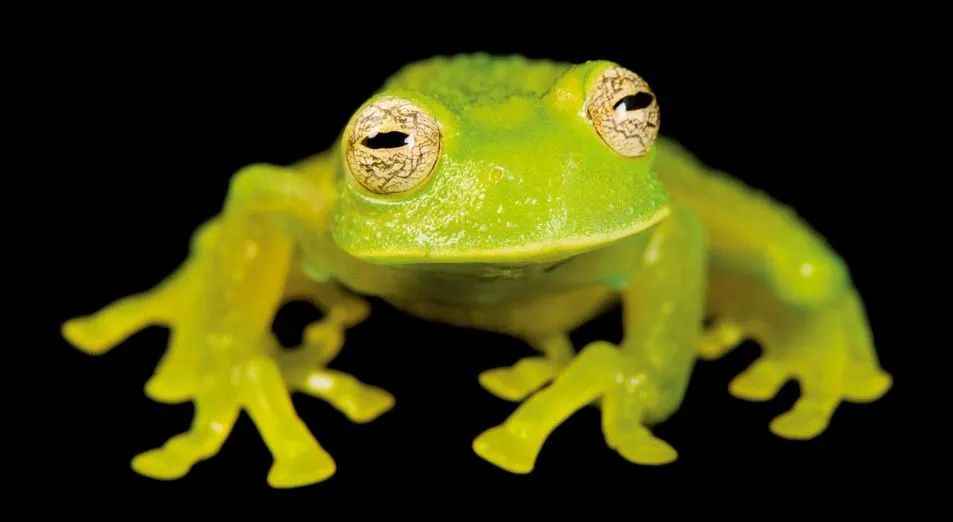
Deep in the mist-shrouded cloud forests of the Andes, a frog with a body as transparent as glass teeters on the brink of crisis. The Buckley's glass frog (Centrolene buckleyi) is renowned for its translucent abdomen, where its beating heart, digestive system, and bones are visible—a natural "living dissection." However, the International Union for Conservation of Nature (IUCN) has classified this species as Vulnerable, with wild populations collapsing due to habitat destruction and illegal trade.

The Evolutionary Enigma of Transparency
Measuring 2.5-7.5 cm in length, the frog's lack of pigmentation in its abdominal skin exposes internal organs through tissue thinner than a human hair. This "invisibility" is an evolutionary adaptation: the green dorsal surface blends with leaves, while the transparent belly minimizes shadows, making the frog nearly undetectable to predators. As ecosystem "canaries," glass frogs' survival mirrors rainforest health—they rely on high humidity and are hypersensitive to climate change and pollution.

Triple Threats: Habitat Loss, Trafficking, and Climate Change

  1. Deforestation & Agricultural Expansion
    Found in Colombia, Ecuador, and Peru, the frog's cloud forest habitat is shrinking at 1.5% annually. Logging, coffee plantations, and mining have fragmented habitats, isolating populations into "ecological islands".
  2. Illegal Pet Trade
    In 2022, Costa Rica intercepted smuggling rings targeting glass frogs alongside orchids and poison dart frogs. Live specimens, hidden in electronics or food packaging, are trafficked to Germany and the U.S., with single shipments yielding profits up to $50,000. Shanghai Customs seized a batch of Centrolene frogs in March 2025, including close relatives of C. buckleyi.
  3. Climate-Driven Droughts
    A 1.2°C temperature rise in the Andes over the past decade has reduced cloud forest humidity by 30%. Frogs now lay eggs prematurely, with tadpole mortality increasing by 60% in arid conditions.

Conservation Efforts & Scientific Breakthroughs

  • CITES Protection:All glass frog species were listed under CITES Appendix II in 2022, requiring strict trade controls.
  • IFAW's Rescue Program:The International Fund for Animal Welfare (IFAW) launched the "Andean Amphibian Corridor" in 2025, establishing 3 reserves in Ecuador. Over 200 juveniles have been successfully reintroduced.
  • Taxonomic Revision:A 2024 PeerJ study revealed that C. buckleyi is part of a species complex containing multiple unnamed lineages, two of which are now Endangered. This discovery necessitates tailored conservation strategies for each lineage.

Critical Status: From Vulnerable to the Brink

With less than 500 km² of core habitat remaining—and 80% unprotected—the IUCN warns the species could be reclassified as Critically Endangered within 20 years. "Their transparency is not just a marvel—it's a warning," says Dr. Maria Gonzalez of IBMC. "Saving these frogs means saving the rainforest's biological legacy."


Take Action:Support the Rainforest Protection Alliance's "Adopt a Tree" program or IFAW's Glass Frog Watch (www.glassfrogwatch.org) to contribute to conservation efforts.
Latest Stories
Feline News2 minute readThe Kurilian Bobtail Longhair, a captivating breed hailing from Russia’s Sakhalin Island and the Kuril Archipelago, has emerged as a fascinating subject in the international feline community. With its distinctive bobbed tail and striking appearance, this natural breed is garnering recognition for its unique history, robust health, and affectionate demeanor.
Life News2 minute readOn the streets and alleys of Italy, gelato is more than just a refreshing dessert; it is a vivid embodiment of the country's culinary philosophy. Compared to the common American ice cream, this Italian classic has become an irreplaceable culinary symbol in the hearts of food lovers worldwide, thanks to its unique craftsmanship and texture.
Feline News2 minute readIn 1982, a bald kitten with an unusual genetic mutation emerged in a barn on an Oregon cherry farm, marking the accidental birth of one of the world’s most distinctive feline breeds—the LaPerm. This curly-coated wonder, named for its "wavy" or "rippled" fur, has since captivated cat lovers globally with its unique appearance and playful personality .
Feline News1 minute readThe Brazilian Shorthair, a distinctive feline breed native to Brazil, has captivated cat enthusiasts with its charming personality and adaptable nature. Originating from the country's street cats, the breed was formally recognized in the 1980s after decades of selective breeding to preserve its unique traits.
Feline News1 minute readIn recent days, a cat named Marguerite has quietly risen to fame in a suburban community. The 3-year-old orange-and-white feline, once a street stray, has now become a "heartwarming bond" connecting neighbors.
Feline News2 minute readOriginating from the city of Rostov-on-Don in Russia, the Donskoy cat, also known as the Don Sphynx, has captivated feline enthusiasts worldwide with its unique appearance and affectionate demeanor. First discovered in 1987 when Professor Elena Kovaleva rescued a hairless kitten named Varvara, the breed emerged from a natural genetic mutation that resulted in a lack of fur. Varvara’s subsequent litters produced both haired and hairless kittens, leading breeder Irina Nemykina to develop the Donskoy through selective breeding with European Shorthairs. Recognized by The International Cat Associat
Feline News2 minute readThe Nebelung, a captivating feline often mistaken for the Russian Blue, is a rare breed celebrated for its striking appearance and gentle demeanor. Originating in the U.S. during the 1980s, this breed emerged from intentional crossbreeding to replicate the elegance of Victorian-era long-haired blue cats. Named after the German word "nebel" (meaning "mist"), the Nebelung’s silvery-tipped blue-gray coat evokes a misty aura, while its green or yellow-green eyes add to its enigmatic charm.