The Quirky Ocean Sunfish: A Mysterious Giant of the Seas


Marine Biology
The Quirky Ocean Sunfish: A Mysterious Giant of the Seas

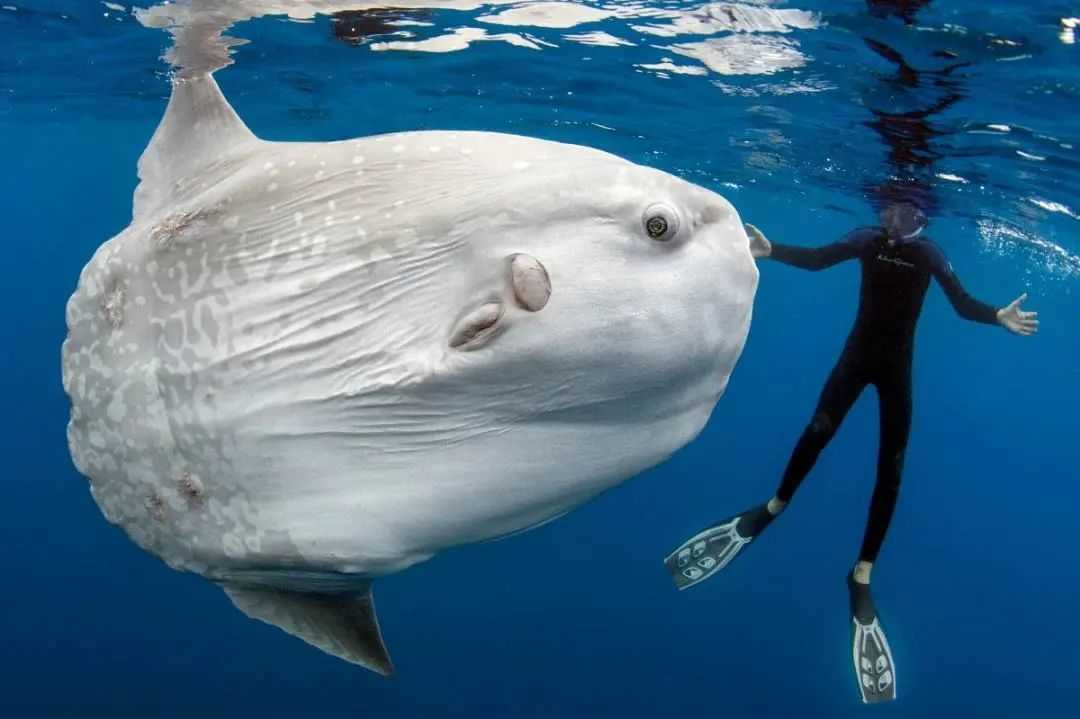
With its peculiar appearance and fascinating behaviors, it has captured the curiosity of marine enthusiasts and researchers alike. This large - sized fish is a sight to behold, standing out among its oceanic counterparts.


Measuring up to an astonishing 3.0 - 5.5 meters in length and weighing between 1400 - 3500 kilograms, the ocean sunfish has a distinctively flattened, round body that gives it the appearance of a giant disc or a "head - only" fish, a feature that has earned it the nickname "head fish" in some regions. Its body is laterally compressed, with a small head, tiny eyes, and a blunt snout. The absence of a true tail fin is compensated by a unique structure formed by the connected dorsal and anal fins, called the "clavus," which helps it maneuver in the water. Its skin is thick, rough, and covered in small, tooth - like projections. The ocean sunfish typically sports a silver - gray to brownish color on its dorsal side, fading to a lighter shade on its belly.


Ocean sunfish are primarily found in tropical and temperate waters across the globe, from the Atlantic and Pacific to the Indian Ocean. They are often spotted near the surface, where they display their characteristic behavior of floating on their sides, seemingly sunbathing. This behavior, which has led to their English name "Ocean Sunfish," serves multiple purposes. It helps them warm up their bodies after diving into the colder, deeper waters in search of food. These fish are known to dive to significant depths, sometimes reaching up to 800 meters, to feed on jellyfish, small fish, and zooplankton. Despite their large size, they are relatively slow - moving, relying on their dorsal and anal fins to propel themselves through the water.


However, the ocean sunfish faces numerous threats. Overfishing in some areas, accidental capture in fishing gear, and the ingestion of plastic debris, which they mistake for jellyfish, pose significant risks to their survival. As a result, their population numbers are declining, and they are now classified as a vulnerable species by the IUCN. Conservation efforts, such as fishing regulations and public awareness campaigns about marine pollution, are crucial to safeguard the future of these unique and remarkable creatures that play an important role in maintaining the balance of ocean ecosystems.
Latest Stories
Feline News2 minute readThe Kurilian Bobtail Longhair, a captivating breed hailing from Russia’s Sakhalin Island and the Kuril Archipelago, has emerged as a fascinating subject in the international feline community. With its distinctive bobbed tail and striking appearance, this natural breed is garnering recognition for its unique history, robust health, and affectionate demeanor.
Life News2 minute readOn the streets and alleys of Italy, gelato is more than just a refreshing dessert; it is a vivid embodiment of the country's culinary philosophy. Compared to the common American ice cream, this Italian classic has become an irreplaceable culinary symbol in the hearts of food lovers worldwide, thanks to its unique craftsmanship and texture.
Feline News2 minute readIn 1982, a bald kitten with an unusual genetic mutation emerged in a barn on an Oregon cherry farm, marking the accidental birth of one of the world’s most distinctive feline breeds—the LaPerm. This curly-coated wonder, named for its "wavy" or "rippled" fur, has since captivated cat lovers globally with its unique appearance and playful personality .
Feline News1 minute readThe Brazilian Shorthair, a distinctive feline breed native to Brazil, has captivated cat enthusiasts with its charming personality and adaptable nature. Originating from the country's street cats, the breed was formally recognized in the 1980s after decades of selective breeding to preserve its unique traits.
Feline News1 minute readIn recent days, a cat named Marguerite has quietly risen to fame in a suburban community. The 3-year-old orange-and-white feline, once a street stray, has now become a "heartwarming bond" connecting neighbors.
Feline News2 minute readOriginating from the city of Rostov-on-Don in Russia, the Donskoy cat, also known as the Don Sphynx, has captivated feline enthusiasts worldwide with its unique appearance and affectionate demeanor. First discovered in 1987 when Professor Elena Kovaleva rescued a hairless kitten named Varvara, the breed emerged from a natural genetic mutation that resulted in a lack of fur. Varvara’s subsequent litters produced both haired and hairless kittens, leading breeder Irina Nemykina to develop the Donskoy through selective breeding with European Shorthairs. Recognized by The International Cat Associat
Feline News2 minute readThe Nebelung, a captivating feline often mistaken for the Russian Blue, is a rare breed celebrated for its striking appearance and gentle demeanor. Originating in the U.S. during the 1980s, this breed emerged from intentional crossbreeding to replicate the elegance of Victorian-era long-haired blue cats. Named after the German word "nebel" (meaning "mist"), the Nebelung’s silvery-tipped blue-gray coat evokes a misty aura, while its green or yellow-green eyes add to its enigmatic charm.