The Pig-Nosed Turtle: A Unique Reptile Named for Its Snout, Easy to Keep but Prone to Illness


Marine Biology
The Pig-Nosed Turtle: A Unique Reptile Named for Its Snout, Easy to Keep but Prone to Illness

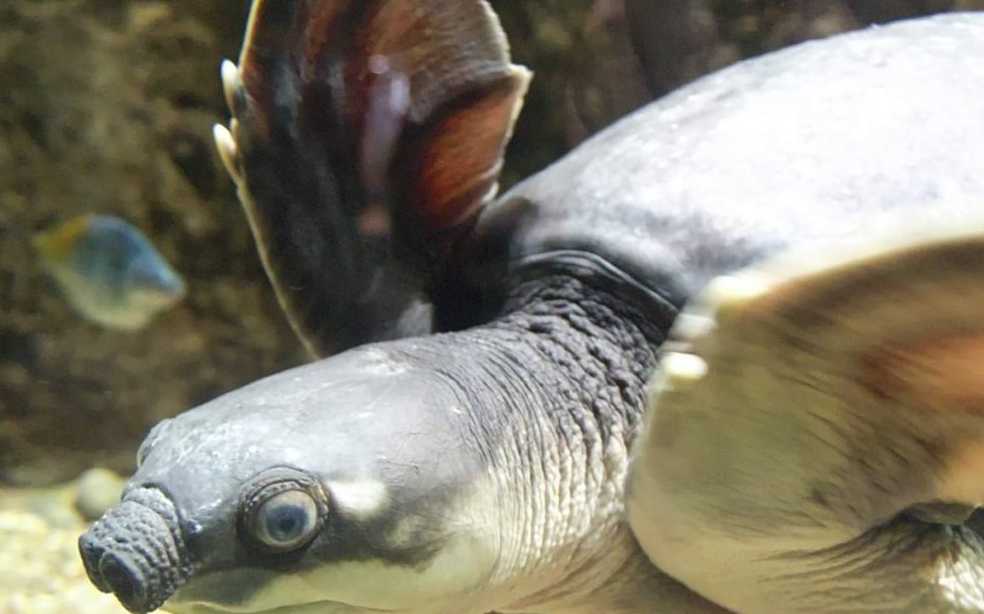
Native to freshwater rivers and lakes in northern Australia and New Guinea, the pig-nosed turtle (Carettochelys insculpta), aptly named for its pig-like snout, stands out among aquatic turtles for its distinctive appearance and paradoxical care requirements. While often praised as a manageable pet for reptile enthusiasts, this species also has a reputation for susceptibility to health issues, making it a fascinating yet challenging creature to maintain.


A Snout Like a Pig: Physical Traits and Adaptations

The pig-nosed turtle’s most defining feature is its fleshy, downturned snout, which resembles a pig’s nose and functions as a snorkel, allowing it to breathe while mostly submerged. Its shell, or carapace, is smooth and leathery (unlike the hard scales of most turtles), ranging from olive to dark brown, and can grow up to 70 centimeters in length. Flipper-like hind legs, adapted for swimming, give it a hydrodynamic profile in water, while its front legs feature claws for digging nests or navigating riverbeds. This unique blend of traits makes it the only surviving member of its family, Carettochelyidae, a relic of ancient turtle evolution.

Captive Care: Easy to House, Hard to Keep Healthy

In captivity, pig-nosed turtles are relatively straightforward to house: they require a large, filtered aquarium with clean, warm water (24–28°C) and ample swimming space. They are omnivorous, feeding on aquatic plants, insects, crustaceans, and commercial turtle pellets, which makes diet planning simple. However, their susceptibility to illnesses—particularly shell infections, respiratory diseases, and vitamin deficiencies—stems from sensitive physiological needs. Poor water quality, inadequate nutrition, or stress from overcrowding can quickly lead to health crises. Unlike many turtles, they are also prone to skin lesions if kept on rough substrates, requiring careful habitat design.

Conservation Status and Wild Challenges

In the wild, pig-nosed turtles face threats from habitat destruction, pollution, and illegal collection for the pet trade. Listed as Vulnerable by the IUCN, their populations have declined due to dam construction, which disrupts nesting sites, and predation by invasive species. In Australia, conservation programs monitor wild nests and promote captive breeding to reduce pressure on wild populations. For hobbyists, responsible ownership means prioritizing veterinary care, maintaining pristine water conditions, and avoiding purchasing wild-caught individuals.


The pig-nosed turtle’s dual nature—easy to care for in theory, yet fragile in practice—highlights the complexity of keeping exotic species. Its pig-like snout and ancient lineage make it a living curiosity, but its health vulnerabilities serve as a reminder that even "manageable" pets require specialized knowledge and dedication. As both a symbol of evolutionary uniqueness and a poster species for responsible reptile care, the pig-nosed turtle underscores the delicate balance between human fascination and the biological needs of Earth’s most unusual creatures.
Latest Stories
Feline News2 minute readThe Kurilian Bobtail Longhair, a captivating breed hailing from Russia’s Sakhalin Island and the Kuril Archipelago, has emerged as a fascinating subject in the international feline community. With its distinctive bobbed tail and striking appearance, this natural breed is garnering recognition for its unique history, robust health, and affectionate demeanor.
Life News2 minute readOn the streets and alleys of Italy, gelato is more than just a refreshing dessert; it is a vivid embodiment of the country's culinary philosophy. Compared to the common American ice cream, this Italian classic has become an irreplaceable culinary symbol in the hearts of food lovers worldwide, thanks to its unique craftsmanship and texture.
Feline News2 minute readIn 1982, a bald kitten with an unusual genetic mutation emerged in a barn on an Oregon cherry farm, marking the accidental birth of one of the world’s most distinctive feline breeds—the LaPerm. This curly-coated wonder, named for its "wavy" or "rippled" fur, has since captivated cat lovers globally with its unique appearance and playful personality .
Feline News1 minute readThe Brazilian Shorthair, a distinctive feline breed native to Brazil, has captivated cat enthusiasts with its charming personality and adaptable nature. Originating from the country's street cats, the breed was formally recognized in the 1980s after decades of selective breeding to preserve its unique traits.
Feline News1 minute readIn recent days, a cat named Marguerite has quietly risen to fame in a suburban community. The 3-year-old orange-and-white feline, once a street stray, has now become a "heartwarming bond" connecting neighbors.
Feline News2 minute readOriginating from the city of Rostov-on-Don in Russia, the Donskoy cat, also known as the Don Sphynx, has captivated feline enthusiasts worldwide with its unique appearance and affectionate demeanor. First discovered in 1987 when Professor Elena Kovaleva rescued a hairless kitten named Varvara, the breed emerged from a natural genetic mutation that resulted in a lack of fur. Varvara’s subsequent litters produced both haired and hairless kittens, leading breeder Irina Nemykina to develop the Donskoy through selective breeding with European Shorthairs. Recognized by The International Cat Associat
Feline News2 minute readThe Nebelung, a captivating feline often mistaken for the Russian Blue, is a rare breed celebrated for its striking appearance and gentle demeanor. Originating in the U.S. during the 1980s, this breed emerged from intentional crossbreeding to replicate the elegance of Victorian-era long-haired blue cats. Named after the German word "nebel" (meaning "mist"), the Nebelung’s silvery-tipped blue-gray coat evokes a misty aura, while its green or yellow-green eyes add to its enigmatic charm.