The Alarm Jellyfish: Ocean’s Bioluminescent Sentinel with a Flashing Defense Mechanism


Animal Information
The Alarm Jellyfish: Ocean’s Bioluminescent Sentinel with a Flashing Defense Mechanism

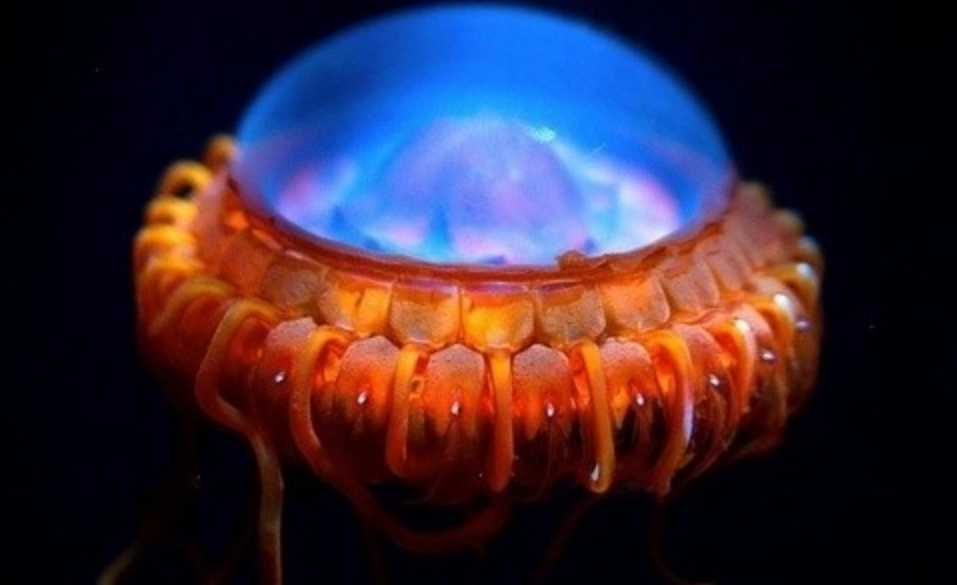
The alarm jellyfish, scientifically known as Atolla wyvillei, is a deep-sea marvel renowned for its spectacular bioluminescent display—a natural defense strategy that earned it the nickname "alarm bell of the ocean." Found in mesopelagic and bathypelagic zones worldwide, this gelatinous creature has evolved a unique way to survive in the dark abyss by turning predation threats into the ultimate warning signal.
A Living Beacon in the Deep: Physical Traits and Adaptations

  • Bell-Shaped Structure and Glowing Ornaments
    The jellyfish features a deep red, bowl-shaped bell up to 15 cm in diameter, with a central stalk (manubrium) and long, trailing tentacles. Its most striking feature is a ring of bright blue photophores (light-producing organs) along the bell’s edge, which flash in a sequential pattern when disturbed. This bioluminescence isn’t just for show—it’s a sophisticated defense mechanism.
  • Survival in the Abyss
    Lacking traditional eyes, Atolla wyvillei detects movement via sensory cells. When a predator (like a fish or squid) attacks, the jellyfish triggers a series of rapid, flashing lights. This "burglar alarm" strategy attracts larger predators to the scene, hoping that the new arrival will prey on the attacker, allowing the jellyfish to escape.

Bioluminescence: Nature’s Neon Distraction

  • The Science of Glowing Defense
    The blue light emitted by Atolla wyvillei results from a chemical reaction involving luciferin (a light-emitting pigment) and luciferase (an enzyme). Unlike most bioluminescent creatures that use light for camouflage or luring prey, this jellyfish employs it aggressively as a distraction tactic. The flashing pattern mimics the movements of larger organisms, confusing or alarming predators.
  • Life in the Dark Depths
    In the lightless ocean depths, the alarm jellyfish drifts slowly, feeding on plankton and small crustaceans caught by its tentacles. Its red pigmentation helps it absorb faint sunlight, making it less visible to predators that rely on vision. However, when threatened, it abandons stealth for spectacle, turning its body into a glowing beacon.
Latest Stories
Beauty News2 minute readBerlin-based amateur model Lena Schmidt, 26, takes the spotlight in Issue 174, with a series of posed yet natural photos capturing her in everyday Berlin settings. Shot by photographer Kai Berger, the collection balances intentionality and ease—Schmidt poses in her apartment’s sunlit kitchen, outside a historic bookstore, and along a tree-lined canal, each stance styled but never stiff.
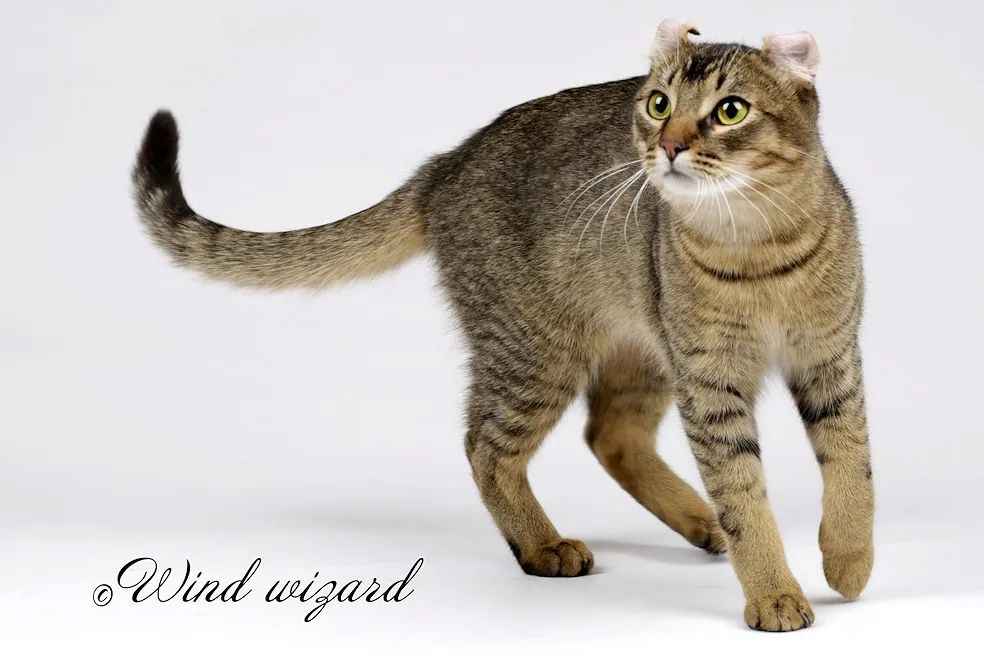
Feline News2 minute readThe Highlander Shorthair, a newly developed cat breed in the United States, combines genetics from the American Curl, Egyptian Mau, Bengal, and other breeds, forming a distinctive appearance and temperament. Originating in 2004, it was initially named the "Highland Lynx" before being officially renamed "Highlander" in 2005. The breed earned registration with The International Cat Association (TICA) in 2008, solidifying its status as an official pedigreed cat.
Feline News2 minute readOriginating in Scotland in the 1960s, the Scottish Straight is the upright-eared counterpart to the Scottish Fold. In 1961, a white barn cat named Susie with folded ears was discovered, and some of her offspring displayed straight ears due to genetic mutation, marking the beginning of this breed’s development. Today, Scottish Straights are celebrated worldwide for their round features, gentle demeanor, and robust genetics.
Car Information1 minute readUnlike the N54’s reputation as a "modding marvel" or the B48’s "family-friendly refinement," the N20 stands as a mid-tier powerplant with clear architecture, moderate performance, and controllable potential. Its design balances daily drivability with upgrade flexibility, making it equally suited for Stage 1 bolt-ons that enhance daily driving pleasure or Stage 2–3 builds for entry-level track use.
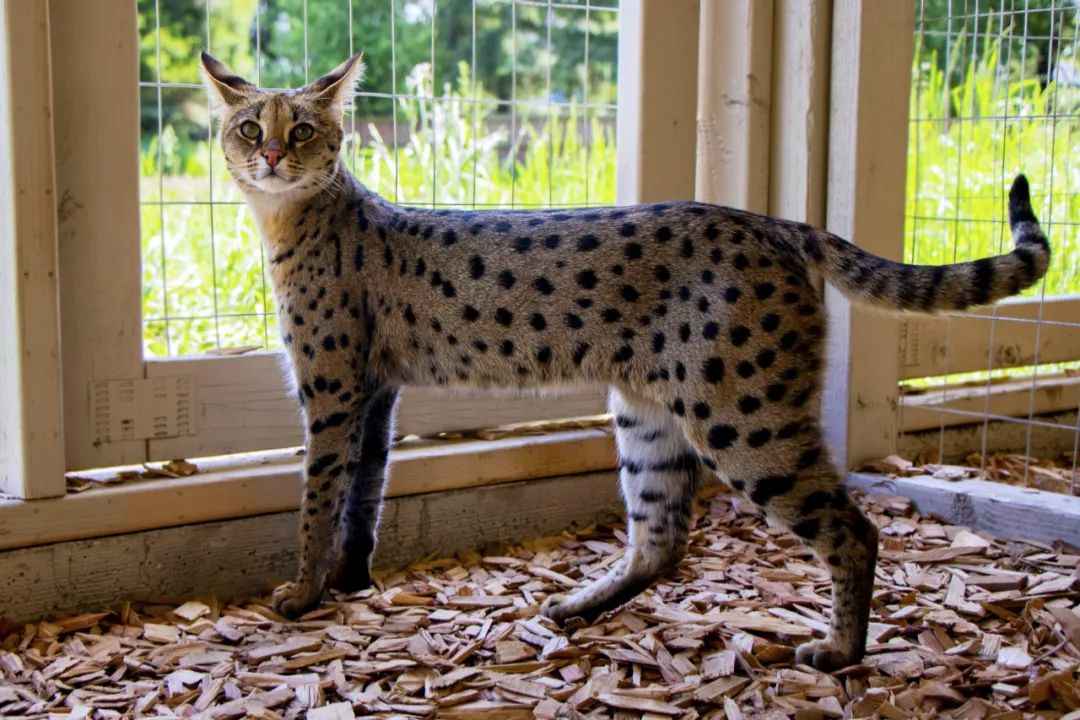
Feline News2 minute readThe Savannah cat, a captivating hybrid of the African serval and domestic cat, has captivated pet enthusiasts worldwide with its striking appearance and dynamic personality. Originating in the U.S. in 1986, this breed was officially recognized by The International Cat Association (TICA) in 2001, solidifying its place in feline history.
Car Information1 minute readAs a fusion of long-wheelbase practicality and hatchback versatility, the F34 3 Series GT balances interior space with coupe-like styling. Sharing powertrain configurations with the F30/F35 sedan, the 320i GT and 328i GT cater to buyers seeking a blend of performance and utility, with select models offering xDrive all-wheel drive.
Industry News1 minute readIntel CEO Lip-Bu Tan publicly acknowledged in a recent internal meeting that the company has fallen out of the global top 10 semiconductor firms due to years of strategic missteps, revealing a staggering $16.6 billion loss in Q3 2024 . This marks the worst quarterly performance in Intel’s 57-year history, driven by $15.9 billion in accelerated depreciation costs tied to underperforming Intel 7 manufacturing assets and Mobileye’s goodwill impairment . To reverse its fortunes, the board approved a new strategy centered on edge AI and agent AI, coupled with global layoffs and business restructuri