The Enigmatic Sea Spiders: Ancient Marine Wonders


Marine Biology
The Enigmatic Sea Spiders: Ancient Marine Wonders

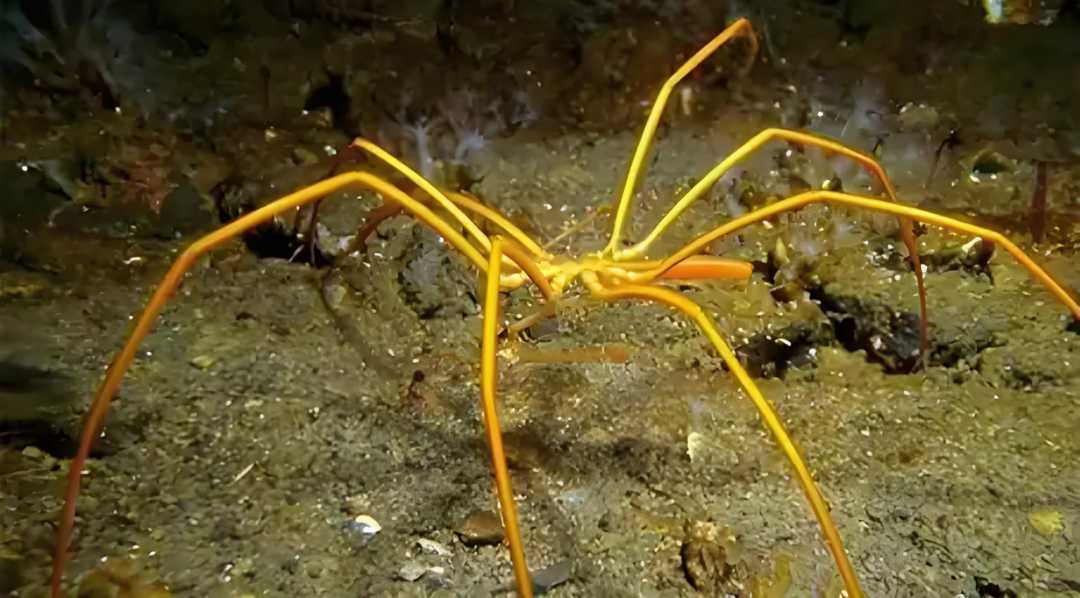
When one thinks of spiders, the image of eight - legged arachnids scurrying on land usually comes to mind. However, there exists a fascinating group of creatures known as sea spiders. Also called pycnogonids, these marine animals have slender, elongated legs and a tiny torso, resembling terrestrial harvestmen, thus earning them their intriguing name.


Sea spiders have an ancient lineage, dating back an astonishing 450 million years. These resilient creatures are often found creeping on seaweed or hiding beneath rocks, dwelling at depths of up to 3,600 meters in the ocean. Their bodies are highly specialized; in fact, they seem to be mostly legs. These legs serve multiple vital functions: they act as respiratory organs, digestive organs, and even play a role in the circulatory system.


What's more remarkable is that their reproductive system is also located in their legs. After mating, male sea spiders utilize a specialized structure on their legs called "ovigers" to temporarily store fertilized eggs. This unique adaptation highlights the incredible evolutionary strategies that sea spiders have developed to survive and reproduce in the harsh and competitive marine environment. As researchers continue to study these mysterious creatures, more secrets about their biology and behavior are sure to be uncovered.
Latest Stories
Feline News2 minute readThe Kurilian Bobtail Longhair, a captivating breed hailing from Russia’s Sakhalin Island and the Kuril Archipelago, has emerged as a fascinating subject in the international feline community. With its distinctive bobbed tail and striking appearance, this natural breed is garnering recognition for its unique history, robust health, and affectionate demeanor.
Life News2 minute readOn the streets and alleys of Italy, gelato is more than just a refreshing dessert; it is a vivid embodiment of the country's culinary philosophy. Compared to the common American ice cream, this Italian classic has become an irreplaceable culinary symbol in the hearts of food lovers worldwide, thanks to its unique craftsmanship and texture.
Feline News2 minute readIn 1982, a bald kitten with an unusual genetic mutation emerged in a barn on an Oregon cherry farm, marking the accidental birth of one of the world’s most distinctive feline breeds—the LaPerm. This curly-coated wonder, named for its "wavy" or "rippled" fur, has since captivated cat lovers globally with its unique appearance and playful personality .
Feline News1 minute readThe Brazilian Shorthair, a distinctive feline breed native to Brazil, has captivated cat enthusiasts with its charming personality and adaptable nature. Originating from the country's street cats, the breed was formally recognized in the 1980s after decades of selective breeding to preserve its unique traits.
Feline News1 minute readIn recent days, a cat named Marguerite has quietly risen to fame in a suburban community. The 3-year-old orange-and-white feline, once a street stray, has now become a "heartwarming bond" connecting neighbors.
Feline News2 minute readOriginating from the city of Rostov-on-Don in Russia, the Donskoy cat, also known as the Don Sphynx, has captivated feline enthusiasts worldwide with its unique appearance and affectionate demeanor. First discovered in 1987 when Professor Elena Kovaleva rescued a hairless kitten named Varvara, the breed emerged from a natural genetic mutation that resulted in a lack of fur. Varvara’s subsequent litters produced both haired and hairless kittens, leading breeder Irina Nemykina to develop the Donskoy through selective breeding with European Shorthairs. Recognized by The International Cat Associat
Feline News2 minute readThe Nebelung, a captivating feline often mistaken for the Russian Blue, is a rare breed celebrated for its striking appearance and gentle demeanor. Originating in the U.S. during the 1980s, this breed emerged from intentional crossbreeding to replicate the elegance of Victorian-era long-haired blue cats. Named after the German word "nebel" (meaning "mist"), the Nebelung’s silvery-tipped blue-gray coat evokes a misty aura, while its green or yellow-green eyes add to its enigmatic charm.