The Enigmatic Foxglove: A Botanical Beauty with Dual Nature


Plant Information
The Enigmatic Foxglove: A Botanical Beauty with Dual Nature

The foxglove (Digitalis purpurea), a striking biennial plant native to Europe, western Asia, and northwestern Africa, has long captivated gardeners and botanists with its towering spires of bell-shaped flowers. Thriving in woodlands, meadows, and rocky slopes, this plant seamlessly blends aesthetic charm with potent medicinal properties.


A Visual Masterpiece in Bloom

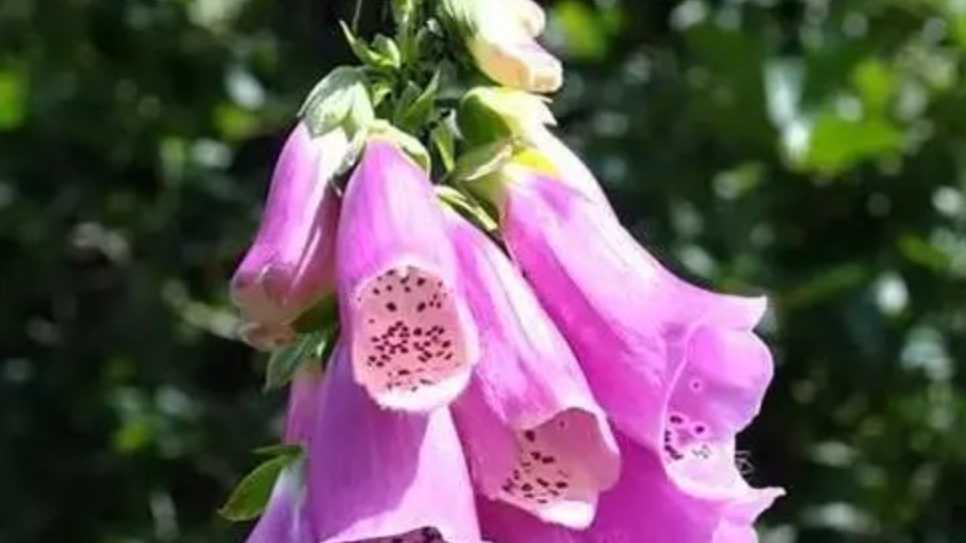
Reaching 60–120 centimeters in height, the foxglove forms a rosette of lanceolate, hairy leaves in its first year, followed by a tall flowering stem in the second. The inflorescence, composed of 20–80 downward-facing flowers, creates a dramatic display: petals range from deep purple to pink, white, or cream, often adorned with speckled throats. Each flower (3–5 cm long) features a tubular base and a flared rim, evolving to attract bumblebees, which navigate the narrow corolla to access nectar, inadvertently transferring pollen. The plant’s texture—from the velvety leaves to the smooth petals—adds tactile depth to its visual allure.

Medicinal Marvel and Cautionary Tale

The foxglove’s leaves contain cardiac glycosides (notably digitoxin and digoxin), which have been used for centuries in traditional medicine to treat heart conditions. These compounds strengthen heart contractions and regulate rhythm, though their efficacy requires precise dosage. However, every part of the plant is highly toxic if ingested, causing nausea, arrhythmias, and even death—earning it nicknames like "Witch’s Gloves" in folklore. Modern medicine carefully synthesizes its compounds, while gardeners revere it for its ornamental value, often planting it in cottage gardens or wildflower meadows. Though not endangered, habitat degradation threatens wild populations. As a symbol of nature’s dual beauty and danger, the foxglove remains a compelling subject in botany, medicine, and horticulture.
Latest Stories
Feline News2 minute readThe Kurilian Bobtail Longhair, a captivating breed hailing from Russia’s Sakhalin Island and the Kuril Archipelago, has emerged as a fascinating subject in the international feline community. With its distinctive bobbed tail and striking appearance, this natural breed is garnering recognition for its unique history, robust health, and affectionate demeanor.
Life News2 minute readOn the streets and alleys of Italy, gelato is more than just a refreshing dessert; it is a vivid embodiment of the country's culinary philosophy. Compared to the common American ice cream, this Italian classic has become an irreplaceable culinary symbol in the hearts of food lovers worldwide, thanks to its unique craftsmanship and texture.
Feline News2 minute readIn 1982, a bald kitten with an unusual genetic mutation emerged in a barn on an Oregon cherry farm, marking the accidental birth of one of the world’s most distinctive feline breeds—the LaPerm. This curly-coated wonder, named for its "wavy" or "rippled" fur, has since captivated cat lovers globally with its unique appearance and playful personality .
Feline News1 minute readThe Brazilian Shorthair, a distinctive feline breed native to Brazil, has captivated cat enthusiasts with its charming personality and adaptable nature. Originating from the country's street cats, the breed was formally recognized in the 1980s after decades of selective breeding to preserve its unique traits.
Feline News1 minute readIn recent days, a cat named Marguerite has quietly risen to fame in a suburban community. The 3-year-old orange-and-white feline, once a street stray, has now become a "heartwarming bond" connecting neighbors.
Feline News2 minute readOriginating from the city of Rostov-on-Don in Russia, the Donskoy cat, also known as the Don Sphynx, has captivated feline enthusiasts worldwide with its unique appearance and affectionate demeanor. First discovered in 1987 when Professor Elena Kovaleva rescued a hairless kitten named Varvara, the breed emerged from a natural genetic mutation that resulted in a lack of fur. Varvara’s subsequent litters produced both haired and hairless kittens, leading breeder Irina Nemykina to develop the Donskoy through selective breeding with European Shorthairs. Recognized by The International Cat Associat
Feline News2 minute readThe Nebelung, a captivating feline often mistaken for the Russian Blue, is a rare breed celebrated for its striking appearance and gentle demeanor. Originating in the U.S. during the 1980s, this breed emerged from intentional crossbreeding to replicate the elegance of Victorian-era long-haired blue cats. Named after the German word "nebel" (meaning "mist"), the Nebelung’s silvery-tipped blue-gray coat evokes a misty aura, while its green or yellow-green eyes add to its enigmatic charm.