The Armor-Plated Scaly-Foot Snail: Deep-Sea Marvel of the Indian Ocean


Marine Biology
The Armor-Plated Scaly-Foot Snail: Deep-Sea Marvel of the Indian Ocean

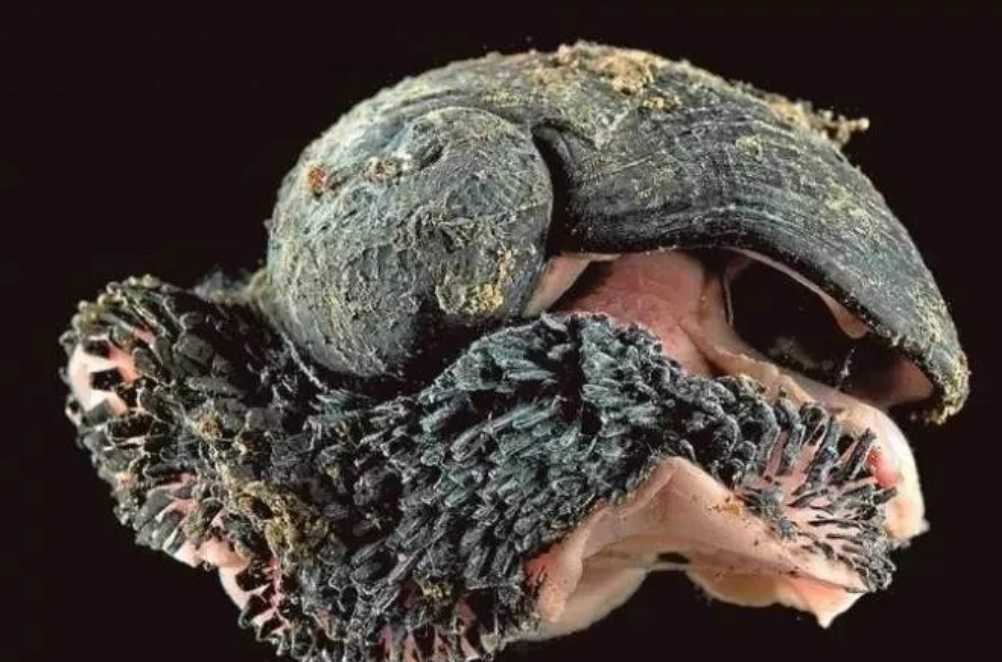
Living near hydrothermal vents in the Indian Ocean, the scaly-foot snail (Chrysomallon squamiferum) defies survival norms with its iron-clad armor and ability to withstand 350°C temperatures. This extraordinary gastropod, discovered in 2001 near the Kairei hydrothermal field, boasts a three-layered shell infused with iron sulfides, making it one of the few animals on Earth to incorporate metal into its exoskeleton. Its survival hinges on a tiny habitat—just two football fields in size—where it thrives in a world devoid of sunlight, relying on bacterial symbiosis for nutrition.


Anatomy of a Deep-Sea Warrior

The snail’s most remarkable feature is its composite shell:


  1. Outer Layer: A thin, iron sulfide coating that forms sharp scales, deterring predators like crabs.
  2. Middle Layer: A porous organic matrix that absorbs impact, similar to Kevlar.
  3. Inner Layer: A calcium carbonate shell for structural support.


This armor isn’t just defensive; it’s a product of its extreme environment. Seawater superheated by vents dissolves minerals, which the snail’s tissues convert into iron sulfides. Even its foot is armored, with iron-rich scales protecting it from scalding fluids.


Nutritionally, the snail is a biological oddity. Instead of eating, it harbors γ-Proteobacteria in its gills, which convert hydrogen sulfide from vents into energy via chemosynthesis. This symbiosis eliminates the need for traditional feeding, allowing it to thrive in an ecosystem where organic matter is scarce.

Vulnerability in a Fragile Paradise

Restricted to only a few Indian Ocean vent fields, the scaly-foot snail faces existential threats. Deep-sea mining for rare minerals has already destroyed parts of its habitat, and exploratory drills risk disrupting the delicate chemistry of hydrothermal vents. Unlike most snails, it has a low reproductive rate, laying fewer than 100 eggs annually, which compounds its vulnerability to population loss.


In 2019, the IUCN classified it as "Endangered," highlighting the urgency of protecting its tiny range. Scientists argue that vent ecosystems like these hold keys to understanding life’s origins and potential extraterrestrial habitats. For the scaly-foot snail, survival isn’t just about its own future—it’s a battle to preserve one of Earth’s last frontiers of biological innovation.


In the pitch-black depths where no sunlight reaches, this armored mollusk stands as a testament to nature’s ability to craft life in the most inhospitable places. Its existence reminds humanity that even in the ocean’s darkest corners, marvels of evolution await—if we choose to protect them
Latest Stories
Feline News2 minute readThe Kurilian Bobtail Longhair, a captivating breed hailing from Russia’s Sakhalin Island and the Kuril Archipelago, has emerged as a fascinating subject in the international feline community. With its distinctive bobbed tail and striking appearance, this natural breed is garnering recognition for its unique history, robust health, and affectionate demeanor.
Life News2 minute readOn the streets and alleys of Italy, gelato is more than just a refreshing dessert; it is a vivid embodiment of the country's culinary philosophy. Compared to the common American ice cream, this Italian classic has become an irreplaceable culinary symbol in the hearts of food lovers worldwide, thanks to its unique craftsmanship and texture.
Feline News2 minute readIn 1982, a bald kitten with an unusual genetic mutation emerged in a barn on an Oregon cherry farm, marking the accidental birth of one of the world’s most distinctive feline breeds—the LaPerm. This curly-coated wonder, named for its "wavy" or "rippled" fur, has since captivated cat lovers globally with its unique appearance and playful personality .
Feline News1 minute readThe Brazilian Shorthair, a distinctive feline breed native to Brazil, has captivated cat enthusiasts with its charming personality and adaptable nature. Originating from the country's street cats, the breed was formally recognized in the 1980s after decades of selective breeding to preserve its unique traits.
Feline News1 minute readIn recent days, a cat named Marguerite has quietly risen to fame in a suburban community. The 3-year-old orange-and-white feline, once a street stray, has now become a "heartwarming bond" connecting neighbors.
Feline News2 minute readOriginating from the city of Rostov-on-Don in Russia, the Donskoy cat, also known as the Don Sphynx, has captivated feline enthusiasts worldwide with its unique appearance and affectionate demeanor. First discovered in 1987 when Professor Elena Kovaleva rescued a hairless kitten named Varvara, the breed emerged from a natural genetic mutation that resulted in a lack of fur. Varvara’s subsequent litters produced both haired and hairless kittens, leading breeder Irina Nemykina to develop the Donskoy through selective breeding with European Shorthairs. Recognized by The International Cat Associat
Feline News2 minute readThe Nebelung, a captivating feline often mistaken for the Russian Blue, is a rare breed celebrated for its striking appearance and gentle demeanor. Originating in the U.S. during the 1980s, this breed emerged from intentional crossbreeding to replicate the elegance of Victorian-era long-haired blue cats. Named after the German word "nebel" (meaning "mist"), the Nebelung’s silvery-tipped blue-gray coat evokes a misty aura, while its green or yellow-green eyes add to its enigmatic charm.