The Leaf Sheep Slug: Nature’s Photosynthetic Marvel That 'Steals' Chloroplasts to Survive


Marine Biology
The Leaf Sheep Slug: Nature’s Photosynthetic Marvel That 'Steals' Chloroplasts to Survive

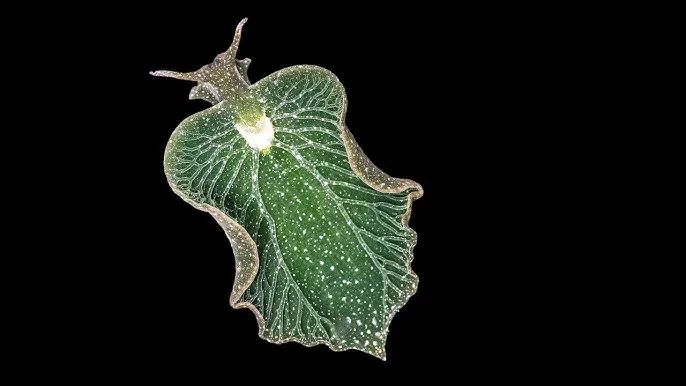
The leaf sheep slug (Elysia chlorotica), a marine gastropod, defies biological norms by hijacking chloroplasts from algae and using them for photosynthesis—allowing it to go 9 to 10 months without eating. This extraordinary ability, known as kleptoplasty, has made it a celebrity in the scientific world, blurring the line between animal and plant.


Solar-Powered Slug: The Science Behind Chloroplast Theft

  • Photosynthesis in an Animal
    When young, the slug feasts on green algae like Vaucheria litorea, ingesting chloroplasts (plastids) from the algal cells. Instead of digesting them, it stores these plastids in its digestive tract, where they continue producing energy through photosynthesis. Genes from the algae’s nucleus, transferred to the slug’s DNA, even help maintain the chloroplasts’ function—an extremely rare example of horizontal gene transfer in animals.
  • Leaf-Like Adaptations
    Its vibrant green body, dotted with leaf-like projections (cerata), mimics seaweed while maximizing sunlight exposure. The cerata house the stolen chloroplasts, allowing the slug to absorb light and convert carbon dioxide into glucose, just like a plant. This gives it the nickname "leaf sheep" due to its fuzzy appearance and herbivorous habits.

Survival Strategy: From Feeding Frenzy to Solar Slumber

  • The Great Chloroplast Heist
    Juvenile slugs must consume algae to acquire chloroplasts, but once stocked, they can rely on photosynthesis for months. This adaptation lets them survive in nutrient-poor waters, outcompeting species that depend on constant feeding. Their ability to "farm" chloroplasts may have evolved as a response to limited food sources in their coastal habitats.
  • Life Cycle and Habitat
    Found along the eastern coast of the United States and in Japan, the slug lays spiral egg masses on algae. Hatchlings emerge as clear, colorless larvae, only turning green after their first algal meal. They thrive in shallow, saltwater marshes and estuaries, where sunlight penetrates easily to fuel their photosynthetic lifestyle.
Latest Stories
Feline News2 minute readThe Kurilian Bobtail Longhair, a captivating breed hailing from Russia’s Sakhalin Island and the Kuril Archipelago, has emerged as a fascinating subject in the international feline community. With its distinctive bobbed tail and striking appearance, this natural breed is garnering recognition for its unique history, robust health, and affectionate demeanor.
Life News2 minute readOn the streets and alleys of Italy, gelato is more than just a refreshing dessert; it is a vivid embodiment of the country's culinary philosophy. Compared to the common American ice cream, this Italian classic has become an irreplaceable culinary symbol in the hearts of food lovers worldwide, thanks to its unique craftsmanship and texture.
Feline News2 minute readIn 1982, a bald kitten with an unusual genetic mutation emerged in a barn on an Oregon cherry farm, marking the accidental birth of one of the world’s most distinctive feline breeds—the LaPerm. This curly-coated wonder, named for its "wavy" or "rippled" fur, has since captivated cat lovers globally with its unique appearance and playful personality .
Feline News1 minute readThe Brazilian Shorthair, a distinctive feline breed native to Brazil, has captivated cat enthusiasts with its charming personality and adaptable nature. Originating from the country's street cats, the breed was formally recognized in the 1980s after decades of selective breeding to preserve its unique traits.
Feline News1 minute readIn recent days, a cat named Marguerite has quietly risen to fame in a suburban community. The 3-year-old orange-and-white feline, once a street stray, has now become a "heartwarming bond" connecting neighbors.
Feline News2 minute readOriginating from the city of Rostov-on-Don in Russia, the Donskoy cat, also known as the Don Sphynx, has captivated feline enthusiasts worldwide with its unique appearance and affectionate demeanor. First discovered in 1987 when Professor Elena Kovaleva rescued a hairless kitten named Varvara, the breed emerged from a natural genetic mutation that resulted in a lack of fur. Varvara’s subsequent litters produced both haired and hairless kittens, leading breeder Irina Nemykina to develop the Donskoy through selective breeding with European Shorthairs. Recognized by The International Cat Associat
Feline News2 minute readThe Nebelung, a captivating feline often mistaken for the Russian Blue, is a rare breed celebrated for its striking appearance and gentle demeanor. Originating in the U.S. during the 1980s, this breed emerged from intentional crossbreeding to replicate the elegance of Victorian-era long-haired blue cats. Named after the German word "nebel" (meaning "mist"), the Nebelung’s silvery-tipped blue-gray coat evokes a misty aura, while its green or yellow-green eyes add to its enigmatic charm.