Four-Eyed Turtle: A Unique Freshwater Species Teeters on the Brink of Extinction


Animal Information
Four-Eyed Turtle: A Unique Freshwater Species Teeters on the Brink of Extinction

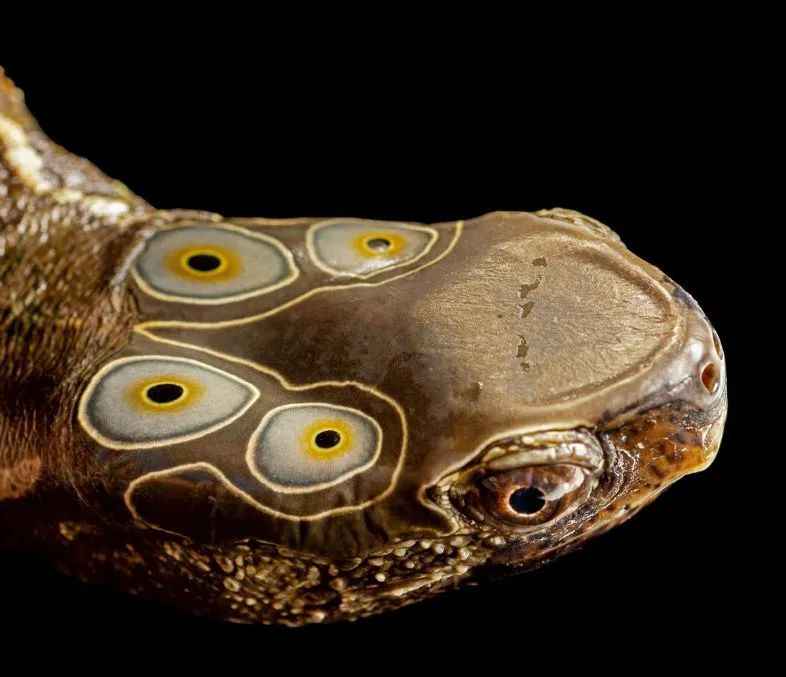
The four-eyed turtle (Sacalia quadriocellata), a rare freshwater reptile native to Southeast Asia, has captured global attention for its distinctive appearance and critical endangered status. Contrary to its common name, this small turtle—typically measuring under 20 centimeters in length—possesses only two functional eyes. Its moniker derives from four striking ocelli (eye-like spots) atop its head: two pairs of bright yellow markings ringed with dark pigment, resembling additional eyes and forming one of nature’s most intriguing examples of mimicry.


Scientists believe these ocelli serve as a survival adaptation. When threatened by predators such as birds or snakes, the turtle retracts its head into its shell, leaving the spots exposed to confuse attackers—potentially misleading them about the turtle’s size or intended movement. The markings may also play a role in communication during mating seasons, helping individuals recognize conspecifics.


Inhabiting clear, fast-flowing mountain streams, marshes, and humid forest ecosystems, the four-eyed turtle ranges across southern China, northeastern Vietnam, and parts of Laos. Its diet consists of insects, small crustaceans, and aquatic plant matter, reflecting its dependence on pristine freshwater habitats. However, wild populations have plummeted in recent decades due to habitat loss and illegal exploitation.


Classified as "Endangered" on the IUCN Red List and listed in Appendix II of CITES (Convention on International Trade in Endangered Species), the species faces severe threats from habitat fragmentation—caused by dam construction, agricultural expansion, and water pollution—and poaching for the illegal pet trade, where its unique appearance makes it a coveted specimen. Traditional medicinal uses further exacerbate its decline.


Conservation efforts are underway, with research institutions in China and Vietnam launching captive breeding and reintroduction programs. Community outreach initiatives aim to reduce local exploitation, while habitat restoration projects target critical watersheds. Experts warn that without strengthened cross-border collaboration and stricter enforcement against illegal trade, this enigmatic "four-eyed" species could vanish from the wild within decades.
Latest Stories
Feline News2 minute readThe Kurilian Bobtail Longhair, a captivating breed hailing from Russia’s Sakhalin Island and the Kuril Archipelago, has emerged as a fascinating subject in the international feline community. With its distinctive bobbed tail and striking appearance, this natural breed is garnering recognition for its unique history, robust health, and affectionate demeanor.
Life News2 minute readOn the streets and alleys of Italy, gelato is more than just a refreshing dessert; it is a vivid embodiment of the country's culinary philosophy. Compared to the common American ice cream, this Italian classic has become an irreplaceable culinary symbol in the hearts of food lovers worldwide, thanks to its unique craftsmanship and texture.
Feline News2 minute readIn 1982, a bald kitten with an unusual genetic mutation emerged in a barn on an Oregon cherry farm, marking the accidental birth of one of the world’s most distinctive feline breeds—the LaPerm. This curly-coated wonder, named for its "wavy" or "rippled" fur, has since captivated cat lovers globally with its unique appearance and playful personality .
Feline News1 minute readThe Brazilian Shorthair, a distinctive feline breed native to Brazil, has captivated cat enthusiasts with its charming personality and adaptable nature. Originating from the country's street cats, the breed was formally recognized in the 1980s after decades of selective breeding to preserve its unique traits.
Feline News1 minute readIn recent days, a cat named Marguerite has quietly risen to fame in a suburban community. The 3-year-old orange-and-white feline, once a street stray, has now become a "heartwarming bond" connecting neighbors.
Feline News2 minute readOriginating from the city of Rostov-on-Don in Russia, the Donskoy cat, also known as the Don Sphynx, has captivated feline enthusiasts worldwide with its unique appearance and affectionate demeanor. First discovered in 1987 when Professor Elena Kovaleva rescued a hairless kitten named Varvara, the breed emerged from a natural genetic mutation that resulted in a lack of fur. Varvara’s subsequent litters produced both haired and hairless kittens, leading breeder Irina Nemykina to develop the Donskoy through selective breeding with European Shorthairs. Recognized by The International Cat Associat
Feline News2 minute readThe Nebelung, a captivating feline often mistaken for the Russian Blue, is a rare breed celebrated for its striking appearance and gentle demeanor. Originating in the U.S. during the 1980s, this breed emerged from intentional crossbreeding to replicate the elegance of Victorian-era long-haired blue cats. Named after the German word "nebel" (meaning "mist"), the Nebelung’s silvery-tipped blue-gray coat evokes a misty aura, while its green or yellow-green eyes add to its enigmatic charm.