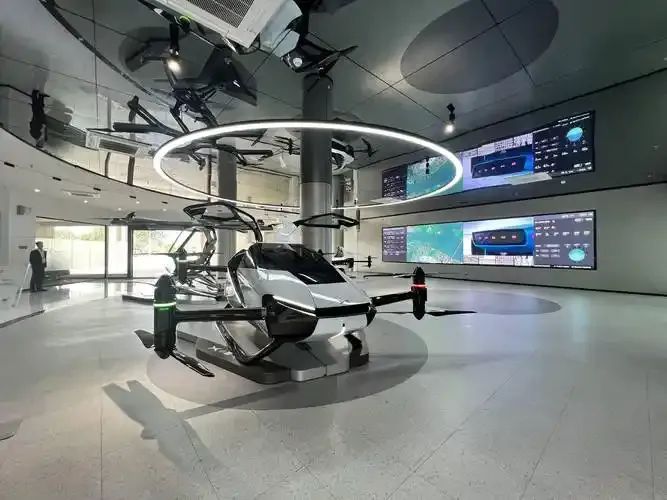
The low - altitude economy industry boasts advantages such as a long industrial chain, wide - ranging radiation - driven effects, strong growth potential, and vast market space. It is a prominent manifestation of new technologies, industries, models, and business forms. Major developed economies like those in Europe, the United States, and Japan,
leveraging the first - mover advantages established during the general aviation era, have formed relatively complete industrial chains and mature business models in the low - altitude economy field, demonstrating remarkable leadership and innovation capabilities. In contrast, China's low - altitude economy industry as a whole is still in the early development stage. A comprehensive understanding of the global development situation of the low - altitude economy industry and summarizing the development experiences of major developed economies such as those in Europe, the United States, and Japan are of great significance for China to seize the strategic opportunities in the global low - altitude economy development.
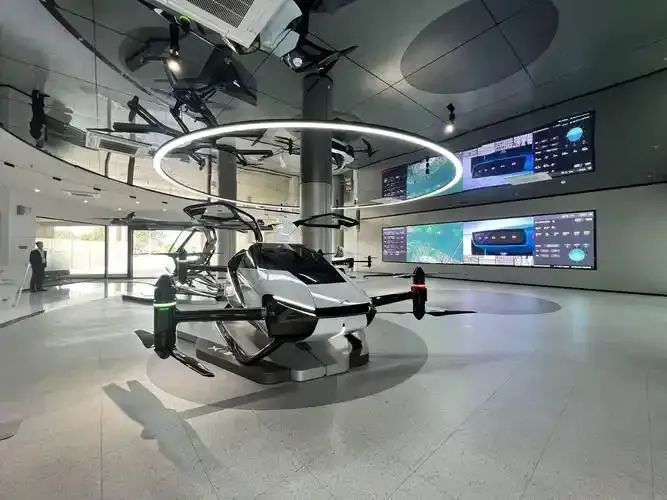
Source: Images from the Internet, if there is any infringement, please contact the removal of
(I) Current Development Status of the Overseas Low - Altitude Economy Industry
The overseas low - altitude economy industry continues the prosperity of the general aviation era. Major developed economies in Europe, the United States, and Japan are actively consolidating their first - mover advantages in scale and technology. With the progress of science and technology and the increasing maturity of the aviation industry, the low - altitude economy, as an emerging economic form, is gradually becoming a new engine for global economic development. The development of the low - altitude economy in major global economies has its own characteristics and has made significant progress. The practices of major developed economies in Europe, the United States, and Japan are highly representative and worthy of in - depth study and reference.
As a powerful aviation country, the United States has always been in a leading position in the development of the low - altitude economy. The U.S. low - altitude economy covers multiple fields such as general aviation, drone transportation, and urban air mobility. The Federal Aviation Administration (FAA) has played a crucial role in promoting the development of the low - altitude economy. By formulating and implementing a series of regulations and standards, it has provided strong guarantees for the safe and orderly development of the low - altitude economy.
Japan promotes the development of the low - altitude economy through government planning, enterprise participation, and technological innovation. Japan has formulated a development roadmap for Advanced Air Mobility (AAM), clarifying development goals for 2025 and 2030. It has actively cultivated and strengthened a number of eVTOL (electric vertical takeoff and landing) enterprises and encouraged and guided automotive companies such as Honda and Toyota, which are involved in the air transportation field, to participate in the development of the low - altitude economy. In addition, Japan actively expands the application scenarios of the low - altitude economy industry, including flights to offshore oil platforms, helicopter pilotage in ports, sightseeing and entertainment, cross - border flights, inter - city flights, as well as medical rescue and mountain search and rescue.
(II) Development Experiences of the Overseas Low - Altitude Economy Industry
1. Leading with Technological Innovation to Promote Continuous Industrial Upgrades
Major developed economies in Europe, the United States, and Japan are committed to promoting technological progress and innovation in the aerospace field, continuously strengthening their own technological advantages. The United States continuously increases R & D investment to enhance its technological innovation capabilities. The U.S. government and enterprises invest a large amount of funds every year in aviation technology research and development, covering a wide range of areas, including not only military aviation but also civil aviation, aerospace technology, and many other fields. In addition, the United States is home to world - class universities and research institutions such as the Massachusetts Institute of Technology and the California Institute of Technology, which have rich research experience and profound technological accumulation in the aerospace field. Moreover, U.S. aviation research institutions such as the National Aeronautics and Space Administration (NASA) and the Defense Advanced Research Projects Agency (DARPA) also play important roles in the development of aviation technology.
The European Union, through the "Horizon 2020" and "Horizon Europe" programs, has incubated multiple projects and enterprises related to urban air mobility. These projects cover various aspects such as U - Space, UAM, airspace management, and aviation AI applications, providing comprehensive support for the development of the eVTOL industry. In addition, governments of European countries encourage the research, development, and application of eVTOL technology by directly funding research projects, setting up special funds, or establishing investment funds.
In Japan, SkyDrive, a leading eVTOL manufacturer, is collaborating with Suzuki Motor to produce flying cars. In addition to all - electric eVTOLs, Honda has introduced a gas turbine - electric hybrid eVTOL solution, aiming for a 400 - kilometer range. The Japan Aerospace Exploration Agency (JAXA) is also jointly promoting the research and development of eVTOLs with enterprises.
2. Continuously Improving the Policy and Regulatory System to Ensure Industrial Growth
Many countries and regions around the world have introduced a series of supportive policies and preferential measures, providing strong guarantees for the development of the low - altitude economy.