The Watusi Cattle: Africa’s Majestic Horned Giants with Cooling Superpowers


Animal Information
The Watusi Cattle: Africa’s Majestic Horned Giants with Cooling Superpowers

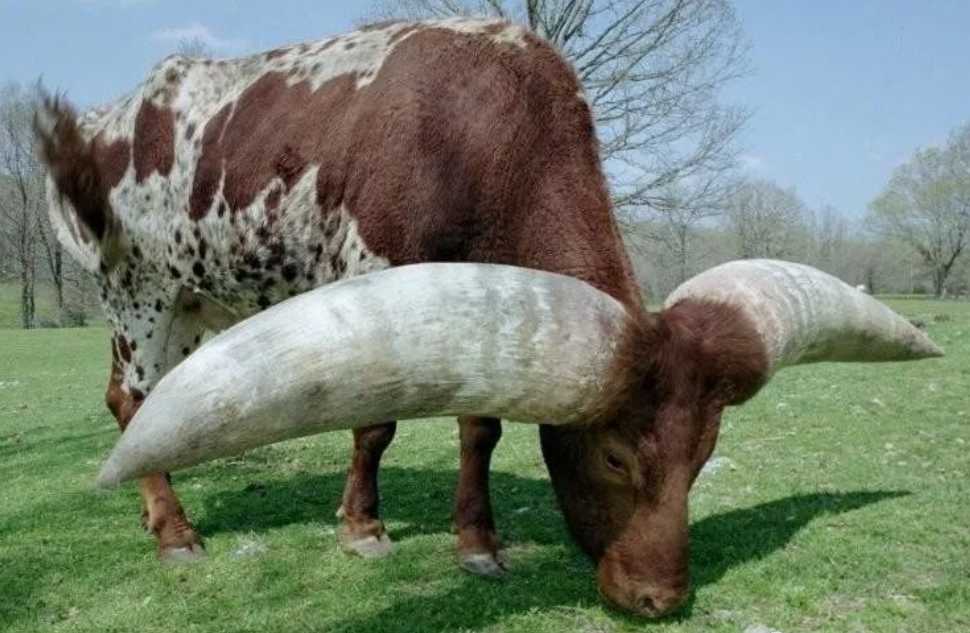
Native to southern Africa, the Watusi cattle (also known as Ankole-Watusi) command attention with their extraordinary horns—measuring up to 2.4 meters from tip to tip when fully grown. More than just a defensive weapon, these iconic appendages house a biological marvel: a honeycomb structure that acts as a natural radiator, cooling the bloodstream before it circulates through the body.

Anatomy: Horns as Nature’s Air Conditioners

  • The Science of Horned Thermoregulation
    Each horn contains a network of blood vessels surrounded by porous, honeycomb-like bone. As warm blood flows through the horns, heat dissipates into the air via convection, lowering the animal’s core temperature. This adaptation is crucial in Africa’s scorching savannas, where other cattle species often struggle with heat stress. The horns’ spiral shape further increases surface area for efficient cooling.
  • Size and Structural Adaptations
    Bulls’ horns are larger and more symmetric, while cows’ tend to be smaller and more upward-curving. Despite their imposing size (some pairs weigh over 45 kg), the horns are surprisingly lightweight due to their honeycomb interior. The Watusi’s lean build and short coat further aid heat dissipation, complementing its horned cooling system.

Behavior, Ecology, and Cultural Significance

  • Defense and Social Dynamics
    Beyond thermoregulation, horns serve as formidable weapons against predators like lions and hyenas. During mating season, bulls use their horns in ritualized clashes, demonstrating dominance without causing serious injury. The breed’s calm temperament and agility allow it to navigate rocky terrain while foraging on sparse vegetation.
  • A Sacred Symbol in African Culture
    For tribes like the Tutsi and Hima, Watusi cattle are symbols of wealth, status, and spiritual significance. Horns are often carved and decorated, while the animals feature in traditional ceremonies and folklore. In modern times, they are prized for their hardiness and disease resistance, playing a vital role in sustainable ranching across Africa.

Conservation and Modern Relevance

  • Thriving in a Changing Landscape
    While not endangered, the Watusi faces competition from commercial breeds in some regions. Conservation efforts focus on preserving its unique genetics, with organizations like the African Watusi Cattle Society promoting sustainable breeding. Their ability to thrive in arid environments makes them increasingly important for climate-resilient agriculture.
  • Global Appreciation for a Horned Wonder
    In recent years, the Watusi has gained popularity in zoos and exotic farms worldwide, admired for its striking appearance and evolutionary ingenuity. Scientists continue to study its horn structure, inspired by its natural cooling system for innovations in architectural design and thermal management technology.


In the sun-baked savannas of Africa, the Watusi cattle stands as a testament to nature’s ability to craft both beauty and function. Its colossal horns, evolved over millennia to conquer heat and threats, remind humanity that in the animal kingdom, survival often wears the most spectacular disguises

Latest Stories
Feline News2 minute readThe Kurilian Bobtail Longhair, a captivating breed hailing from Russia’s Sakhalin Island and the Kuril Archipelago, has emerged as a fascinating subject in the international feline community. With its distinctive bobbed tail and striking appearance, this natural breed is garnering recognition for its unique history, robust health, and affectionate demeanor.
Life News2 minute readOn the streets and alleys of Italy, gelato is more than just a refreshing dessert; it is a vivid embodiment of the country's culinary philosophy. Compared to the common American ice cream, this Italian classic has become an irreplaceable culinary symbol in the hearts of food lovers worldwide, thanks to its unique craftsmanship and texture.
Feline News2 minute readIn 1982, a bald kitten with an unusual genetic mutation emerged in a barn on an Oregon cherry farm, marking the accidental birth of one of the world’s most distinctive feline breeds—the LaPerm. This curly-coated wonder, named for its "wavy" or "rippled" fur, has since captivated cat lovers globally with its unique appearance and playful personality .
Feline News1 minute readThe Brazilian Shorthair, a distinctive feline breed native to Brazil, has captivated cat enthusiasts with its charming personality and adaptable nature. Originating from the country's street cats, the breed was formally recognized in the 1980s after decades of selective breeding to preserve its unique traits.
Feline News1 minute readIn recent days, a cat named Marguerite has quietly risen to fame in a suburban community. The 3-year-old orange-and-white feline, once a street stray, has now become a "heartwarming bond" connecting neighbors.
Feline News2 minute readOriginating from the city of Rostov-on-Don in Russia, the Donskoy cat, also known as the Don Sphynx, has captivated feline enthusiasts worldwide with its unique appearance and affectionate demeanor. First discovered in 1987 when Professor Elena Kovaleva rescued a hairless kitten named Varvara, the breed emerged from a natural genetic mutation that resulted in a lack of fur. Varvara’s subsequent litters produced both haired and hairless kittens, leading breeder Irina Nemykina to develop the Donskoy through selective breeding with European Shorthairs. Recognized by The International Cat Associat
Feline News2 minute readThe Nebelung, a captivating feline often mistaken for the Russian Blue, is a rare breed celebrated for its striking appearance and gentle demeanor. Originating in the U.S. during the 1980s, this breed emerged from intentional crossbreeding to replicate the elegance of Victorian-era long-haired blue cats. Named after the German word "nebel" (meaning "mist"), the Nebelung’s silvery-tipped blue-gray coat evokes a misty aura, while its green or yellow-green eyes add to its enigmatic charm.