The Leatherback Turtle: Earth’s Colossal Marine Reptile Without a Traditional Shell


Animal Information
The Leatherback Turtle: Earth’s Colossal Marine Reptile Without a Traditional Shell

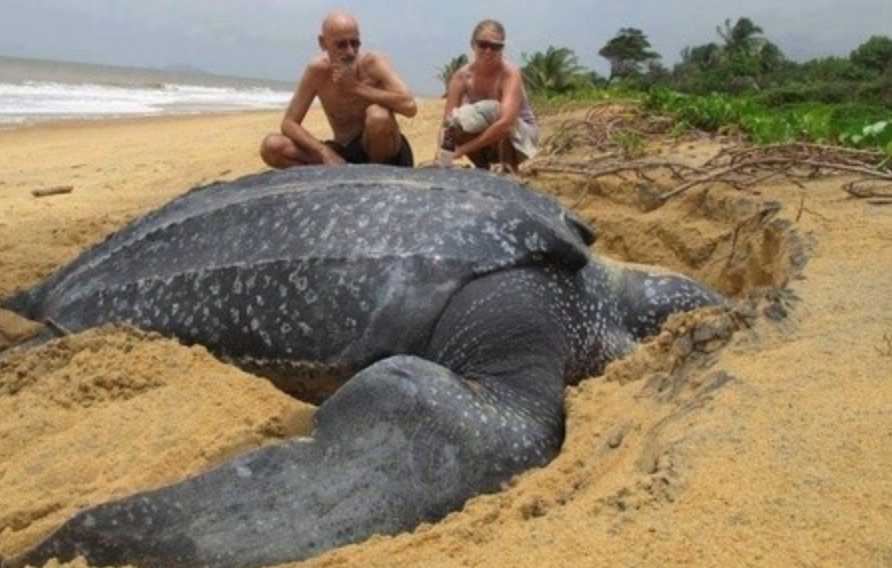
The leatherback turtle (Dermochelys coriacea) holds the title of the world’s largest turtle, capable of weighing up to 900 kilograms. Unlike other turtles, it lacks a hard bony shell. Instead, its back is supported by a flexible framework of bones covered by thick, rubbery skin, giving it a unique, leathery appearance that distinguishes it from all other chelonians.

An Evolutionary Marvel: Adaptations for Oceanic Life

  • Shell Structure Redefined
    The leatherback’s "shell" is a mosaic of bony plates beneath dark, pebbled skin, topped by seven longitudinal ridges. This design reduces drag in water, allowing it to dive to depths of over 1,000 meters—deeper than any other turtle. Its body is streamlined for transoceanic journeys, with flippers spanning up to 2.7 meters, enabling it to migrate thousands of kilometers each year.
  • Thermoregulation Superpowers
    As a semi-endothermic animal, the leatherback maintains body heat in cold oceans through adaptations like a thick layer of fat and efficient blood vessel arrangements. This allows it to thrive in waters where other turtles would freeze, making it a true master of extreme environments.

Global Wanderer and Conservation Concerns

  • Diet and Life Cycle
    Primarily feeding on jellyfish, the leatherback plays a crucial role in controlling jellyfish populations. Females return to tropical beaches to nest, digging pits and laying up to 100 eggs per clutch. Hatchlings face numerous threats, from predatory crabs to artificial lighting that disorients them from the sea.
  • Threats to Survival
    Listed as "Vulnerable" by the IUCN, the leatherback confronts multiple perils: plastic pollution (mistaken for jellyfish), habitat loss from coastal development, and climate change (which skews egg sex ratios). Fishing gear entanglement also poses a significant risk, with thousands dying annually in commercial nets.


Despite its massive size and ancient lineage (dating back 100 million years), the leatherback’s future hinges on human action. Conservation initiatives—including beach patrols, net modifications, and plastic reduction campaigns—aim to protect this ocean giant, ensuring that Earth’s last leatherback turtles continue to traverse the world’s seas for generations to come.
Latest Stories
Feline News2 minute readThe Kurilian Bobtail Longhair, a captivating breed hailing from Russia’s Sakhalin Island and the Kuril Archipelago, has emerged as a fascinating subject in the international feline community. With its distinctive bobbed tail and striking appearance, this natural breed is garnering recognition for its unique history, robust health, and affectionate demeanor.
Life News2 minute readOn the streets and alleys of Italy, gelato is more than just a refreshing dessert; it is a vivid embodiment of the country's culinary philosophy. Compared to the common American ice cream, this Italian classic has become an irreplaceable culinary symbol in the hearts of food lovers worldwide, thanks to its unique craftsmanship and texture.
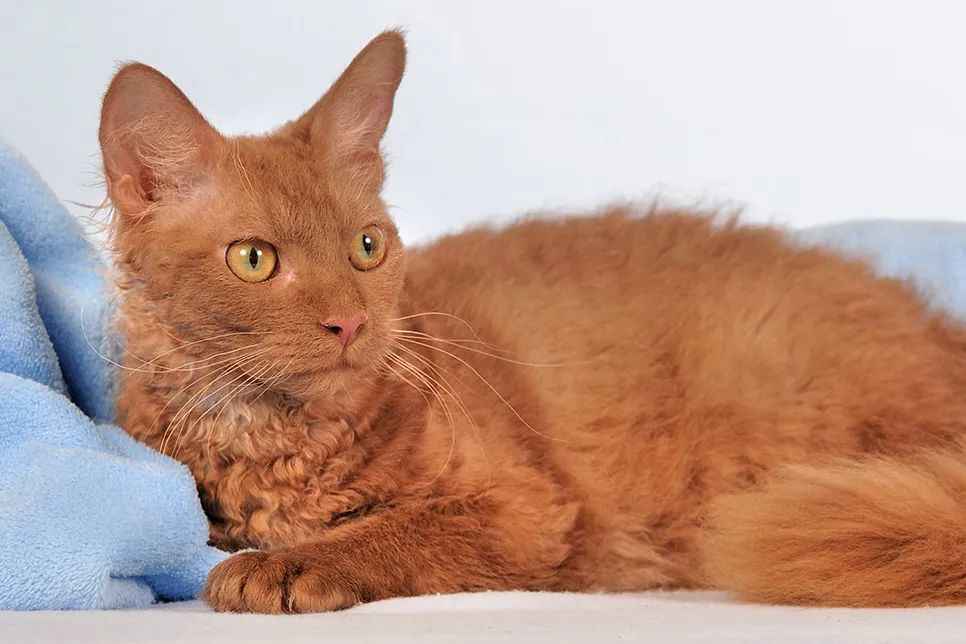
Feline News2 minute readIn 1982, a bald kitten with an unusual genetic mutation emerged in a barn on an Oregon cherry farm, marking the accidental birth of one of the world’s most distinctive feline breeds—the LaPerm. This curly-coated wonder, named for its "wavy" or "rippled" fur, has since captivated cat lovers globally with its unique appearance and playful personality .
Feline News1 minute readThe Brazilian Shorthair, a distinctive feline breed native to Brazil, has captivated cat enthusiasts with its charming personality and adaptable nature. Originating from the country's street cats, the breed was formally recognized in the 1980s after decades of selective breeding to preserve its unique traits.
Feline News1 minute readIn recent days, a cat named Marguerite has quietly risen to fame in a suburban community. The 3-year-old orange-and-white feline, once a street stray, has now become a "heartwarming bond" connecting neighbors.
Feline News2 minute readOriginating from the city of Rostov-on-Don in Russia, the Donskoy cat, also known as the Don Sphynx, has captivated feline enthusiasts worldwide with its unique appearance and affectionate demeanor. First discovered in 1987 when Professor Elena Kovaleva rescued a hairless kitten named Varvara, the breed emerged from a natural genetic mutation that resulted in a lack of fur. Varvara’s subsequent litters produced both haired and hairless kittens, leading breeder Irina Nemykina to develop the Donskoy through selective breeding with European Shorthairs. Recognized by The International Cat Associat
Feline News2 minute readThe Nebelung, a captivating feline often mistaken for the Russian Blue, is a rare breed celebrated for its striking appearance and gentle demeanor. Originating in the U.S. during the 1980s, this breed emerged from intentional crossbreeding to replicate the elegance of Victorian-era long-haired blue cats. Named after the German word "nebel" (meaning "mist"), the Nebelung’s silvery-tipped blue-gray coat evokes a misty aura, while its green or yellow-green eyes add to its enigmatic charm.