The Intriguing Naked Man Orchid: A Botanical Wonder of the Mediterranean


Plant Information
The Intriguing Naked Man Orchid: A Botanical Wonder of the Mediterranean

In the diverse world of orchids, the Naked Man Orchid, scientifically known as Orchis italica, stands out with its strikingly unique appearance. Native to the Mediterranean basin, this orchid has captured the fascination of botanists, nature enthusiasts, and the general public alike.

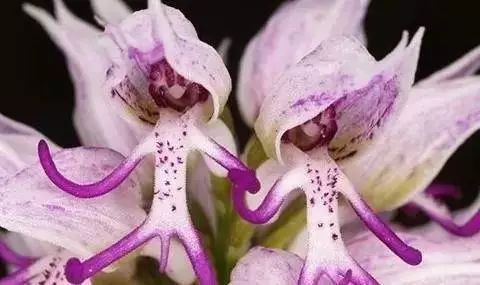
The Naked Man Orchid gets its rather bold common name from the shape of its flowers. Each bloom features a lobed lip (labellum) that uncannily mimics the form of a naked man, with what seem like a head, outstretched arms, and legs. This remarkable resemblance is truly a marvel of nature's design. The flowers are densely clustered on a spike, which can reach up to 50 centimeters in height. They typically display shades of bright pink, adding a splash of color to the landscapes where they grow.


The plant itself has basal leaves with strongly undulating margins, a characteristic that helps in its identification even when not in bloom. These leaves, often flecked with brown as they age, form a rosette at the base of the stem. Additionally, there are 3 or 4 small leaves encasing the stem.


This orchid species has a preference for specific growing conditions. It thrives in partial shade and low - nutrient soil, making habitats such as lean grasslands, open garrigues, and light woods ideal for its growth. In the wild, it can be found across a wide range, from southwestern Europe including the Balearic Islands, Portugal, Sardinia, and Spain, to southeastern Europe like Albania, Greece, Italy, Crete, Sicily, and countries of the former Yugoslavia. Its distribution also extends to western Asia (Cyprus, the east Aegean islands, Lebanon, Syria, Israel, Palestinian territories, and Turkey) and northern Africa (Algeria, Libya, Morocco, and Tunisia).


In Greek folklore, the orchid has an interesting origin story. Orchis, the son of a fairy and a satyr, committed a sacrilege during a banquet for Bacchus by attempting to rape a priestess. As punishment, he was torn apart by wild monsters and then transformed into this delicate plant. Theophrastus, an early Western author, was the first to use the name "orchis" scientifically, drawing a connection between the plant's double - tuber roots, which resemble male genitalia, and the mythological Orchis. In fact, in Italy, there is a belief that consuming the plant can enhance virility.


Despite its wide distribution, like many orchid species, the Naked Man Orchid faces threats. Habitat destruction due to urbanization, agricultural expansion, and over - collection for horticultural and traditional medicine purposes pose risks to its survival. Conservation efforts are crucial to ensure that future generations can continue to behold the unique beauty of the Naked Man Orchid in its natural habitats. Whether admired for its strange allure or studied for its ecological and cultural significance, Orchis italica remains an extraordinary plant in the botanical realm.

Latest Stories
Feline News2 minute readThe Kurilian Bobtail Longhair, a captivating breed hailing from Russia’s Sakhalin Island and the Kuril Archipelago, has emerged as a fascinating subject in the international feline community. With its distinctive bobbed tail and striking appearance, this natural breed is garnering recognition for its unique history, robust health, and affectionate demeanor.
Life News2 minute readOn the streets and alleys of Italy, gelato is more than just a refreshing dessert; it is a vivid embodiment of the country's culinary philosophy. Compared to the common American ice cream, this Italian classic has become an irreplaceable culinary symbol in the hearts of food lovers worldwide, thanks to its unique craftsmanship and texture.
Feline News2 minute readIn 1982, a bald kitten with an unusual genetic mutation emerged in a barn on an Oregon cherry farm, marking the accidental birth of one of the world’s most distinctive feline breeds—the LaPerm. This curly-coated wonder, named for its "wavy" or "rippled" fur, has since captivated cat lovers globally with its unique appearance and playful personality .
Feline News1 minute readThe Brazilian Shorthair, a distinctive feline breed native to Brazil, has captivated cat enthusiasts with its charming personality and adaptable nature. Originating from the country's street cats, the breed was formally recognized in the 1980s after decades of selective breeding to preserve its unique traits.
Feline News1 minute readIn recent days, a cat named Marguerite has quietly risen to fame in a suburban community. The 3-year-old orange-and-white feline, once a street stray, has now become a "heartwarming bond" connecting neighbors.
Feline News2 minute readOriginating from the city of Rostov-on-Don in Russia, the Donskoy cat, also known as the Don Sphynx, has captivated feline enthusiasts worldwide with its unique appearance and affectionate demeanor. First discovered in 1987 when Professor Elena Kovaleva rescued a hairless kitten named Varvara, the breed emerged from a natural genetic mutation that resulted in a lack of fur. Varvara’s subsequent litters produced both haired and hairless kittens, leading breeder Irina Nemykina to develop the Donskoy through selective breeding with European Shorthairs. Recognized by The International Cat Associat
Feline News2 minute readThe Nebelung, a captivating feline often mistaken for the Russian Blue, is a rare breed celebrated for its striking appearance and gentle demeanor. Originating in the U.S. during the 1980s, this breed emerged from intentional crossbreeding to replicate the elegance of Victorian-era long-haired blue cats. Named after the German word "nebel" (meaning "mist"), the Nebelung’s silvery-tipped blue-gray coat evokes a misty aura, while its green or yellow-green eyes add to its enigmatic charm.