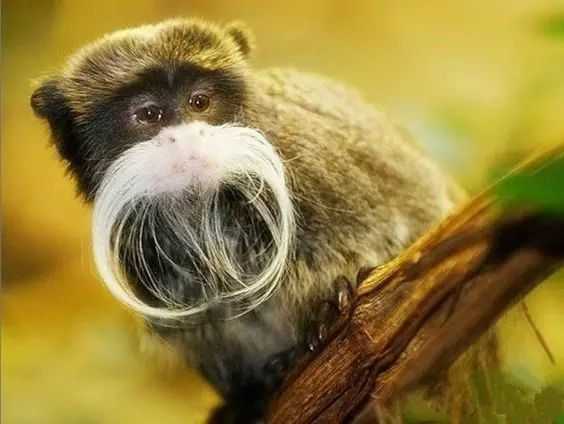
The Emperor Tamarin: A Regal Primate with a Distinctive Handlebar Mustache


Animal Information
The Emperor Tamarin: A Regal Primate with a Distinctive Handlebar Mustache

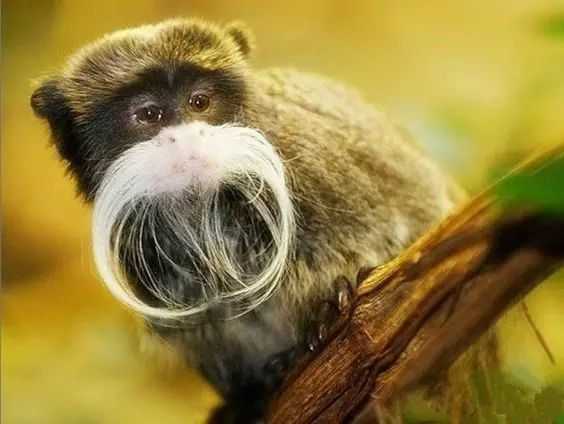
Native to the rainforests of the Amazon Basin in South America, the emperor tamarin (Saguinus imperator) has earned its name from its striking facial feature: a long, white mustache that droops elegantly over its chin, resembling the grandeur of a royal portrait. This small primate, found in Brazil, Peru, and Bolivia, captivates researchers and nature enthusiasts with its unique appearance and social behavior in the dense forest canopy.


A Dashing Mustache and Agile Adaptations

The emperor tamarin’s most iconic trait is its exaggerated white mustache, which contrasts sharply with its dark brown to black fur. Males and females both sport this facial hair, though it may be more pronounced in males. Weighing just 300–400 grams, it has a slender body, long tail, and nimble limbs adapted for leaping between branches. Its prehensile tail provides balance as it forages for fruit, insects, and tree sap, while sharp claws help it cling to vertical trunks. The species’ bold facial markings may serve as a form of visual communication within its social group, though their exact function remains a subject of study.
 
Source: Images from the Internet, if there is any infringement, please contact the removal of


Social Structure and Conservation Concerns

Living in family groups of 2–8 individuals, emperor tamarins are highly social, relying on vocalizations and grooming to maintain bonds. They exhibit cooperative breeding, with males and older offspring helping to care for infants. Their rainforest habitat is threatened by deforestation for agriculture, logging, and mining, pushing populations into fragmented areas. Listed as "Least Concern" by the IUCN, they benefit from their adaptability to secondary forests, but prolonged habitat loss could impact their survival. Conservation efforts focus on protecting Amazonian rainforests and promoting sustainable land use practices to safeguard this charismatic primate and its ecosystem.


The emperor tamarin’s dashing mustache and lively demeanor make it a symbol of the Amazon’s vibrant biodiversity. As deforestation threatens its home, this small primate serves as a reminder of the countless unique species that depend on intact rainforests—creatures whose survival hinges on human stewardship of one of Earth’s most critical ecological frontiers.
Latest Stories
Feline News2 minute readThe Kurilian Bobtail Longhair, a captivating breed hailing from Russia’s Sakhalin Island and the Kuril Archipelago, has emerged as a fascinating subject in the international feline community. With its distinctive bobbed tail and striking appearance, this natural breed is garnering recognition for its unique history, robust health, and affectionate demeanor.
Life News2 minute readOn the streets and alleys of Italy, gelato is more than just a refreshing dessert; it is a vivid embodiment of the country's culinary philosophy. Compared to the common American ice cream, this Italian classic has become an irreplaceable culinary symbol in the hearts of food lovers worldwide, thanks to its unique craftsmanship and texture.
Feline News2 minute readIn 1982, a bald kitten with an unusual genetic mutation emerged in a barn on an Oregon cherry farm, marking the accidental birth of one of the world’s most distinctive feline breeds—the LaPerm. This curly-coated wonder, named for its "wavy" or "rippled" fur, has since captivated cat lovers globally with its unique appearance and playful personality .
Feline News1 minute readThe Brazilian Shorthair, a distinctive feline breed native to Brazil, has captivated cat enthusiasts with its charming personality and adaptable nature. Originating from the country's street cats, the breed was formally recognized in the 1980s after decades of selective breeding to preserve its unique traits.
Feline News1 minute readIn recent days, a cat named Marguerite has quietly risen to fame in a suburban community. The 3-year-old orange-and-white feline, once a street stray, has now become a "heartwarming bond" connecting neighbors.
Feline News2 minute readOriginating from the city of Rostov-on-Don in Russia, the Donskoy cat, also known as the Don Sphynx, has captivated feline enthusiasts worldwide with its unique appearance and affectionate demeanor. First discovered in 1987 when Professor Elena Kovaleva rescued a hairless kitten named Varvara, the breed emerged from a natural genetic mutation that resulted in a lack of fur. Varvara’s subsequent litters produced both haired and hairless kittens, leading breeder Irina Nemykina to develop the Donskoy through selective breeding with European Shorthairs. Recognized by The International Cat Associat
Feline News2 minute readThe Nebelung, a captivating feline often mistaken for the Russian Blue, is a rare breed celebrated for its striking appearance and gentle demeanor. Originating in the U.S. during the 1980s, this breed emerged from intentional crossbreeding to replicate the elegance of Victorian-era long-haired blue cats. Named after the German word "nebel" (meaning "mist"), the Nebelung’s silvery-tipped blue-gray coat evokes a misty aura, while its green or yellow-green eyes add to its enigmatic charm.