The Intriguing Masdevallia: A Marvel of the Orchid World


Plant Information
The Intriguing Masdevallia: A Marvel of the Orchid World

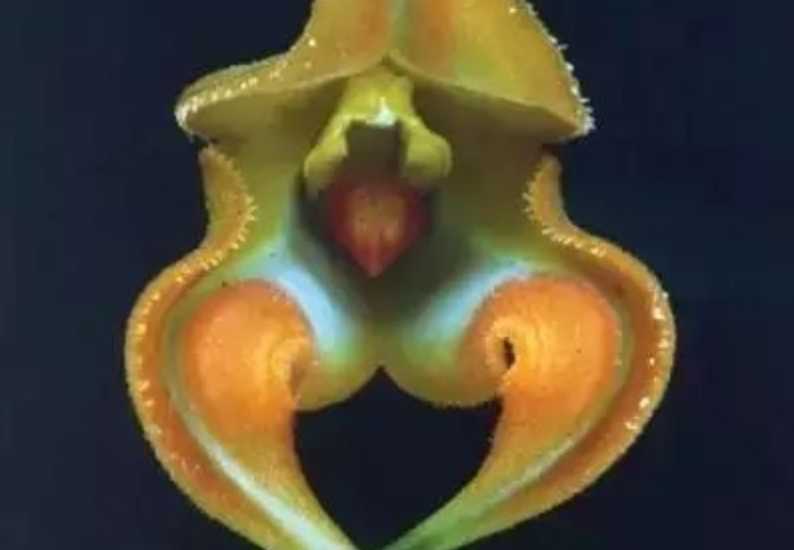
The Masdevallia, commonly known as the Three - Pointed Orchid, belongs to the vast and diverse Orchidaceae family. This genus is a captivating group of plants that has fascinated botanists, orchid enthusiasts, and nature lovers around the globe.

Masdevallias are characterized by their unique and eye - catching flowers. The most distinctive feature is the presence of three sepals that often have long, tail - like extensions at their tips, which give the plant its common name. These sepals can be fused at the base, forming a tube - like structure. The flowers come in a wide array of colors, from vivid reds, oranges, and yellows to more subdued purples, pinks, and whites. Some varieties even have intricate patterns and markings on their petals and sepals. The true petals of the Masdevallia are usually smaller and are often hidden within the showy sepals. The overall shape of the flower is quite irregular, with a triangular or bell - like form that adds to its charm. The plants themselves are generally small to medium - sized, with compact growth habits. They typically have a single leaf or a small rosette of leaves emerging from a short stem.

Native Habitat and Distribution

These orchids are native to the tropical and subtropical regions of the Americas, stretching from Mexico all the way down to Brazil. They are most commonly found in the cloud forests of the Andes Mountains in countries like Colombia, Ecuador, and Peru. In these high - altitude regions, the Masdevallia thrives in the cool, moist, and shaded conditions. The cloud forests provide the perfect environment with their constant mist, high humidity, and filtered sunlight. They are often epiphytic, meaning they grow on the branches of trees, using them for support rather than taking nutrients from the tree itself. However, some species can also be found growing on rocks or in the ground in their native habitats.

Cultivation and Care

Cultivating Masdevallias can be a rewarding but challenging experience. They require specific conditions to thrive. Light is a crucial factor; they prefer bright, indirect light, similar to what they would receive in their natural cloud forest habitats. Too much direct sunlight can scorch their leaves, while too little light may result in poor growth and fewer flowers. Temperature is also vital. They are accustomed to the cool temperatures of high - altitude areas, with ideal daytime temperatures ranging from 15 - 25°C (59 - 77°F) and slightly cooler nights. Humidity levels should be kept high, around 60 - 80%, which can be achieved through regular misting or by using a humidifier, especially in drier indoor environments. When it comes to potting, a well - drained, airy medium is essential. A mixture of fine bark, sphagnum moss, and perlite is often recommended. Watering should be done carefully, keeping the medium slightly moist but not waterlogged, as overly wet conditions can lead to root rot. Fertilizing during the growing season with a balanced orchid fertilizer can help promote healthy growth and abundant flowering. With proper care, these unique orchids can grace gardens and indoor spaces with their extraordinary beauty, making them a prized addition to any orchid collection.

Latest Stories
Beauty News2 minute readBerlin-based amateur model Lena Schmidt, 26, takes the spotlight in Issue 174, with a series of posed yet natural photos capturing her in everyday Berlin settings. Shot by photographer Kai Berger, the collection balances intentionality and ease—Schmidt poses in her apartment’s sunlit kitchen, outside a historic bookstore, and along a tree-lined canal, each stance styled but never stiff.
Feline News2 minute readThe Highlander Shorthair, a newly developed cat breed in the United States, combines genetics from the American Curl, Egyptian Mau, Bengal, and other breeds, forming a distinctive appearance and temperament. Originating in 2004, it was initially named the "Highland Lynx" before being officially renamed "Highlander" in 2005. The breed earned registration with The International Cat Association (TICA) in 2008, solidifying its status as an official pedigreed cat.
Feline News2 minute readOriginating in Scotland in the 1960s, the Scottish Straight is the upright-eared counterpart to the Scottish Fold. In 1961, a white barn cat named Susie with folded ears was discovered, and some of her offspring displayed straight ears due to genetic mutation, marking the beginning of this breed’s development. Today, Scottish Straights are celebrated worldwide for their round features, gentle demeanor, and robust genetics.
Car Information1 minute readUnlike the N54’s reputation as a "modding marvel" or the B48’s "family-friendly refinement," the N20 stands as a mid-tier powerplant with clear architecture, moderate performance, and controllable potential. Its design balances daily drivability with upgrade flexibility, making it equally suited for Stage 1 bolt-ons that enhance daily driving pleasure or Stage 2–3 builds for entry-level track use.
Feline News2 minute readThe Savannah cat, a captivating hybrid of the African serval and domestic cat, has captivated pet enthusiasts worldwide with its striking appearance and dynamic personality. Originating in the U.S. in 1986, this breed was officially recognized by The International Cat Association (TICA) in 2001, solidifying its place in feline history.
Car Information1 minute readAs a fusion of long-wheelbase practicality and hatchback versatility, the F34 3 Series GT balances interior space with coupe-like styling. Sharing powertrain configurations with the F30/F35 sedan, the 320i GT and 328i GT cater to buyers seeking a blend of performance and utility, with select models offering xDrive all-wheel drive.
Industry News1 minute readIntel CEO Lip-Bu Tan publicly acknowledged in a recent internal meeting that the company has fallen out of the global top 10 semiconductor firms due to years of strategic missteps, revealing a staggering $16.6 billion loss in Q3 2024 . This marks the worst quarterly performance in Intel’s 57-year history, driven by $15.9 billion in accelerated depreciation costs tied to underperforming Intel 7 manufacturing assets and Mobileye’s goodwill impairment . To reverse its fortunes, the board approved a new strategy centered on edge AI and agent AI, coupled with global layoffs and business restructuri