The Dumbo Octopus: A Deep - Sea Marvel Named After Disney's Beloved Elephant


Animal Information
The Dumbo Octopus: A Deep - Sea Marvel Named After Disney's Beloved Elephant

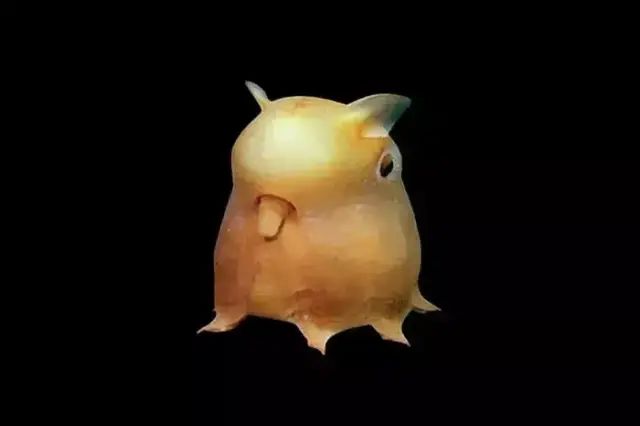
Hiding in the pitch - black depths of the ocean, the dumbo octopus (Grimpoteuthis) floats like a living piece of animation, its name inspired by Disney’s iconic flying elephant, Dumbo. With flapping ear - like fins and a gelatinous, umbrella - shaped body, this deep - sea cephalopod has captured the imagination of marine biologists and the public alike, proving that reality can be just as magical as fiction.


A Graceful Giant of the Abyss: Adaptations for Extreme Depths

The dumbo octopus earns its moniker from the pair of large, floppy fins on either side of its mantle, which resemble the oversized ears of Disney’s Dumbo. These fins allow it to "fly" through the water, while its eight arms, connected by a webbed membrane, form a parachute - like shape that helps it glide or hover. Found at depths of 3,000 to 4,000 meters, it has adapted to survive in extreme pressure with a gelatinous body that lacks a rigid skeleton. Its skin ranges in color from pale pink to deep red, and some species sport glowing suckers—bioluminescent organs thought to attract prey or communicate in the perpetual darkness.

Mysterious Life in the Deep and Conservation Challenges

Little is known about the dumbo octopus’s life cycle, as its remote habitat makes observation difficult. It is believed to feed on crustaceans and worms, using its arms to scoop prey into its beak. Unlike many octopuses, it does not ink, likely because ink would be ineffective in the deep sea. With several species identified worldwide, from the Pacific to the Atlantic, the dumbo octopus faces few natural predators but is threatened by deep - sea trawling and climate change. While not yet listed as endangered, scientists warn that human activities like underwater mining could devastate its habitat.


The dumbo octopus serves as a reminder of the ocean’s endless capacity to inspire wonder. Named after a fictional character, it blurs the line between fantasy and reality, proving that the sea’s depths harbor creatures as whimsical as any storybook. As researchers continue to explore the abyss, the dumbo octopus—with its flapping fins and otherworldly grace—stands as a symbol of the magic that still awaits discovery in Earth’s last great frontier.
Latest Stories
Feline News2 minute readThe Kurilian Bobtail Longhair, a captivating breed hailing from Russia’s Sakhalin Island and the Kuril Archipelago, has emerged as a fascinating subject in the international feline community. With its distinctive bobbed tail and striking appearance, this natural breed is garnering recognition for its unique history, robust health, and affectionate demeanor.
Life News2 minute readOn the streets and alleys of Italy, gelato is more than just a refreshing dessert; it is a vivid embodiment of the country's culinary philosophy. Compared to the common American ice cream, this Italian classic has become an irreplaceable culinary symbol in the hearts of food lovers worldwide, thanks to its unique craftsmanship and texture.
Feline News2 minute readIn 1982, a bald kitten with an unusual genetic mutation emerged in a barn on an Oregon cherry farm, marking the accidental birth of one of the world’s most distinctive feline breeds—the LaPerm. This curly-coated wonder, named for its "wavy" or "rippled" fur, has since captivated cat lovers globally with its unique appearance and playful personality .
Feline News1 minute readThe Brazilian Shorthair, a distinctive feline breed native to Brazil, has captivated cat enthusiasts with its charming personality and adaptable nature. Originating from the country's street cats, the breed was formally recognized in the 1980s after decades of selective breeding to preserve its unique traits.
Feline News1 minute readIn recent days, a cat named Marguerite has quietly risen to fame in a suburban community. The 3-year-old orange-and-white feline, once a street stray, has now become a "heartwarming bond" connecting neighbors.
Feline News2 minute readOriginating from the city of Rostov-on-Don in Russia, the Donskoy cat, also known as the Don Sphynx, has captivated feline enthusiasts worldwide with its unique appearance and affectionate demeanor. First discovered in 1987 when Professor Elena Kovaleva rescued a hairless kitten named Varvara, the breed emerged from a natural genetic mutation that resulted in a lack of fur. Varvara’s subsequent litters produced both haired and hairless kittens, leading breeder Irina Nemykina to develop the Donskoy through selective breeding with European Shorthairs. Recognized by The International Cat Associat
Feline News2 minute readThe Nebelung, a captivating feline often mistaken for the Russian Blue, is a rare breed celebrated for its striking appearance and gentle demeanor. Originating in the U.S. during the 1980s, this breed emerged from intentional crossbreeding to replicate the elegance of Victorian-era long-haired blue cats. Named after the German word "nebel" (meaning "mist"), the Nebelung’s silvery-tipped blue-gray coat evokes a misty aura, while its green or yellow-green eyes add to its enigmatic charm.