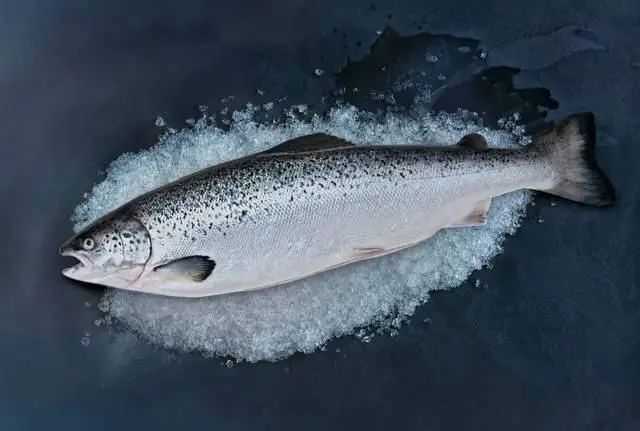
Salmon: The Iconic Fish of the Northern Waters


Marine Biology
Salmon: The Iconic Fish of the Northern Waters

Salmon, commonly known as "salmon," is a group of anadromous fish species that have captured the world's attention for centuries. These remarkable creatures are renowned for their incredible life cycle, traversing vast distances between the ocean and freshwater rivers to spawn. Salmon are found in the cold waters of the North Atlantic and North Pacific Oceans, with several species, such as the Chinook, Coho, and Sockeye, each possessing unique characteristics.


Salmon exhibit a sleek, streamlined body designed for efficient swimming against strong ocean currents and river rapids. Their bodies are covered in small, silvery scales that glisten under the sunlight, providing excellent camouflage. As they prepare to spawn, their appearance often changes significantly. Males may develop a hooked jaw, known as a kype, and their coloration can shift to more vivid hues, ranging from deep reds to greens, depending on the species. This transformation is not only a visual spectacle but also an adaptation for attracting mates and establishing dominance during the spawning season.


The life cycle of salmon is a marvel of nature. Born in freshwater rivers, they spend their early life in the protective environment of the stream, feeding on small invertebrates and insects. As they grow, they migrate downstream to the ocean, where they spend most of their adult lives, feasting on a diet of small fish and krill, which contributes to their substantial growth. After spending several years in the ocean, they undergo an incredible journey back to their natal rivers to spawn. Guided by an extraordinary sense of smell, they can navigate thousands of miles, often swimming against strong currents and leaping over waterfalls to reach their spawning grounds. Once there, the females lay their eggs in nests called redds, which the males then fertilize. Tragically, most adult salmon die shortly after spawning, having fulfilled their life's purpose of ensuring the next generation. This unique life cycle makes salmon not only a vital part of the marine and freshwater ecosystems but also a symbol of resilience and the circle of life. However, salmon populations face numerous threats, including overfishing, habitat degradation, and climate change, highlighting the need for conservation efforts to safeguard these iconic fish.

Latest Stories
Feline News2 minute readThe Kurilian Bobtail Longhair, a captivating breed hailing from Russia’s Sakhalin Island and the Kuril Archipelago, has emerged as a fascinating subject in the international feline community. With its distinctive bobbed tail and striking appearance, this natural breed is garnering recognition for its unique history, robust health, and affectionate demeanor.
Life News2 minute readOn the streets and alleys of Italy, gelato is more than just a refreshing dessert; it is a vivid embodiment of the country's culinary philosophy. Compared to the common American ice cream, this Italian classic has become an irreplaceable culinary symbol in the hearts of food lovers worldwide, thanks to its unique craftsmanship and texture.
Feline News2 minute readIn 1982, a bald kitten with an unusual genetic mutation emerged in a barn on an Oregon cherry farm, marking the accidental birth of one of the world’s most distinctive feline breeds—the LaPerm. This curly-coated wonder, named for its "wavy" or "rippled" fur, has since captivated cat lovers globally with its unique appearance and playful personality .
Feline News1 minute readThe Brazilian Shorthair, a distinctive feline breed native to Brazil, has captivated cat enthusiasts with its charming personality and adaptable nature. Originating from the country's street cats, the breed was formally recognized in the 1980s after decades of selective breeding to preserve its unique traits.
Feline News1 minute readIn recent days, a cat named Marguerite has quietly risen to fame in a suburban community. The 3-year-old orange-and-white feline, once a street stray, has now become a "heartwarming bond" connecting neighbors.
Feline News2 minute readOriginating from the city of Rostov-on-Don in Russia, the Donskoy cat, also known as the Don Sphynx, has captivated feline enthusiasts worldwide with its unique appearance and affectionate demeanor. First discovered in 1987 when Professor Elena Kovaleva rescued a hairless kitten named Varvara, the breed emerged from a natural genetic mutation that resulted in a lack of fur. Varvara’s subsequent litters produced both haired and hairless kittens, leading breeder Irina Nemykina to develop the Donskoy through selective breeding with European Shorthairs. Recognized by The International Cat Associat
Feline News2 minute readThe Nebelung, a captivating feline often mistaken for the Russian Blue, is a rare breed celebrated for its striking appearance and gentle demeanor. Originating in the U.S. during the 1980s, this breed emerged from intentional crossbreeding to replicate the elegance of Victorian-era long-haired blue cats. Named after the German word "nebel" (meaning "mist"), the Nebelung’s silvery-tipped blue-gray coat evokes a misty aura, while its green or yellow-green eyes add to its enigmatic charm.