Pot-au-feu: France's Timeless Stew Celebrating Simplicity and Heritage


Life News
Pot-au-feu: France's Timeless Stew Celebrating Simplicity and Heritage

In the culinary landscape of France, few dishes carry the weight of tradition and comfort quite like pot-au-feu. More than just a meal, this iconic stew has woven itself into the fabric of French culture, captivating palates for centuries with its humble yet profound combination of ingredients.


In the culinary landscape of France, few dishes carry the weight of tradition and comfort quite like pot-au-feu. More than just a meal, this iconic stew has woven itself into the fabric of French culture, captivating palates for centuries with its humble yet profound combination of ingredients.


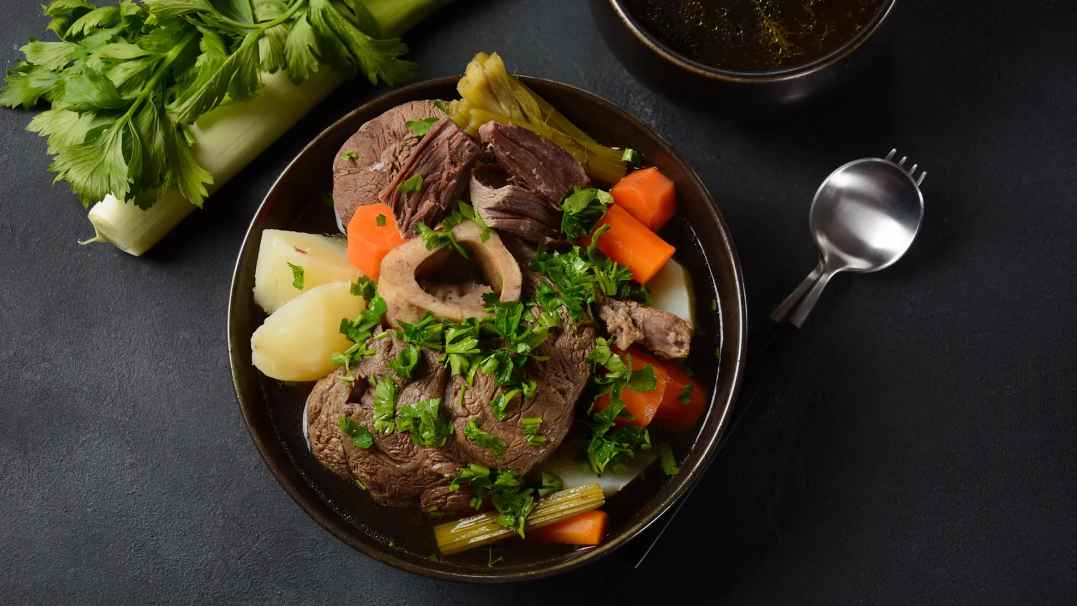
At its core, pot-au-feu is a masterclass in simplicity. The dish revolves around slow-cooked meat—typically cuts of beef like shank or brisket, chosen for their ability to tenderize and infuse depth into the broth—simmered gently with a medley of root vegetables. Parsnips, turnips, and celery form the vegetable base, their earthy sweetness melding with the meat’s richness. Often, cooks add aromatic leeks or onions, their subtle pungency balancing the dish’s heartiness.


What elevates pot-au-feu from a simple stew to a culinary institution is its careful attention to texture and flavor. Many recipes call for marrow bones or oxtail, simmered alongside the meat and vegetables. These additions work magic: marrow melts into the broth, lending a velvety thickness, while oxtail releases collagen, transforming the liquid into a savory, deeply flavored base that coats each ingredient.


The beauty of pot-au-feu lies in its patience. Cooked over low heat for hours, the process allows the meat to become fork-tender, the vegetables to soften without losing their shape, and the flavors to harmonize into something far greater than the sum of their parts. It is a dish that respects tradition—passed down through generations, with each family adding subtle tweaks, yet remaining true to its essence.


Beyond its taste, pot-au-feu embodies French conviviality. Served in family gatherings, village festivals, or quiet weeknight dinners, it brings people together. The broth, often ladled first as a starter, warms the soul, while the tender meat and vegetables, sometimes accompanied by Dijon mustard or cornichons, offer a satisfying main course.


In an era of fast-paced cuisine, pot-au-feu endures as a reminder of the power of slow cooking and quality ingredients. It is more than a recipe; it is a testament to France’s culinary heritage, a dish that continues to thrive, beloved by both generations past and present for its ability to comfort, nourish, and celebrate the art of simple, intentional cooking.
Latest Stories
Industry News1 minute readG20 finance ministers and central bank governors have issued a joint communiqué, committing to enhance international policy cooperation and sending a signal in support of multilateralism. They emphasized the need to end global trade conflicts soon and called on the U.S. and Europe to reach a fair agreement on tariffs.
Animal Information1 minute readIn the arid deserts of South America, an endangered pig-like species known locally as "taguá" (Chacoan peccary, Catagonus wagneri) is fighting for survival. These remarkable creatures have adapted uniquely to thrive in harsh desert conditions, with their diet centered on spiky cacti—an unusual food source that few other animals can exploit.
Animal Information1 minute readBeneath the waters of the Missouri River basin resides a creature that stands as a living testament to Earth's ancient past—the pallid sturgeon (Scaphirhynchus albus). Dubbed a "living fossil," this substantial fish traces its lineage back to the age of dinosaurs, persisting through tens of millions of years of geological shifts and biological evolution in these river systems.
Industry News1 minute readMicrosoft and the U.S. Idaho National Laboratory (INL) announced a partnership on July 16 to use AI in new nuclear plant licensing, aiming to drastically shorten the process. The move responds to Trump’s executive order to cut nuclear licensing to 18 months, addressing growing energy demands from AI data centers.
Industry News1 minute readThe U.S. Federal Communications Commission (FCC) announced plans on July 16 to introduce new rules, fully prohibiting any submarine communication cables containing Chinese technology or equipment from connecting to U.S. networks.
Feline News2 minute readThe Himalayan cat, a captivating fusion of Persian and Siamese genetics, has enchanted cat enthusiasts worldwide with its striking blue eyes and luxurious coat. Bred since the 1930s, this breed gained official recognition in 1957 when breeders Ben and Ann Borrett debuted their specimens at a cat show, setting standards adopted by organizations like the CFA . Nicknamed "Himmies," these cats balance elegance with affectionate charm, though their popularity demands careful attention to health and grooming.
Feline News1 minute read[Nashville, July 18th] —— The Tennessee Rex, a uniquely American cat breed celebrated for its naturally curly fur, is gaining recognition among pet enthusiasts worldwide. This distinctive feline traces its origins to a chance discovery in 2004 in Tennessee, where a stray cat gave birth to a litter containing a kitten with unusually soft, curly hair—a natural genetic mutation that marked the breed's beginning.