Gymnothorax pseudothyrsoideus: The Elusive Yellow-Lined Moray Eel of Tropical Reefs


Marine Biology
Gymnothorax pseudothyrsoideus: The Elusive Yellow-Lined Moray Eel of Tropical Reefs

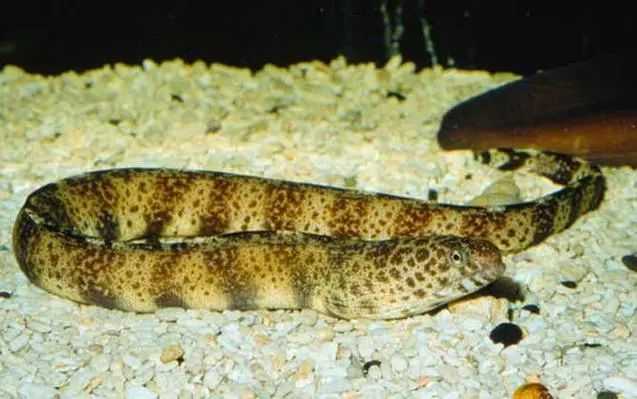
Gymnothorax pseudothyrsoideus, commonly known as the yellow-lined moray eel or close-netted moray, is a fascinating species within the Muraenidae family, inhabiting the coral reefs and rocky crevices of the Indo-Pacific region. Belonging to the genus Gymnothorax (nude-breasted morays), this eel is characterized by its elongated, serpentine body and distinct coloration, making it a striking yet cryptic inhabitant of the underwater world.


Reaching lengths of up to 1.5 meters, the yellow-lined moray eel boasts a cylindrical body covered in a smooth, scaleless skin. Its base color ranges from light brown to gray, adorned with a dense network of narrow, yellowish lines or spots that create a mesh-like pattern, giving it the appearance of a living tapestry. This intricate camouflage allows it to blend seamlessly with the coral and rock formations, where it spends most of its day coiled in crevices, emerging at night to hunt. Equipped with sharp teeth and a powerful jaw, it preys on small fish, crustaceans, and cephalopods, using its keen sense of smell to locate prey in the dark.


Despite its intimidating appearance, Gymnothorax pseudothyrsoideus is generally shy and non-aggressive toward humans unless provoked. It plays a vital role in marine ecosystems as a top predator, controlling populations of its prey and maintaining the balance of reef biodiversity. However, like many moray eel species, it faces threats from overfishing for the aquarium trade and seafood markets, as well as habitat degradation from coral bleaching and pollution. In some regions, it is considered a delicacy, though its flesh may carry ciguatoxin, a naturally occurring toxin that poses risks to human consumers. As a symbol of the hidden complexity of reef ecosystems, the yellow-lined moray eel reminds us of the importance of preserving these fragile environments and the diverse species that call them home.

Latest Stories
Feline News2 minute readThe Kurilian Bobtail Longhair, a captivating breed hailing from Russia’s Sakhalin Island and the Kuril Archipelago, has emerged as a fascinating subject in the international feline community. With its distinctive bobbed tail and striking appearance, this natural breed is garnering recognition for its unique history, robust health, and affectionate demeanor.
Life News2 minute readOn the streets and alleys of Italy, gelato is more than just a refreshing dessert; it is a vivid embodiment of the country's culinary philosophy. Compared to the common American ice cream, this Italian classic has become an irreplaceable culinary symbol in the hearts of food lovers worldwide, thanks to its unique craftsmanship and texture.
Feline News2 minute readIn 1982, a bald kitten with an unusual genetic mutation emerged in a barn on an Oregon cherry farm, marking the accidental birth of one of the world’s most distinctive feline breeds—the LaPerm. This curly-coated wonder, named for its "wavy" or "rippled" fur, has since captivated cat lovers globally with its unique appearance and playful personality .
Feline News1 minute readThe Brazilian Shorthair, a distinctive feline breed native to Brazil, has captivated cat enthusiasts with its charming personality and adaptable nature. Originating from the country's street cats, the breed was formally recognized in the 1980s after decades of selective breeding to preserve its unique traits.
Feline News1 minute readIn recent days, a cat named Marguerite has quietly risen to fame in a suburban community. The 3-year-old orange-and-white feline, once a street stray, has now become a "heartwarming bond" connecting neighbors.
Feline News2 minute readOriginating from the city of Rostov-on-Don in Russia, the Donskoy cat, also known as the Don Sphynx, has captivated feline enthusiasts worldwide with its unique appearance and affectionate demeanor. First discovered in 1987 when Professor Elena Kovaleva rescued a hairless kitten named Varvara, the breed emerged from a natural genetic mutation that resulted in a lack of fur. Varvara’s subsequent litters produced both haired and hairless kittens, leading breeder Irina Nemykina to develop the Donskoy through selective breeding with European Shorthairs. Recognized by The International Cat Associat
Feline News2 minute readThe Nebelung, a captivating feline often mistaken for the Russian Blue, is a rare breed celebrated for its striking appearance and gentle demeanor. Originating in the U.S. during the 1980s, this breed emerged from intentional crossbreeding to replicate the elegance of Victorian-era long-haired blue cats. Named after the German word "nebel" (meaning "mist"), the Nebelung’s silvery-tipped blue-gray coat evokes a misty aura, while its green or yellow-green eyes add to its enigmatic charm.