The Platypus: Australia’s Bizarre 'Duck-Billed' Mammal, a Living Evolutionary Enigma


Animal Information
The Platypus: Australia’s Bizarre 'Duck-Billed' Mammal, a Living Evolutionary Enigma

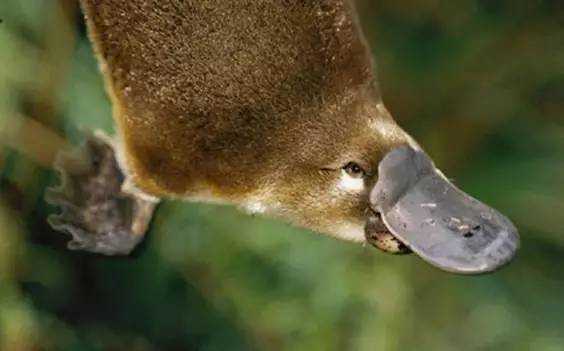
Native to the freshwater rivers of eastern Australia, the platypus (Ornithorhynchus anatinus) stands as one of the world’s most extraordinary creatures—an odd blend of mammalian, reptilian, and avian traits that baffled scientists when first discovered. Often called a "living fossil," this semiaquatic mammal lays eggs, produces milk, and sports a duck-like bill, making it a unique representative of the ancient monotreme order.


A Hodgepodge of Adaptations: Form and Function

The platypus’s most iconic feature is its rubbery, duck-shaped bill, which is equipped with electroreceptors to detect prey (shrimp, worms, and insects) in murky water. Its body is covered in dense, waterproof fur (ranging from dark brown to light tan), with webbed feet that fold back on land to reveal clawed digits for digging. Males possess venomous spurs on their hind legs, a rare trait among mammals, used in territorial disputes. Growing up to 50 centimeters in length and weighing 1–2 kilograms, it has a flat, beaver-like tail that stores fat and aids in swimming. Despite its mammalian classification, it lacks teats; instead, milk seeps through skin glands, a primitive trait linking it to reptilian ancestors.
 
 
Source: Images from the Internet, if there is any infringement, please contact the removal of


Nocturnal Lifestyle and Conservation Challenges

Primarily nocturnal, the platypus spends its days in burrows along riverbanks and forages at night, using its bill to sweep the riverbed for food. It is a solitary creature, except during the breeding season, when females lay 1–2 leathery eggs and incubate them in their burrows. Once thought common, the platypus is now listed as "Vulnerable" in parts of its range, facing threats from habitat destruction, pollution, droughts, and climate change. River degradation from agriculture and urbanization disrupts its feeding grounds, while dams alter water flow and fragment populations. Conservation groups in Australia, such as the Platypus Conservation Initiative, work to restore river health and raise awareness about this unique mammal’s ecological needs.

A Scientific Marvel and Cultural Icon

The platypus has long fascinated scientists, challenging traditional classifications of mammals. Its genome, a mix of mammalian, reptilian, and avian genes, provides insights into early vertebrate evolution. In Australian Aboriginal culture, it features in Dreamtime stories, symbolizing the duality of water and land. Today, it serves as an unofficial mascot for Australia’s biodiversity, appearing on coins and tourism campaigns. Yet its survival remains precarious—reminding humanity that even the most evolutionarily resilient species depend on intact ecosystems.


As a living link to Earth’s distant past, the platypus embodies nature’s capacity to defy expectation. Its strange form, a product of millions of years of adaptation, stands as a testament to the wonder and fragility of life—urging global efforts to protect the waterways it calls home before this evolutionary enigma becomes a relic of the past.
Latest Stories
Industry News1 minute readG20 finance ministers and central bank governors have issued a joint communiqué, committing to enhance international policy cooperation and sending a signal in support of multilateralism. They emphasized the need to end global trade conflicts soon and called on the U.S. and Europe to reach a fair agreement on tariffs.
Animal Information1 minute readIn the arid deserts of South America, an endangered pig-like species known locally as "taguá" (Chacoan peccary, Catagonus wagneri) is fighting for survival. These remarkable creatures have adapted uniquely to thrive in harsh desert conditions, with their diet centered on spiky cacti—an unusual food source that few other animals can exploit.
Animal Information1 minute readBeneath the waters of the Missouri River basin resides a creature that stands as a living testament to Earth's ancient past—the pallid sturgeon (Scaphirhynchus albus). Dubbed a "living fossil," this substantial fish traces its lineage back to the age of dinosaurs, persisting through tens of millions of years of geological shifts and biological evolution in these river systems.
Industry News1 minute readMicrosoft and the U.S. Idaho National Laboratory (INL) announced a partnership on July 16 to use AI in new nuclear plant licensing, aiming to drastically shorten the process. The move responds to Trump’s executive order to cut nuclear licensing to 18 months, addressing growing energy demands from AI data centers.
Industry News1 minute readThe U.S. Federal Communications Commission (FCC) announced plans on July 16 to introduce new rules, fully prohibiting any submarine communication cables containing Chinese technology or equipment from connecting to U.S. networks.
Feline News2 minute readThe Himalayan cat, a captivating fusion of Persian and Siamese genetics, has enchanted cat enthusiasts worldwide with its striking blue eyes and luxurious coat. Bred since the 1930s, this breed gained official recognition in 1957 when breeders Ben and Ann Borrett debuted their specimens at a cat show, setting standards adopted by organizations like the CFA . Nicknamed "Himmies," these cats balance elegance with affectionate charm, though their popularity demands careful attention to health and grooming.
Feline News1 minute read[Nashville, July 18th] —— The Tennessee Rex, a uniquely American cat breed celebrated for its naturally curly fur, is gaining recognition among pet enthusiasts worldwide. This distinctive feline traces its origins to a chance discovery in 2004 in Tennessee, where a stray cat gave birth to a litter containing a kitten with unusually soft, curly hair—a natural genetic mutation that marked the breed's beginning.