The Gynandromorphic Northern Cardinal: A Rare Avian Wonder with Split Sexual Identity


Animal Information
The Gynandromorphic Northern Cardinal: A Rare Avian Wonder with Split Sexual Identity

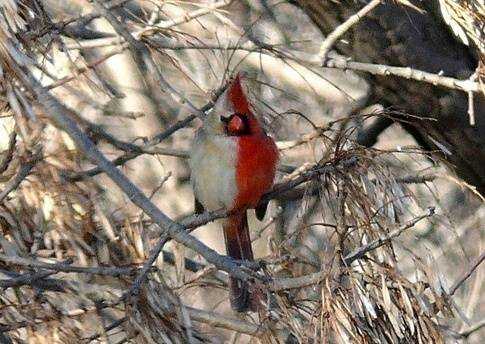
The northern cardinal (Cardinalis cardinalis) is renowned for its striking sexual dimorphism—males dazzle in vibrant red plumage, while females sport subtle brown tones. Yet occasionally, a rare phenomenon occurs: gynandromorphism, where an individual displays both male and female traits. These "split-sex" cardinals captivate scientists, offering unique insights into avian sex determination and development.


Feathers of Two Worlds: Physical Characteristics

In a gynandromorphic cardinal, one side of the body may exhibit classic male traits—bright red feathers, a bold black face mask—while the opposite side shows female characteristics: muted brown plumage and a lighter mask. This bilateral division is often stark, with the red-and-brown boundary running down the center of the body. Some individuals may also display mixed secondary sex traits, such as a male-sized beak on one side and a female’s on the other. These rare birds result from a genetic anomaly during early development, where cells carry either ZZ (male) or ZW (female) chromosomes, creating a living mosaic of sexual identities.

Rarity, Behavior, and Scientific Significance

Gynandromorphs are extremely rare in birds, with only a handful of northern cardinal cases documented. Observations show these individuals often behave ambiguously: some attempt to sing like males but lack typical territorial aggression, while others may display nesting behaviors without a mate. Their fertility remains unclear, though most are likely sterile due to reproductive system abnormalities. Scientists value these birds as natural experiments, as they challenge our understanding of how sex hormones and genetic signals shape physical and behavioral traits in birds.


While gynandromorphic cardinals face survival challenges—their unique appearance may draw predators or confuse potential mates—they serve as living testaments to nature’s capacity for genetic variation. Each split-feathered individual reminds us that in the avian world, the boundaries of sex are sometimes more fluid than we imagine—offering a rare glimpse into the complex interplay of genes, development, and identity.
Latest Stories
Feline News2 minute readThe Kurilian Bobtail Longhair, a captivating breed hailing from Russia’s Sakhalin Island and the Kuril Archipelago, has emerged as a fascinating subject in the international feline community. With its distinctive bobbed tail and striking appearance, this natural breed is garnering recognition for its unique history, robust health, and affectionate demeanor.
Life News2 minute readOn the streets and alleys of Italy, gelato is more than just a refreshing dessert; it is a vivid embodiment of the country's culinary philosophy. Compared to the common American ice cream, this Italian classic has become an irreplaceable culinary symbol in the hearts of food lovers worldwide, thanks to its unique craftsmanship and texture.
Feline News2 minute readIn 1982, a bald kitten with an unusual genetic mutation emerged in a barn on an Oregon cherry farm, marking the accidental birth of one of the world’s most distinctive feline breeds—the LaPerm. This curly-coated wonder, named for its "wavy" or "rippled" fur, has since captivated cat lovers globally with its unique appearance and playful personality .
Feline News1 minute readThe Brazilian Shorthair, a distinctive feline breed native to Brazil, has captivated cat enthusiasts with its charming personality and adaptable nature. Originating from the country's street cats, the breed was formally recognized in the 1980s after decades of selective breeding to preserve its unique traits.
Feline News1 minute readIn recent days, a cat named Marguerite has quietly risen to fame in a suburban community. The 3-year-old orange-and-white feline, once a street stray, has now become a "heartwarming bond" connecting neighbors.
Feline News2 minute readOriginating from the city of Rostov-on-Don in Russia, the Donskoy cat, also known as the Don Sphynx, has captivated feline enthusiasts worldwide with its unique appearance and affectionate demeanor. First discovered in 1987 when Professor Elena Kovaleva rescued a hairless kitten named Varvara, the breed emerged from a natural genetic mutation that resulted in a lack of fur. Varvara’s subsequent litters produced both haired and hairless kittens, leading breeder Irina Nemykina to develop the Donskoy through selective breeding with European Shorthairs. Recognized by The International Cat Associat
Feline News2 minute readThe Nebelung, a captivating feline often mistaken for the Russian Blue, is a rare breed celebrated for its striking appearance and gentle demeanor. Originating in the U.S. during the 1980s, this breed emerged from intentional crossbreeding to replicate the elegance of Victorian-era long-haired blue cats. Named after the German word "nebel" (meaning "mist"), the Nebelung’s silvery-tipped blue-gray coat evokes a misty aura, while its green or yellow-green eyes add to its enigmatic charm.