The Glasswing Butterfly: Nature’s Transparent Wonder with a Survival Strategy


Animal Information
The Glasswing Butterfly: Nature’s Transparent Wonder with a Survival Strategy

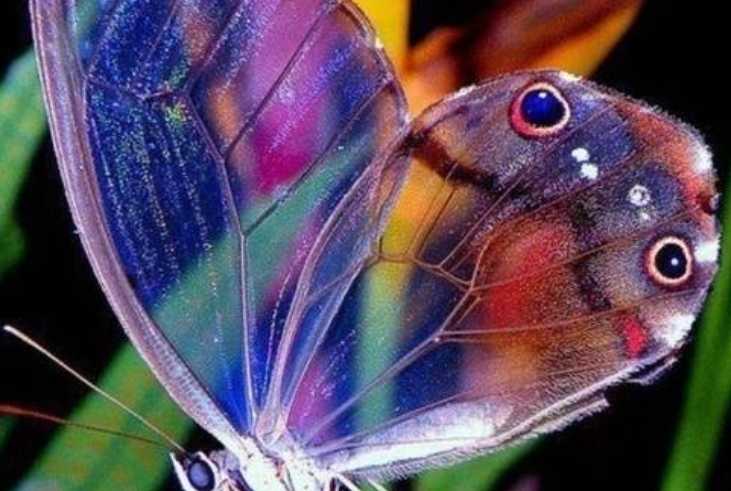
Native to the tropical rainforests of Central and South America, the glasswing butterfly (Greta oto) has captivated scientists and nature enthusiasts with its most iconic feature—wings so transparent they appear nearly invisible in flight. This remarkable adaptation allows it to vanish mid-air, making it a living example of nature’s evolutionary ingenuity.

Transparency as Camouflage: Physical Adaptations

The glasswing’s wings lack the colored scales found in most butterflies, instead featuring a membrane of clear chitin with tiny, irregular nanostructures that scatter light minimally. This creates a glass-like effect, allowing the butterfly to blend into sunlit foliage or disappear against the sky. Bordered by dark, reddish-brown veins, the wings span 5–6 cm, with the body sporting a fuzzy, brownish hue. Unlike other butterflies, it relies on transparency rather than bright colors for defense, a strategy that thrives in its dense forest habitat where predators like birds struggle to spot moving glassy wings.

Life Cycle and Ecological Role

Caterpillars of the glasswing butterfly feed on toxic plants in the nightshade family, absorbing compounds that make them unpalatable to predators—a trait retained in adulthood. Adults nectar on flowers like Lantana, aiding in pollination while using their transparent wings to navigate between blooms undetected. They are most active during the day, fluttering slowly to minimize wing movement and maintain invisibility. Though not currently endangered, their rainforest habitat faces threats from deforestation and climate change, which could disrupt their delicate life cycle.

Scientific Inspiration and Cultural Significance

The glasswing’s transparent wings have inspired materials science, with researchers studying their nanostructures to develop anti-reflective coatings for solar panels and electronics. In Central American folklore, the butterfly is often seen as a symbol of transformation and adaptability. Today, it serves as a flagship species for rainforest conservation, reminding humanity of the countless unique creatures that rely on intact ecosystems for survival—creatures whose beauty lies not in opulence, but in the elegant simplicity of evolutionary design.

Latest Stories
Feline News2 minute readThe Kurilian Bobtail Longhair, a captivating breed hailing from Russia’s Sakhalin Island and the Kuril Archipelago, has emerged as a fascinating subject in the international feline community. With its distinctive bobbed tail and striking appearance, this natural breed is garnering recognition for its unique history, robust health, and affectionate demeanor.
Life News2 minute readOn the streets and alleys of Italy, gelato is more than just a refreshing dessert; it is a vivid embodiment of the country's culinary philosophy. Compared to the common American ice cream, this Italian classic has become an irreplaceable culinary symbol in the hearts of food lovers worldwide, thanks to its unique craftsmanship and texture.
Feline News2 minute readIn 1982, a bald kitten with an unusual genetic mutation emerged in a barn on an Oregon cherry farm, marking the accidental birth of one of the world’s most distinctive feline breeds—the LaPerm. This curly-coated wonder, named for its "wavy" or "rippled" fur, has since captivated cat lovers globally with its unique appearance and playful personality .
Feline News1 minute readThe Brazilian Shorthair, a distinctive feline breed native to Brazil, has captivated cat enthusiasts with its charming personality and adaptable nature. Originating from the country's street cats, the breed was formally recognized in the 1980s after decades of selective breeding to preserve its unique traits.
Feline News1 minute readIn recent days, a cat named Marguerite has quietly risen to fame in a suburban community. The 3-year-old orange-and-white feline, once a street stray, has now become a "heartwarming bond" connecting neighbors.
Feline News2 minute readOriginating from the city of Rostov-on-Don in Russia, the Donskoy cat, also known as the Don Sphynx, has captivated feline enthusiasts worldwide with its unique appearance and affectionate demeanor. First discovered in 1987 when Professor Elena Kovaleva rescued a hairless kitten named Varvara, the breed emerged from a natural genetic mutation that resulted in a lack of fur. Varvara’s subsequent litters produced both haired and hairless kittens, leading breeder Irina Nemykina to develop the Donskoy through selective breeding with European Shorthairs. Recognized by The International Cat Associat
Feline News2 minute readThe Nebelung, a captivating feline often mistaken for the Russian Blue, is a rare breed celebrated for its striking appearance and gentle demeanor. Originating in the U.S. during the 1980s, this breed emerged from intentional crossbreeding to replicate the elegance of Victorian-era long-haired blue cats. Named after the German word "nebel" (meaning "mist"), the Nebelung’s silvery-tipped blue-gray coat evokes a misty aura, while its green or yellow-green eyes add to its enigmatic charm.