The Gerenuk: Africa’s Graceful 'Giraffe-Necked' Antelope


Animal Information
The Gerenuk: Africa’s Graceful 'Giraffe-Necked' Antelope

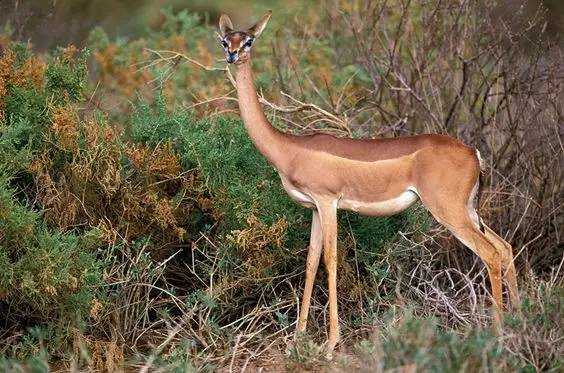
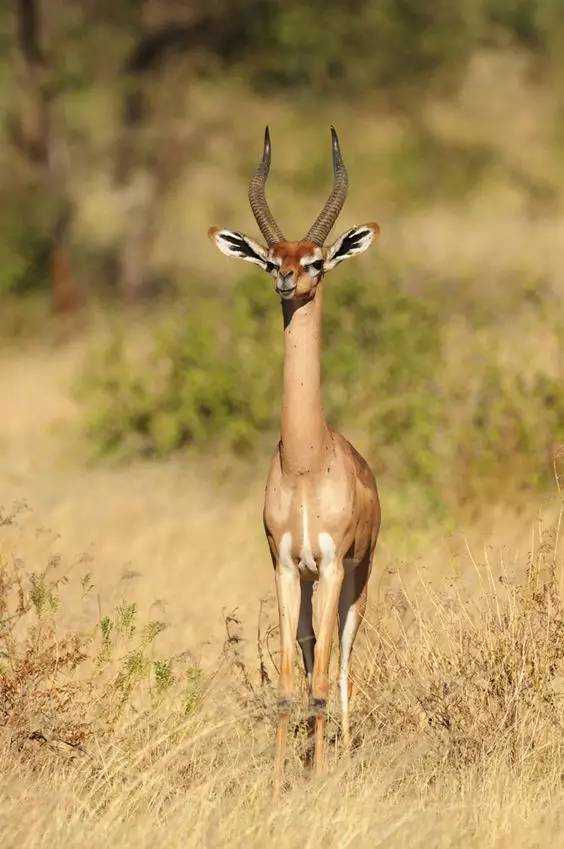
Native to the arid savannas and thornbush plains of East Africa, the gerenuk (Litocranius walleri), often called the "giraffe-necked antelope," stands out with its elongated neck, slender legs, and unique feeding behavior. This medium-sized antelope, found in countries like Kenya, Somalia, and Ethiopia, has evolved extraordinary adaptations to thrive in its harsh, resource-scarce habitat.


A Neck Built for Height: Physical Traits and Adaptations

The gerenuk’s most striking feature is its disproportionately long neck, which can reach up to 60 centimeters—allowing it to browse on leaves, shoots, and flowers from trees and shrubs that other antelopes cannot access. Standing 80–100 centimeters at the shoulder, it has a lean body, large eyes, and small, backward-curving horns in males. Its skin ranges from light tan to reddish-brown, blending with dry grasses, while a white underbelly reflects sunlight. When feeding, it rears up on its hind legs, using its prehensile lips to pluck foliage—a behavior resembling a miniature giraffe.
Source: Images from the Internet, if there is any infringement, please contact the removal of


Survival in Arid Lands and Social Behavior

Highly adapted to arid environments, the gerenuk can go long periods without drinking, obtaining moisture from the plants it eats. It lives in small family groups or pairs, with males defending territories through scent marking and displays. Despite its delicate appearance, it is agile and can sprint to evade predators like lions, cheetahs, and hyenas. Females give birth to a single calf, which hides in vegetation for the first few weeks of life.

Conservation Challenges and Ecological Role

Listed as "Near Threatened" by the IUCN, the gerenuk faces threats from habitat loss due to agriculture, livestock grazing, and droughts exacerbated by climate change. Illegal hunting for meat and trophies also impacts populations. As a specialized browser, it plays a crucial role in seed dispersal and shaping vegetation structure in its ecosystem. Conservation projects in East Africa focus on protecting its habitat and promoting coexistence with local communities, highlighting the gerenuk’s unique place in Africa’s diverse wildlife tapestry.


The gerenuk’s elegant form and remarkable adaptations serve as a testament to nature’s ingenuity in arid landscapes. Its ability to thrive where resources are scarce reminds us of the intricate balance between species and their environments, making it a symbol of resilience in the face of ecological challenges.
Latest Stories
Feline News2 minute readThe Kurilian Bobtail Longhair, a captivating breed hailing from Russia’s Sakhalin Island and the Kuril Archipelago, has emerged as a fascinating subject in the international feline community. With its distinctive bobbed tail and striking appearance, this natural breed is garnering recognition for its unique history, robust health, and affectionate demeanor.
Life News2 minute readOn the streets and alleys of Italy, gelato is more than just a refreshing dessert; it is a vivid embodiment of the country's culinary philosophy. Compared to the common American ice cream, this Italian classic has become an irreplaceable culinary symbol in the hearts of food lovers worldwide, thanks to its unique craftsmanship and texture.
Feline News2 minute readIn 1982, a bald kitten with an unusual genetic mutation emerged in a barn on an Oregon cherry farm, marking the accidental birth of one of the world’s most distinctive feline breeds—the LaPerm. This curly-coated wonder, named for its "wavy" or "rippled" fur, has since captivated cat lovers globally with its unique appearance and playful personality .
Feline News1 minute readThe Brazilian Shorthair, a distinctive feline breed native to Brazil, has captivated cat enthusiasts with its charming personality and adaptable nature. Originating from the country's street cats, the breed was formally recognized in the 1980s after decades of selective breeding to preserve its unique traits.
Feline News1 minute readIn recent days, a cat named Marguerite has quietly risen to fame in a suburban community. The 3-year-old orange-and-white feline, once a street stray, has now become a "heartwarming bond" connecting neighbors.
Feline News2 minute readOriginating from the city of Rostov-on-Don in Russia, the Donskoy cat, also known as the Don Sphynx, has captivated feline enthusiasts worldwide with its unique appearance and affectionate demeanor. First discovered in 1987 when Professor Elena Kovaleva rescued a hairless kitten named Varvara, the breed emerged from a natural genetic mutation that resulted in a lack of fur. Varvara’s subsequent litters produced both haired and hairless kittens, leading breeder Irina Nemykina to develop the Donskoy through selective breeding with European Shorthairs. Recognized by The International Cat Associat
Feline News2 minute readThe Nebelung, a captivating feline often mistaken for the Russian Blue, is a rare breed celebrated for its striking appearance and gentle demeanor. Originating in the U.S. during the 1980s, this breed emerged from intentional crossbreeding to replicate the elegance of Victorian-era long-haired blue cats. Named after the German word "nebel" (meaning "mist"), the Nebelung’s silvery-tipped blue-gray coat evokes a misty aura, while its green or yellow-green eyes add to its enigmatic charm.