The Enigmatic Datura: A Floral Paradox of Beauty and Danger


Plant Information
The Enigmatic Datura: A Floral Paradox of Beauty and Danger

The Datura, commonly known as Jimsonweed or Angel's Trumpet, is a genus of flowering plants that has captivated and cautioned humanity for centuries. Native to the Americas, these annual or perennial herbs now thrive in temperate and tropical regions worldwide, blending striking ornamental appeal with inherent toxicity.


A Mesmerizing Display of Botanical Grandeur

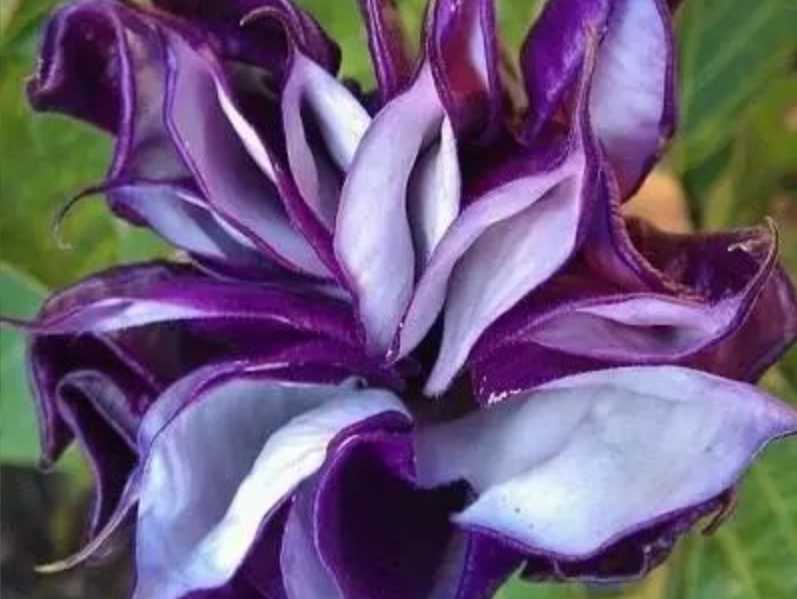
Datura species are renowned for their large, pendulous flowers, which range from pure white to deep purple or pink. The trumpet-shaped blooms, often 10–20 centimeters long, emit a sweet, intoxicating fragrance at night, attracting moths and other nocturnal pollinators. Their velvety petals may be smooth or ribbed, with some varieties featuring intricate radial patterns. The plant’s foliage is equally dramatic: broad, ovate leaves with toothed edges and a slightly sticky texture, often tinged with purple veins. Following blooming, Datura produces spiny seed capsules that burst open to release hundreds of dark seeds, symbolizing both fertility and the plant’s hazardous nature.

Cultural Significance and Lethal Potency

Throughout history, Datura has played a complex role in human culture. Indigenous peoples used its psychoactive alkaloids—including atropine, scopolamine, and hyoscyamine—in shamanic rituals, believing the plant facilitated communication with the spirit world. However, these compounds are highly toxic, causing delirium, hallucinations, and even death if ingested. In traditional medicine, Datura was used externally for pain relief but remains strictly regulated due to its risks. Today, the plant’s allure persists in horticulture, where it is grown for its dramatic flowers in moon gardens or wildflower borders. Yet gardeners are warned to handle it with care, as all parts of the plant are poisonous to humans and animals. As a symbol of beauty intertwined with danger, the Datura stands as a botanical reminder of nature’s dual-edged sword.
Latest Stories
Feline News2 minute readThe Kurilian Bobtail Longhair, a captivating breed hailing from Russia’s Sakhalin Island and the Kuril Archipelago, has emerged as a fascinating subject in the international feline community. With its distinctive bobbed tail and striking appearance, this natural breed is garnering recognition for its unique history, robust health, and affectionate demeanor.
Life News2 minute readOn the streets and alleys of Italy, gelato is more than just a refreshing dessert; it is a vivid embodiment of the country's culinary philosophy. Compared to the common American ice cream, this Italian classic has become an irreplaceable culinary symbol in the hearts of food lovers worldwide, thanks to its unique craftsmanship and texture.
Feline News2 minute readIn 1982, a bald kitten with an unusual genetic mutation emerged in a barn on an Oregon cherry farm, marking the accidental birth of one of the world’s most distinctive feline breeds—the LaPerm. This curly-coated wonder, named for its "wavy" or "rippled" fur, has since captivated cat lovers globally with its unique appearance and playful personality .
Feline News1 minute readThe Brazilian Shorthair, a distinctive feline breed native to Brazil, has captivated cat enthusiasts with its charming personality and adaptable nature. Originating from the country's street cats, the breed was formally recognized in the 1980s after decades of selective breeding to preserve its unique traits.
Feline News1 minute readIn recent days, a cat named Marguerite has quietly risen to fame in a suburban community. The 3-year-old orange-and-white feline, once a street stray, has now become a "heartwarming bond" connecting neighbors.
Feline News2 minute readOriginating from the city of Rostov-on-Don in Russia, the Donskoy cat, also known as the Don Sphynx, has captivated feline enthusiasts worldwide with its unique appearance and affectionate demeanor. First discovered in 1987 when Professor Elena Kovaleva rescued a hairless kitten named Varvara, the breed emerged from a natural genetic mutation that resulted in a lack of fur. Varvara’s subsequent litters produced both haired and hairless kittens, leading breeder Irina Nemykina to develop the Donskoy through selective breeding with European Shorthairs. Recognized by The International Cat Associat
Feline News2 minute readThe Nebelung, a captivating feline often mistaken for the Russian Blue, is a rare breed celebrated for its striking appearance and gentle demeanor. Originating in the U.S. during the 1980s, this breed emerged from intentional crossbreeding to replicate the elegance of Victorian-era long-haired blue cats. Named after the German word "nebel" (meaning "mist"), the Nebelung’s silvery-tipped blue-gray coat evokes a misty aura, while its green or yellow-green eyes add to its enigmatic charm.