Pelates sexlineatus: The Six - Striped Grunter of Australian Waters


Marine Biology
Pelates sexlineatus: The Six - Striped Grunter of Australian Waters

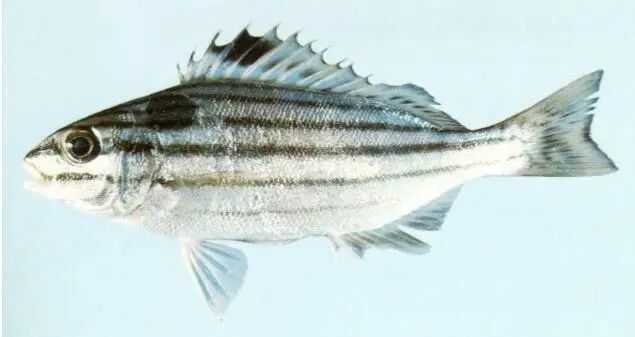
Pelates sexlineatus, commonly referred to as the six - striped grunter, is a fascinating species within the Terapontidae family. Endemic to the eastern Australian waters, this fish is celebrated for its distinct appearance and ecological role in the region's coastal and estuarine ecosystems.

Growing up to 20 cm in length, the six - striped grunter showcases a streamlined, laterally compressed body. Its coloration ranges from brownish to silver - grey, with six prominent dark stripes running along its body. These stripes not only add to its visual allure but also serve as effective camouflage among seagrass beds and rocky substrates. It has a small mouth and a coarsely serrated preopercular margin. The dorsal fin is divided into two parts: a spiny anterior section that provides protection and a soft - rayed posterior part that aids in maneuvering.


Inhabiting estuaries and coastal reefs at depths ranging from 1 m to 30 m, the six - striped grunter forms schools, often congregating over seagrass beds near estuary mouths. Juveniles are particularly drawn to seagrass beds, which offer both shelter and an abundant supply of food. This species is primarily carnivorous, with a diet consisting mostly of crustaceans. By preying on these small invertebrates, it helps regulate their populations and maintain the balance of the ecosystem.


While it holds only minor commercial importance in New South Wales, being caught in the estuary general fishery and sometimes discarded as bycatch in prawn trawl and ocean trawl fisheries, it is also targeted by recreational anglers. However, like many estuarine - dependent species, it faces threats from habitat degradation, including seagrass loss due to pollution and coastal development. Conservation efforts aimed at protecting estuarine habitats and promoting sustainable fishing practices are crucial to ensure the long - term survival of this unique six - striped grunter and the integrity of the ecosystems it inhabits.

Latest Stories
Feline News2 minute readThe Kurilian Bobtail Longhair, a captivating breed hailing from Russia’s Sakhalin Island and the Kuril Archipelago, has emerged as a fascinating subject in the international feline community. With its distinctive bobbed tail and striking appearance, this natural breed is garnering recognition for its unique history, robust health, and affectionate demeanor.
Life News2 minute readOn the streets and alleys of Italy, gelato is more than just a refreshing dessert; it is a vivid embodiment of the country's culinary philosophy. Compared to the common American ice cream, this Italian classic has become an irreplaceable culinary symbol in the hearts of food lovers worldwide, thanks to its unique craftsmanship and texture.
Feline News2 minute readIn 1982, a bald kitten with an unusual genetic mutation emerged in a barn on an Oregon cherry farm, marking the accidental birth of one of the world’s most distinctive feline breeds—the LaPerm. This curly-coated wonder, named for its "wavy" or "rippled" fur, has since captivated cat lovers globally with its unique appearance and playful personality .
Feline News1 minute readThe Brazilian Shorthair, a distinctive feline breed native to Brazil, has captivated cat enthusiasts with its charming personality and adaptable nature. Originating from the country's street cats, the breed was formally recognized in the 1980s after decades of selective breeding to preserve its unique traits.
Feline News1 minute readIn recent days, a cat named Marguerite has quietly risen to fame in a suburban community. The 3-year-old orange-and-white feline, once a street stray, has now become a "heartwarming bond" connecting neighbors.
Feline News2 minute readOriginating from the city of Rostov-on-Don in Russia, the Donskoy cat, also known as the Don Sphynx, has captivated feline enthusiasts worldwide with its unique appearance and affectionate demeanor. First discovered in 1987 when Professor Elena Kovaleva rescued a hairless kitten named Varvara, the breed emerged from a natural genetic mutation that resulted in a lack of fur. Varvara’s subsequent litters produced both haired and hairless kittens, leading breeder Irina Nemykina to develop the Donskoy through selective breeding with European Shorthairs. Recognized by The International Cat Associat
Feline News2 minute readThe Nebelung, a captivating feline often mistaken for the Russian Blue, is a rare breed celebrated for its striking appearance and gentle demeanor. Originating in the U.S. during the 1980s, this breed emerged from intentional crossbreeding to replicate the elegance of Victorian-era long-haired blue cats. Named after the German word "nebel" (meaning "mist"), the Nebelung’s silvery-tipped blue-gray coat evokes a misty aura, while its green or yellow-green eyes add to its enigmatic charm.