Ditrema temmincki: The Elusive "Sea Crucian" of the Yellow Sea


Marine Biology
Ditrema temmincki: The Elusive "Sea Crucian" of the Yellow Sea

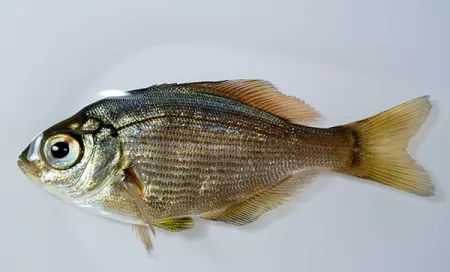
Ditrema temmincki, commonly known as the sea knifefish or by regional nicknames, is a small temperate marine fish belonging to the Embiotocidae family. Inhabiting the coastal waters of the Yellow Sea, this species is celebrated for its unique appearance and selective feeding habits, drawing comparisons to freshwater crucian carp due to its gentle feeding behavior and streamlined form.

Growing to approximately 20 centimeters in length, the sea crucian features a laterally compressed, oval body with a grayish-brown to dark brown coloration, often adorned with subtle darker speckles. Its most distinctive markings include a small black spot located below the corner of the mouth and dark-colored fins that contrast with its lighter body. The species’ name stems from its delicate, crucian-like feeding manner: small, cone-shaped teeth allow it to selectively consume soft-bodied prey, a trait that sets it apart from more aggressive marine feeders.


A non-schooling species, Ditrema temmincki prefers solitary or small-group living in shallow, nutrient-rich environments such as artificial reefs and kelp farming areas, where it forages for mollusks, water fleas, and other aquatic invertebrates. Its habitat preference makes it challenging to catch from shore, requiring anglers to use small boats or sampans to access its feeding grounds. Light tackle, such as hand rods or rock fishing rods, is typically employed to target this species, as its cautious nature demands subtle bait presentation.


While currently listed as a species of least concern, Ditrema temmincki faces potential threats from coastal development and overfishing in its limited range along the Yellow Sea. Conservation efforts focused on preserving marine habitats and promoting sustainable angling practices are crucial to maintaining its populations. As a unique link between marine and freshwater ecosystems, this small fish highlights the biodiversity of temperate coastal waters and the need for targeted protection in its specialized niche.
Latest Stories
Feline News2 minute readThe Kurilian Bobtail Longhair, a captivating breed hailing from Russia’s Sakhalin Island and the Kuril Archipelago, has emerged as a fascinating subject in the international feline community. With its distinctive bobbed tail and striking appearance, this natural breed is garnering recognition for its unique history, robust health, and affectionate demeanor.
Life News2 minute readOn the streets and alleys of Italy, gelato is more than just a refreshing dessert; it is a vivid embodiment of the country's culinary philosophy. Compared to the common American ice cream, this Italian classic has become an irreplaceable culinary symbol in the hearts of food lovers worldwide, thanks to its unique craftsmanship and texture.
Feline News2 minute readIn 1982, a bald kitten with an unusual genetic mutation emerged in a barn on an Oregon cherry farm, marking the accidental birth of one of the world’s most distinctive feline breeds—the LaPerm. This curly-coated wonder, named for its "wavy" or "rippled" fur, has since captivated cat lovers globally with its unique appearance and playful personality .
Feline News1 minute readThe Brazilian Shorthair, a distinctive feline breed native to Brazil, has captivated cat enthusiasts with its charming personality and adaptable nature. Originating from the country's street cats, the breed was formally recognized in the 1980s after decades of selective breeding to preserve its unique traits.
Feline News1 minute readIn recent days, a cat named Marguerite has quietly risen to fame in a suburban community. The 3-year-old orange-and-white feline, once a street stray, has now become a "heartwarming bond" connecting neighbors.
Feline News2 minute readOriginating from the city of Rostov-on-Don in Russia, the Donskoy cat, also known as the Don Sphynx, has captivated feline enthusiasts worldwide with its unique appearance and affectionate demeanor. First discovered in 1987 when Professor Elena Kovaleva rescued a hairless kitten named Varvara, the breed emerged from a natural genetic mutation that resulted in a lack of fur. Varvara’s subsequent litters produced both haired and hairless kittens, leading breeder Irina Nemykina to develop the Donskoy through selective breeding with European Shorthairs. Recognized by The International Cat Associat
Feline News2 minute readThe Nebelung, a captivating feline often mistaken for the Russian Blue, is a rare breed celebrated for its striking appearance and gentle demeanor. Originating in the U.S. during the 1980s, this breed emerged from intentional crossbreeding to replicate the elegance of Victorian-era long-haired blue cats. Named after the German word "nebel" (meaning "mist"), the Nebelung’s silvery-tipped blue-gray coat evokes a misty aura, while its green or yellow-green eyes add to its enigmatic charm.