The Pink Bottlenose Dolphin: Nature’s Rare Blush-Hued Marine Marvel


Animal Information
The Pink Bottlenose Dolphin: Nature’s Rare Blush-Hued Marine Marvel

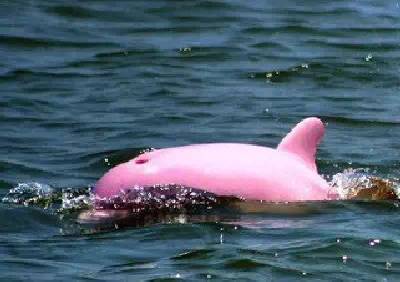
A rare and captivating variant of the common bottlenose dolphin (Tursiops truncatus), the pink bottlenose dolphin has fascinated marine biologists and enthusiasts with its striking rosy hue. Spotted in coastal waters from the Gulf of Mexico to Southeast Asia, this genetic anomaly stands out not only for its color but also for the mysteries surrounding its unique pigmentation.


The Science Behind the Blush: Pigmentation and Adaptations

  • Pinkness Unveiled
    Unlike albino dolphins, which lack pigmentation, pink bottlenose dolphins owe their color to a combination of genetics and blood vessel visibility. As they age, capillaries near the skin’s surface may become more pronounced, giving the dolphin a pinkish tone. In some cases, injuries or skin conditions can also contribute to the hue, though the exact mechanism remains unclear.
  • Physical Traits
    Like their gray counterparts, pink dolphins have a bulbous forehead (melon), a curved dorsal fin, and a distinctive bottlenose. They grow up to 3 meters long and weigh around 200 kilograms, sharing the same streamlined body and powerful tail flukes for swimming at speeds up to 20 miles per hour.

Behavior and Conservation Challenges

  • Social and Feeding Habits
    Pink dolphins are highly social, often seen in pods of 2–15 individuals, using echolocation to hunt fish, squid, and crustaceans. Their pink coloration does not appear to affect behavior, as they engage in playful activities like leaping and tail-slapping, and communicate through clicks and whistles.
  • Threats to Survival
    While not a separate species, pink dolphins face the same risks as common bottlenose dolphins: habitat degradation, water pollution, boat strikes, and entanglement in fishing gear. Their rarity makes them particularly vulnerable to human curiosity, with unregulated tourism potentially stressing these animals. In the Gulf of Mexico, where pink dolphins are most frequently sighted, oil spills and coastal development further endanger their environment.


Conservationists emphasize the need to protect pink dolphins through marine reserve designations, public education about responsible wildlife viewing, and stricter regulations on coastal industries. As a living symbol of nature’s diversity, the pink bottlenose dolphin serves as a reminder of the ocean’s capacity to surprise—and the urgent need to preserve its most unique inhabitants.

Latest Stories
Feline News2 minute readThe Kurilian Bobtail Longhair, a captivating breed hailing from Russia’s Sakhalin Island and the Kuril Archipelago, has emerged as a fascinating subject in the international feline community. With its distinctive bobbed tail and striking appearance, this natural breed is garnering recognition for its unique history, robust health, and affectionate demeanor.
Life News2 minute readOn the streets and alleys of Italy, gelato is more than just a refreshing dessert; it is a vivid embodiment of the country's culinary philosophy. Compared to the common American ice cream, this Italian classic has become an irreplaceable culinary symbol in the hearts of food lovers worldwide, thanks to its unique craftsmanship and texture.
Feline News2 minute readIn 1982, a bald kitten with an unusual genetic mutation emerged in a barn on an Oregon cherry farm, marking the accidental birth of one of the world’s most distinctive feline breeds—the LaPerm. This curly-coated wonder, named for its "wavy" or "rippled" fur, has since captivated cat lovers globally with its unique appearance and playful personality .
Feline News1 minute readThe Brazilian Shorthair, a distinctive feline breed native to Brazil, has captivated cat enthusiasts with its charming personality and adaptable nature. Originating from the country's street cats, the breed was formally recognized in the 1980s after decades of selective breeding to preserve its unique traits.
Feline News1 minute readIn recent days, a cat named Marguerite has quietly risen to fame in a suburban community. The 3-year-old orange-and-white feline, once a street stray, has now become a "heartwarming bond" connecting neighbors.
Feline News2 minute readOriginating from the city of Rostov-on-Don in Russia, the Donskoy cat, also known as the Don Sphynx, has captivated feline enthusiasts worldwide with its unique appearance and affectionate demeanor. First discovered in 1987 when Professor Elena Kovaleva rescued a hairless kitten named Varvara, the breed emerged from a natural genetic mutation that resulted in a lack of fur. Varvara’s subsequent litters produced both haired and hairless kittens, leading breeder Irina Nemykina to develop the Donskoy through selective breeding with European Shorthairs. Recognized by The International Cat Associat
Feline News2 minute readThe Nebelung, a captivating feline often mistaken for the Russian Blue, is a rare breed celebrated for its striking appearance and gentle demeanor. Originating in the U.S. during the 1980s, this breed emerged from intentional crossbreeding to replicate the elegance of Victorian-era long-haired blue cats. Named after the German word "nebel" (meaning "mist"), the Nebelung’s silvery-tipped blue-gray coat evokes a misty aura, while its green or yellow-green eyes add to its enigmatic charm.