The Majestic King Protea: South Africa's Floral Royalty


Plant Information
The Majestic King Protea: South Africa's Floral Royalty

The King Protea (Protea cynaroides), an iconic botanical masterpiece native to South Africa’s fynbos regions, reigns as one of the world’s most striking flowers. This evergreen shrub has captivated horticulturists and nature enthusiasts with its regal appearance and cultural significance, standing as a living symbol of the continent’s diverse ecosystems.


A Floral Crown of Unmatched Grandeur

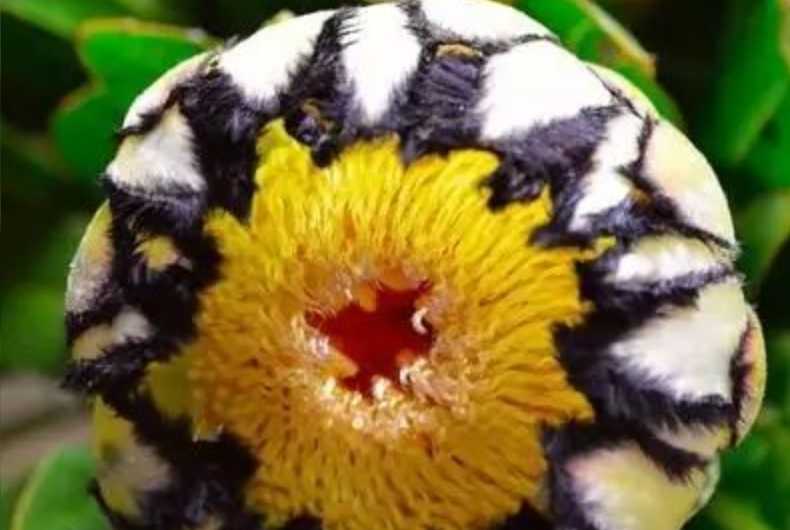
As the largest flower in the Protea genus, the King Protea boasts spherical flower heads that can span up to 30 centimeters in diameter. Its dramatic structure features leathery, overlapping bracts in hues of deep pink, crimson, or cream, forming a protective casing around the central disk of tiny florets. The bracts’ velvety texture and vibrant color gradients resemble a crown, while the flower’s robust, woody stem supports it at heights of 1–2 meters. Blooming from late winter to summer, the King Protea emits a subtle nectar scent that attracts sunbirds and insects, which aid in its pollination. Its elliptical, glossy leaves further enhance its majesty, with a waxy coating that helps it thrive in arid, Mediterranean - like climates.

Ecological Significance and Cultural Eminence

In its native fynbos biome, the King Protea plays a vital role in fire - adapted ecosystems. Its thick, resinous bark protects the plant during wildfires, while post - fire seed dispersal ensures regeneration. This resilience has made it a national emblem of South Africa, adopted as the country’s floral symbol in 1976. Commercially, the King Protea is highly prized in the cut flower industry for its long vase life (10–20 days) and dramatic presence in arrangements. Cultivation requires well - drained, acidic soil and full sun, though hybrids like 'Grandiflora' have expanded its adaptability. Despite its popularity, habitat loss and climate change threaten wild populations, prompting conservation efforts to preserve this floral monarch and the unique ecosystems it inhabits. As a fusion of natural grandeur and cultural legacy, the King Protea continues to rule as a botanical icon of unparalleled beauty.

Latest Stories
Feline News2 minute readThe Kurilian Bobtail Longhair, a captivating breed hailing from Russia’s Sakhalin Island and the Kuril Archipelago, has emerged as a fascinating subject in the international feline community. With its distinctive bobbed tail and striking appearance, this natural breed is garnering recognition for its unique history, robust health, and affectionate demeanor.
Life News2 minute readOn the streets and alleys of Italy, gelato is more than just a refreshing dessert; it is a vivid embodiment of the country's culinary philosophy. Compared to the common American ice cream, this Italian classic has become an irreplaceable culinary symbol in the hearts of food lovers worldwide, thanks to its unique craftsmanship and texture.
Feline News2 minute readIn 1982, a bald kitten with an unusual genetic mutation emerged in a barn on an Oregon cherry farm, marking the accidental birth of one of the world’s most distinctive feline breeds—the LaPerm. This curly-coated wonder, named for its "wavy" or "rippled" fur, has since captivated cat lovers globally with its unique appearance and playful personality .
Feline News1 minute readThe Brazilian Shorthair, a distinctive feline breed native to Brazil, has captivated cat enthusiasts with its charming personality and adaptable nature. Originating from the country's street cats, the breed was formally recognized in the 1980s after decades of selective breeding to preserve its unique traits.
Feline News1 minute readIn recent days, a cat named Marguerite has quietly risen to fame in a suburban community. The 3-year-old orange-and-white feline, once a street stray, has now become a "heartwarming bond" connecting neighbors.
Feline News2 minute readOriginating from the city of Rostov-on-Don in Russia, the Donskoy cat, also known as the Don Sphynx, has captivated feline enthusiasts worldwide with its unique appearance and affectionate demeanor. First discovered in 1987 when Professor Elena Kovaleva rescued a hairless kitten named Varvara, the breed emerged from a natural genetic mutation that resulted in a lack of fur. Varvara’s subsequent litters produced both haired and hairless kittens, leading breeder Irina Nemykina to develop the Donskoy through selective breeding with European Shorthairs. Recognized by The International Cat Associat
Feline News2 minute readThe Nebelung, a captivating feline often mistaken for the Russian Blue, is a rare breed celebrated for its striking appearance and gentle demeanor. Originating in the U.S. during the 1980s, this breed emerged from intentional crossbreeding to replicate the elegance of Victorian-era long-haired blue cats. Named after the German word "nebel" (meaning "mist"), the Nebelung’s silvery-tipped blue-gray coat evokes a misty aura, while its green or yellow-green eyes add to its enigmatic charm.