The Bubble Alga: Nature’s Giant Single-Celled Marvel Floating in Tropical Seas


Marine Biology
The Bubble Alga: Nature’s Giant Single-Celled Marvel Floating in Tropical Seas

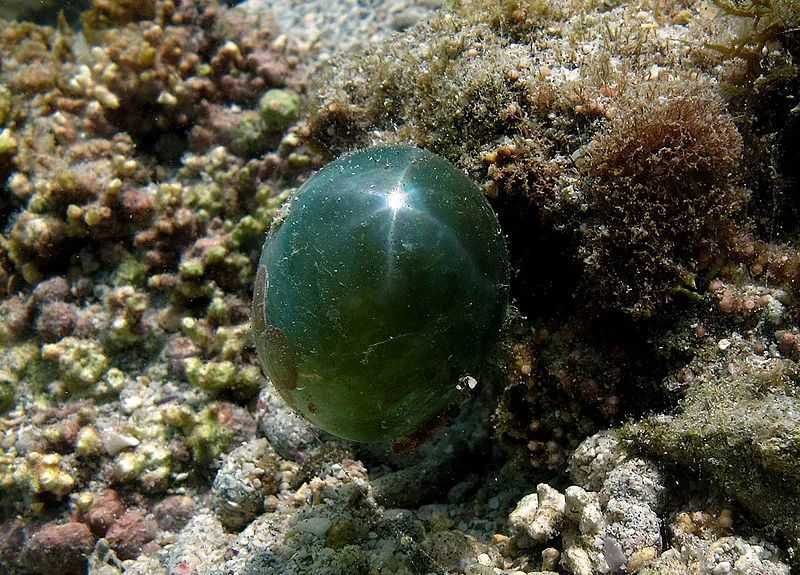
Known as the "bubble alga" or "sailor’s eyeball," Valonia ventricosa is a remarkable marine alga and one of the largest single-celled organisms on Earth. Thriving in tropical and subtropical oceans, this spherical green alga has fascinated biologists for its unique structure—each "bubble" is a single cell that can grow up to 5 centimeters in diameter, defying conventional notions of cellular size.


A Single Cell as a Living Sphere: Anatomy and Adaptations

  • Giant Unicellular Wonder
    Unlike most single cells visible only under a microscope, Valonia ventricosa forms hollow, rubbery spheres with a bright green chloroplast-laden cytoplasm lining the cell wall. The interior is filled with a watery sap, maintaining turgor pressure to sustain the bubble’s shape. This extraordinary size is achieved through nuclear division without cell division, resulting in a coenocytic structure (multiple nuclei within a single cell membrane).
  • Photosynthetic Strategy
    Living in shallow, sunlit waters, the alga uses chlorophyll to perform photosynthesis, converting sunlight into energy. Its spherical shape maximizes light absorption, while the thick cell wall protects it from herbivores like sea urchins and fish. When disturbed, the bubbles may release a sticky mucilage, deterring predators.

Ecology and Life in the Coral Reefs

  • Habitat and Distribution
    Found in clear, warm waters from the Indian Ocean to the Caribbean, Valonia ventricosa attaches to reefs, rocks, or seagrass beds using fine rhizoids (root-like structures). It prefers areas with moderate wave action, which provides nutrients and prevents sediment buildup.
  • Role in Marine Ecosystems
    As a primary producer, the bubble alga contributes to oxygen production and serves as a habitat for tiny invertebrates seeking shelter within its folds. Its decomposing cells release nutrients into the water, supporting coral reef health. However, under certain conditions (e.g., nutrient runoff), it can form dense mats, outcompeting other algae and disrupting local ecosystems.

Scientific Significance and Human Interaction

  • Cell Biology in the Extreme
    Valonia ventricosa is a model organism for studying cell physiology, as its large size allows researchers to easily manipulate and observe cellular processes. Studies on its membrane transport and osmotic regulation have shed light on how single cells maintain homeostasis.
  • Marine Ornament and Conservation
    In the aquarium trade, bubble algae are prized for their unique appearance but require careful maintenance to prevent overgrowth. In the wild, they face threats from coral bleaching, ocean acidification, and human disturbance. Their presence in a reef is often an indicator of water quality, making them valuable ecological sentinels.


With its spherical form floating in sunlit seas, Valonia ventricosa challenges our understanding of life at the cellular level. This "sailor’s eyeball" reminds us that in nature, even the simplest forms can achieve extraordinary feats—proving that size and complexity are not always synonymous, and that a single cell can hold the beauty and resilience of an entire organism.
Latest Stories
Feline News2 minute readThe Kurilian Bobtail Longhair, a captivating breed hailing from Russia’s Sakhalin Island and the Kuril Archipelago, has emerged as a fascinating subject in the international feline community. With its distinctive bobbed tail and striking appearance, this natural breed is garnering recognition for its unique history, robust health, and affectionate demeanor.
Life News2 minute readOn the streets and alleys of Italy, gelato is more than just a refreshing dessert; it is a vivid embodiment of the country's culinary philosophy. Compared to the common American ice cream, this Italian classic has become an irreplaceable culinary symbol in the hearts of food lovers worldwide, thanks to its unique craftsmanship and texture.
Feline News2 minute readIn 1982, a bald kitten with an unusual genetic mutation emerged in a barn on an Oregon cherry farm, marking the accidental birth of one of the world’s most distinctive feline breeds—the LaPerm. This curly-coated wonder, named for its "wavy" or "rippled" fur, has since captivated cat lovers globally with its unique appearance and playful personality .
Feline News1 minute readThe Brazilian Shorthair, a distinctive feline breed native to Brazil, has captivated cat enthusiasts with its charming personality and adaptable nature. Originating from the country's street cats, the breed was formally recognized in the 1980s after decades of selective breeding to preserve its unique traits.
Feline News1 minute readIn recent days, a cat named Marguerite has quietly risen to fame in a suburban community. The 3-year-old orange-and-white feline, once a street stray, has now become a "heartwarming bond" connecting neighbors.
Feline News2 minute readOriginating from the city of Rostov-on-Don in Russia, the Donskoy cat, also known as the Don Sphynx, has captivated feline enthusiasts worldwide with its unique appearance and affectionate demeanor. First discovered in 1987 when Professor Elena Kovaleva rescued a hairless kitten named Varvara, the breed emerged from a natural genetic mutation that resulted in a lack of fur. Varvara’s subsequent litters produced both haired and hairless kittens, leading breeder Irina Nemykina to develop the Donskoy through selective breeding with European Shorthairs. Recognized by The International Cat Associat
Feline News2 minute readThe Nebelung, a captivating feline often mistaken for the Russian Blue, is a rare breed celebrated for its striking appearance and gentle demeanor. Originating in the U.S. during the 1980s, this breed emerged from intentional crossbreeding to replicate the elegance of Victorian-era long-haired blue cats. Named after the German word "nebel" (meaning "mist"), the Nebelung’s silvery-tipped blue-gray coat evokes a misty aura, while its green or yellow-green eyes add to its enigmatic charm.