The Blue-Footed Booby: Galápagos’ Colorful Seabird with a Dashing Mating Dance


Animal Information
The Blue-Footed Booby: Galápagos’ Colorful Seabird with a Dashing Mating Dance

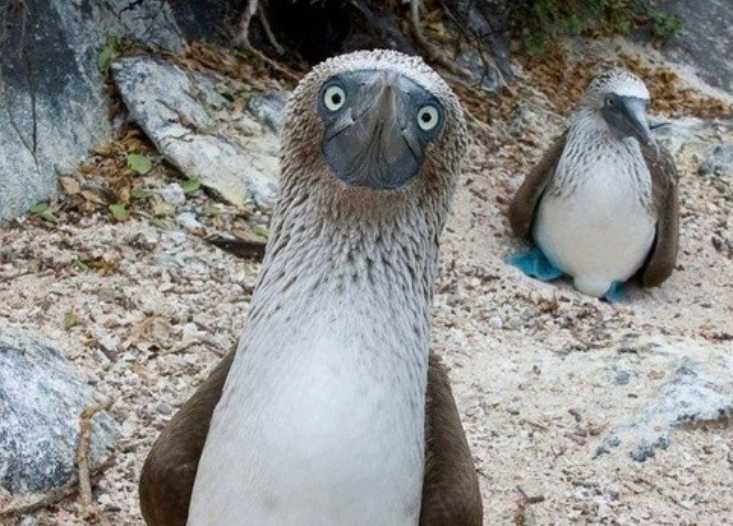
Native to the tropical and subtropical coasts of the eastern Pacific Ocean, the blue-footed booby (Sula nebouxii) is an iconic seabird best known for its most striking feature—bright blue feet that range from a pale turquoise to a vivid cobalt. Made famous by the Galápagos Islands, this charismatic bird has captivated scientists and nature lovers with its unique appearance and elaborate courtship rituals.

A Splash of Blue: Physical Traits and Adaptations

  • Feet as a Living Canvas
    The booby’s blue feet are no accident: their hue comes from carotenoid pigments in its diet of sardines and anchovies. Males typically sport brighter blue feet than females, a trait linked to reproductive fitness. Beyond aesthetics, the feet serve as efficient rudders while swimming and as stabilizers when landing on rocky cliffs.
  • Streamlined Seabird Structure
    Standing 70–90 cm tall with a wingspan of 1.5 meters, the booby has a white body, dark brown wings, and a long, pointed bill adapted for plunge-diving. Its webbed feet, though brilliantly colored, are also perfectly designed for propelling it through water when hunting fish. Juveniles lack the blue hue, developing it as they mature.

Romance on the Rocks: Mating Rituals and Lifestyle

  • The Foot-Flexing Courtship
    During mating season, males perform an elaborate dance: lifting their blue feet high in a slow, exaggerated march, spreading their wings, and calling out to impress females. The brighter the feet and the more energetic the display, the higher the chance of attracting a mate. Females lay 1–3 eggs, and both parents incubate them by resting their blue feet on the clutch to provide warmth.
  • Diving for Dinner
    Blue-footed boobies are exceptional hunters, plunging into the ocean from heights of up to 30 meters, using their sharp eyesight to spot fish below. They can even dive at angles that would disorient other birds, thanks to air sacs under their skin that cushion the impact. They often hunt in groups, herding fish into tight schools before attacking.

Conservation and Cultural Significance

Listed as "Least Concern" by the IUCN, the blue-footed booby faces threats from overfishing (which reduces prey), marine pollution, and introduced predators on nesting islands. In the Galápagos, conservation efforts focus on protecting nesting sites and monitoring population health. The bird’s quirky appearance has made it a symbol of the archipelago’s biodiversity, appearing in documentaries and tourism campaigns. Its blue feet, a blend of biological function and evolutionary showmanship, serve as a reminder of nature’s ability to turn practical traits into works of art—all in the name of love and survival.
Latest Stories
Feline News2 minute readThe Kurilian Bobtail Longhair, a captivating breed hailing from Russia’s Sakhalin Island and the Kuril Archipelago, has emerged as a fascinating subject in the international feline community. With its distinctive bobbed tail and striking appearance, this natural breed is garnering recognition for its unique history, robust health, and affectionate demeanor.
Life News2 minute readOn the streets and alleys of Italy, gelato is more than just a refreshing dessert; it is a vivid embodiment of the country's culinary philosophy. Compared to the common American ice cream, this Italian classic has become an irreplaceable culinary symbol in the hearts of food lovers worldwide, thanks to its unique craftsmanship and texture.
Feline News2 minute readIn 1982, a bald kitten with an unusual genetic mutation emerged in a barn on an Oregon cherry farm, marking the accidental birth of one of the world’s most distinctive feline breeds—the LaPerm. This curly-coated wonder, named for its "wavy" or "rippled" fur, has since captivated cat lovers globally with its unique appearance and playful personality .
Feline News1 minute readThe Brazilian Shorthair, a distinctive feline breed native to Brazil, has captivated cat enthusiasts with its charming personality and adaptable nature. Originating from the country's street cats, the breed was formally recognized in the 1980s after decades of selective breeding to preserve its unique traits.
Feline News1 minute readIn recent days, a cat named Marguerite has quietly risen to fame in a suburban community. The 3-year-old orange-and-white feline, once a street stray, has now become a "heartwarming bond" connecting neighbors.
Feline News2 minute readOriginating from the city of Rostov-on-Don in Russia, the Donskoy cat, also known as the Don Sphynx, has captivated feline enthusiasts worldwide with its unique appearance and affectionate demeanor. First discovered in 1987 when Professor Elena Kovaleva rescued a hairless kitten named Varvara, the breed emerged from a natural genetic mutation that resulted in a lack of fur. Varvara’s subsequent litters produced both haired and hairless kittens, leading breeder Irina Nemykina to develop the Donskoy through selective breeding with European Shorthairs. Recognized by The International Cat Associat
Feline News2 minute readThe Nebelung, a captivating feline often mistaken for the Russian Blue, is a rare breed celebrated for its striking appearance and gentle demeanor. Originating in the U.S. during the 1980s, this breed emerged from intentional crossbreeding to replicate the elegance of Victorian-era long-haired blue cats. Named after the German word "nebel" (meaning "mist"), the Nebelung’s silvery-tipped blue-gray coat evokes a misty aura, while its green or yellow-green eyes add to its enigmatic charm.