The Alluring Moraea: A Floral Gem from the Southern Hemisphere


Plant Information
The Alluring Moraea: A Floral Gem from the Southern Hemisphere

Moraea, commonly known as the Fortnight Lily or African Iris, is a captivating genus within the Iris family, Iridaceae. Native to South Africa, these plants have made their way into gardens and landscapes around the world, enchanting observers with their unique beauty and adaptability.

The Moraea genus encompasses approximately 110 species, each with its own distinct characteristics. These are perennial herbs, with some species featuring short, stout creeping rhizomes, while others grow from corms. The leaves are typically sword - shaped, rigid, and arranged in fan - shaped, distichous rosettes. They can reach lengths of up to 90 centimeters, with a width of 1.5 - 2 centimeters. The parallel - veined leaves are glabrous and flat, providing an elegant backdrop to the flowers.


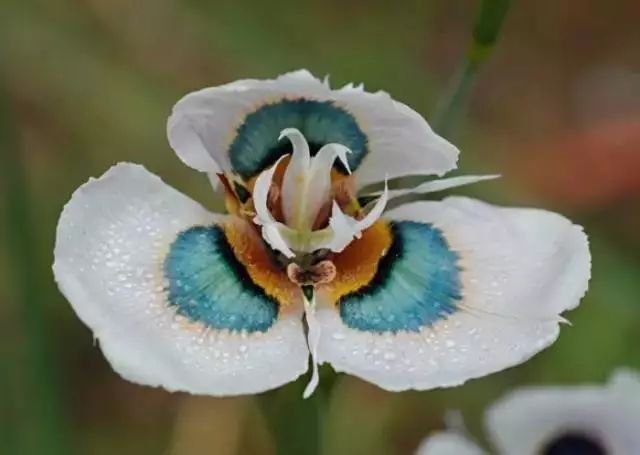
The flowers of Moraea are truly a sight to behold. They are large and showy, with a diameter of about 10 centimeters. Each flower stalk can bear 3 - 4 flowers, which bloom one at a time. The perianth consists of 6 segments, arranged in two whorls. The outer three segments, or falls, are white, often with a yellow - bearded midsection on the hafts. They measure 3 - 4 centimeters long and 2 centimeters wide. The inner three segments, or standards, are also white, but slightly smaller, at 3 - 4 centimeters long and 1 centimeter wide. The three lanceolate, lilac - colored style - crests are deeply bifid and marked bluish. Although each individual flower lasts only a day, they are quickly replaced by new blooms, often in two - week intervals, hence the name "Fortnight Lily."


In their native South Africa, Moraea species are found in a variety of habitats, from the Western Cape to as far as Nigeria and Ethiopia. They are well - adapted to the Mediterranean - like climate of the Western Cape, with its wet winters and dry summers. In cultivation, Moraea thrives in full sun to partial shade and well - drained soil. They are relatively drought - tolerant once established, making them an excellent choice for water - wise gardens. These plants are also popular in container gardening, border plantings, and rock gardens, adding a touch of elegance and color to any landscape.


Some species of Moraea, such as Moraea iridioides, have become naturalized in areas outside their native range, including parts of the United States. However, in their native habitats, many Moraea species are facing threats due to habitat loss caused by urban expansion and agriculture. Conservation efforts are underway to protect these beautiful plants and their habitats.


Beyond their aesthetic appeal, Moraea plants also play a role in the ecosystem. Their nectar - rich flowers attract pollinators such as bees and butterflies, contributing to the biodiversity of the areas where they grow. In traditional medicine in some African cultures, certain Moraea species have been used for their potential medicinal properties, though this is not widely studied in modern science.


In conclusion, Moraea is a fascinating genus of plants that combines beauty, adaptability, and ecological importance. Whether you're a seasoned gardener looking to add a unique touch to your landscape or a nature lover interested in the wonders of the plant world, Moraea is definitely a genus worth exploring.

Latest Stories
Beauty News2 minute readBerlin-based amateur model Lena Schmidt, 26, takes the spotlight in Issue 174, with a series of posed yet natural photos capturing her in everyday Berlin settings. Shot by photographer Kai Berger, the collection balances intentionality and ease—Schmidt poses in her apartment’s sunlit kitchen, outside a historic bookstore, and along a tree-lined canal, each stance styled but never stiff.
Feline News2 minute readThe Highlander Shorthair, a newly developed cat breed in the United States, combines genetics from the American Curl, Egyptian Mau, Bengal, and other breeds, forming a distinctive appearance and temperament. Originating in 2004, it was initially named the "Highland Lynx" before being officially renamed "Highlander" in 2005. The breed earned registration with The International Cat Association (TICA) in 2008, solidifying its status as an official pedigreed cat.
Feline News2 minute readOriginating in Scotland in the 1960s, the Scottish Straight is the upright-eared counterpart to the Scottish Fold. In 1961, a white barn cat named Susie with folded ears was discovered, and some of her offspring displayed straight ears due to genetic mutation, marking the beginning of this breed’s development. Today, Scottish Straights are celebrated worldwide for their round features, gentle demeanor, and robust genetics.
Car Information1 minute readUnlike the N54’s reputation as a "modding marvel" or the B48’s "family-friendly refinement," the N20 stands as a mid-tier powerplant with clear architecture, moderate performance, and controllable potential. Its design balances daily drivability with upgrade flexibility, making it equally suited for Stage 1 bolt-ons that enhance daily driving pleasure or Stage 2–3 builds for entry-level track use.
Feline News2 minute readThe Savannah cat, a captivating hybrid of the African serval and domestic cat, has captivated pet enthusiasts worldwide with its striking appearance and dynamic personality. Originating in the U.S. in 1986, this breed was officially recognized by The International Cat Association (TICA) in 2001, solidifying its place in feline history.
Car Information1 minute readAs a fusion of long-wheelbase practicality and hatchback versatility, the F34 3 Series GT balances interior space with coupe-like styling. Sharing powertrain configurations with the F30/F35 sedan, the 320i GT and 328i GT cater to buyers seeking a blend of performance and utility, with select models offering xDrive all-wheel drive.
Industry News1 minute readIntel CEO Lip-Bu Tan publicly acknowledged in a recent internal meeting that the company has fallen out of the global top 10 semiconductor firms due to years of strategic missteps, revealing a staggering $16.6 billion loss in Q3 2024 . This marks the worst quarterly performance in Intel’s 57-year history, driven by $15.9 billion in accelerated depreciation costs tied to underperforming Intel 7 manufacturing assets and Mobileye’s goodwill impairment . To reverse its fortunes, the board approved a new strategy centered on edge AI and agent AI, coupled with global layoffs and business restructuri