The Maned Wolf: South America’s Elegant 'Fox on Stilts' with a Mysterious Lifestyle


Animal Information
The Maned Wolf: South America’s Elegant 'Fox on Stilts' with a Mysterious Lifestyle

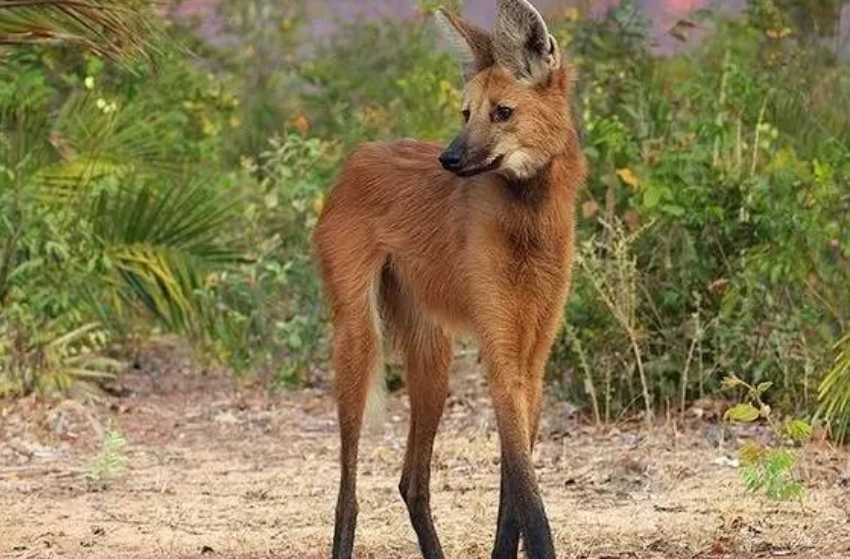
Native to the grasslands and savannas of Brazil, Paraguay, and Argentina, the maned wolf (Chrysocyon brachyurus) stands out as one of South America’s most unique canids. Often described as a "fox on stilts," this tall, reddish canid with a distinctive black mane along its neck and back has captivated researchers with its enigmatic behavior and evolutionary isolation.

A Striking Appearance and Adaptations

The maned wolf’s most iconic features are its long, slender legs—adapted for traversing tall grasses—and its dense, reddish-brown fur, which darkens to black on the legs, tail, and mane. Standing 70–90 cm at the shoulder (taller than most foxes), it weighs 20–30 kg, with large ears that swivel to detect prey in the vegetation. Unlike true wolves, it lacks a pack structure and has a solitary lifestyle, using its mane to intimidate rivals by raising it during confrontations, making it appear larger. Its long legs also aid in spotting predators or prey across the open plains, while its omnivorous diet—including fruits, small mammals, and insects—sets it apart from strictly carnivorous canids.

Nocturnal Habits and Conservation Challenges

Primarily nocturnal, the maned wolf roams alone at night, marking its territory with a pungent urine scent that smells like cannabis, earning it the nickname "skunk wolf." During the day, it rests in tall grass or under bushes, avoiding the heat. Females give birth to 2–5 pups, which stay with their parents for about a year before dispersing. Listed as "Near Threatened" by the IUCN, the maned wolf faces threats from habitat loss due to agriculture and ranching, as well as road accidents and conflicts with farmers who mistakenly blame it for livestock predation (it rarely hunts large animals). Conservation initiatives in Brazil, such as the Maned Wolf Project, focus on habitat preservation, public education, and the creation of wildlife corridors to connect fragmented populations.

Cultural Significance and Ecological Role

In local folklore, the maned wolf is often associated with mystery, and its unique appearance has made it a symbol of South America’s biodiversity. As a seed disperser of fruits like the "wolf apple," it plays a crucial role in maintaining grassland ecosystems. Its presence also indicates a healthy habitat, as it requires large, undisturbed areas to roam. Though it resembles a wolf, it is the only surviving member of its genus, making it a living reminder of the continent’s distinct evolutionary history. Protecting the maned wolf means safeguarding not just a species, but the vast grasslands that sustain countless other forms of life in the heart of South America.
Latest Stories
Feline News2 minute readThe Kurilian Bobtail Longhair, a captivating breed hailing from Russia’s Sakhalin Island and the Kuril Archipelago, has emerged as a fascinating subject in the international feline community. With its distinctive bobbed tail and striking appearance, this natural breed is garnering recognition for its unique history, robust health, and affectionate demeanor.
Life News2 minute readOn the streets and alleys of Italy, gelato is more than just a refreshing dessert; it is a vivid embodiment of the country's culinary philosophy. Compared to the common American ice cream, this Italian classic has become an irreplaceable culinary symbol in the hearts of food lovers worldwide, thanks to its unique craftsmanship and texture.
Feline News2 minute readIn 1982, a bald kitten with an unusual genetic mutation emerged in a barn on an Oregon cherry farm, marking the accidental birth of one of the world’s most distinctive feline breeds—the LaPerm. This curly-coated wonder, named for its "wavy" or "rippled" fur, has since captivated cat lovers globally with its unique appearance and playful personality .
Feline News1 minute readThe Brazilian Shorthair, a distinctive feline breed native to Brazil, has captivated cat enthusiasts with its charming personality and adaptable nature. Originating from the country's street cats, the breed was formally recognized in the 1980s after decades of selective breeding to preserve its unique traits.
Feline News1 minute readIn recent days, a cat named Marguerite has quietly risen to fame in a suburban community. The 3-year-old orange-and-white feline, once a street stray, has now become a "heartwarming bond" connecting neighbors.
Feline News2 minute readOriginating from the city of Rostov-on-Don in Russia, the Donskoy cat, also known as the Don Sphynx, has captivated feline enthusiasts worldwide with its unique appearance and affectionate demeanor. First discovered in 1987 when Professor Elena Kovaleva rescued a hairless kitten named Varvara, the breed emerged from a natural genetic mutation that resulted in a lack of fur. Varvara’s subsequent litters produced both haired and hairless kittens, leading breeder Irina Nemykina to develop the Donskoy through selective breeding with European Shorthairs. Recognized by The International Cat Associat
Feline News2 minute readThe Nebelung, a captivating feline often mistaken for the Russian Blue, is a rare breed celebrated for its striking appearance and gentle demeanor. Originating in the U.S. during the 1980s, this breed emerged from intentional crossbreeding to replicate the elegance of Victorian-era long-haired blue cats. Named after the German word "nebel" (meaning "mist"), the Nebelung’s silvery-tipped blue-gray coat evokes a misty aura, while its green or yellow-green eyes add to its enigmatic charm.