The Enchanting Plumeria: A Tropical Floral Emblem


Plant Information
The Enchanting Plumeria: A Tropical Floral Emblem

The Plumeria, commonly known as Frangipani, is an iconic tropical tree celebrated for its fragrant blossoms and cultural significance across the globe. Native to Central and South America, this deciduous or semi-evergreen plant has naturalized in warm climates from Southeast Asia to the Pacific Islands, thriving in sunny, arid regions.

A Symphony of Scents and Colors

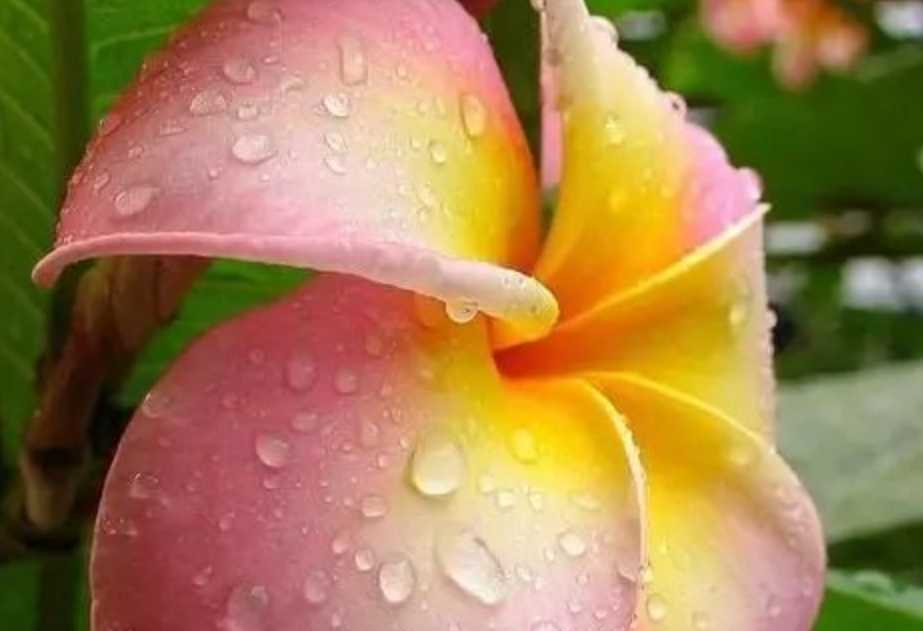
Plumeria trees grow 3–8 meters tall, with succulent, leafless branches that store water during dry seasons. Their leaves are large, oblong, and arranged in whorls at branch tips, creating a lush canopy. The flowers, however, are the plant’s crowning glory: five-petaled blooms (5–7 cm across) in soft pastels or vibrant hues. Common colors include pure white, lemon yellow, peach, and deep pink, often with contrasting centers. The petals are waxy and slightly ruffled, while their sweet, citrusy fragrance intensifies at night, attracting moths and other pollinators. Each flower cluster (cyme) can bear 10–20 blooms, lasting up to a week on the tree and retaining their scent when cut.

Cultural Tapestry and Practical Uses

In Hindu and Buddhist traditions, Plumeria symbolizes immortality and is planted near temples, with its flowers used in religious ceremonies. In Polynesian culture, the flower denotes love and fertility, often worn behind the ear to signal relationship status. Commercially, Plumeria extracts are used in perfumery and aromatherapy, while the wood’s lightweight texture makes it ideal for carvings. The plant is also valued in traditional medicine for its anti-inflammatory properties, though all parts contain milky sap that may irritate skin. As a hardy ornamental, Plumeria thrives in containers or garden beds with well-drained soil, requiring minimal care beyond protection from frost. Its blooms have become emblems of tropical paradise, adorning everything from Hawaiian leis to beachside architecture, embodying nature’s gift of beauty and fragrance.
Latest Stories
Feline News2 minute readThe Kurilian Bobtail Longhair, a captivating breed hailing from Russia’s Sakhalin Island and the Kuril Archipelago, has emerged as a fascinating subject in the international feline community. With its distinctive bobbed tail and striking appearance, this natural breed is garnering recognition for its unique history, robust health, and affectionate demeanor.
Life News2 minute readOn the streets and alleys of Italy, gelato is more than just a refreshing dessert; it is a vivid embodiment of the country's culinary philosophy. Compared to the common American ice cream, this Italian classic has become an irreplaceable culinary symbol in the hearts of food lovers worldwide, thanks to its unique craftsmanship and texture.
Feline News2 minute readIn 1982, a bald kitten with an unusual genetic mutation emerged in a barn on an Oregon cherry farm, marking the accidental birth of one of the world’s most distinctive feline breeds—the LaPerm. This curly-coated wonder, named for its "wavy" or "rippled" fur, has since captivated cat lovers globally with its unique appearance and playful personality .
Feline News1 minute readThe Brazilian Shorthair, a distinctive feline breed native to Brazil, has captivated cat enthusiasts with its charming personality and adaptable nature. Originating from the country's street cats, the breed was formally recognized in the 1980s after decades of selective breeding to preserve its unique traits.
Feline News1 minute readIn recent days, a cat named Marguerite has quietly risen to fame in a suburban community. The 3-year-old orange-and-white feline, once a street stray, has now become a "heartwarming bond" connecting neighbors.
Feline News2 minute readOriginating from the city of Rostov-on-Don in Russia, the Donskoy cat, also known as the Don Sphynx, has captivated feline enthusiasts worldwide with its unique appearance and affectionate demeanor. First discovered in 1987 when Professor Elena Kovaleva rescued a hairless kitten named Varvara, the breed emerged from a natural genetic mutation that resulted in a lack of fur. Varvara’s subsequent litters produced both haired and hairless kittens, leading breeder Irina Nemykina to develop the Donskoy through selective breeding with European Shorthairs. Recognized by The International Cat Associat
Feline News2 minute readThe Nebelung, a captivating feline often mistaken for the Russian Blue, is a rare breed celebrated for its striking appearance and gentle demeanor. Originating in the U.S. during the 1980s, this breed emerged from intentional crossbreeding to replicate the elegance of Victorian-era long-haired blue cats. Named after the German word "nebel" (meaning "mist"), the Nebelung’s silvery-tipped blue-gray coat evokes a misty aura, while its green or yellow-green eyes add to its enigmatic charm.