Periophthalmus spp.: The Amphibious "Mud Skippers" of Coastal Ecosystems


Marine Biology
Periophthalmus spp.: The Amphibious "Mud Skippers" of Coastal Ecosystems

Inhabiting the intertidal mudflats and mangrove forests of the Indo-Pacific region, these small fish have evolved remarkable adaptations that blur the line between aquatic and terrestrial life, making them a fascinating subject of ecological study.
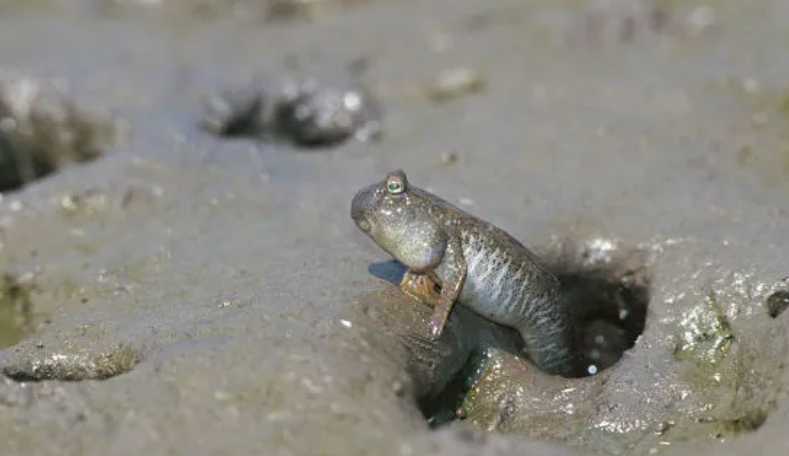
Source: Images from the Internet, if there is any infringement, please contact the removal of


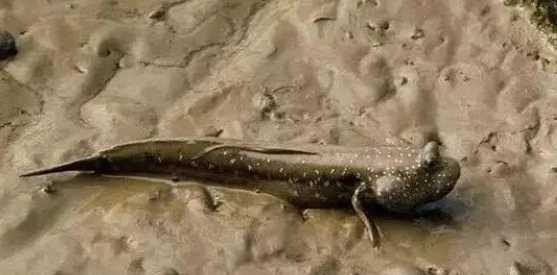
Mud skippers exhibit a streamlined, elongated body that grows up to 15 centimeters in length, with a laterally compressed shape that aids in swimming. Their bodies are covered in tiny, smooth scales and lack a lateral line, a sensory organ common in most fish. The tail fin is broad and rounded, featuring a brownish hue with subtle spotted patterns on the fin rays, which helps them blend into the muddy substrates they frequent. One of their most distinctive features is their pectoral fins, which are highly muscular and adapted for "walking" on land. By using these fins to propel themselves and their tails for balance, mud skippers can leap across mudflats, climb tree roots, and even survive out of water for extended periods by retaining moisture in their gill chambers and skin.


These amphibious fish have a lifespan of approximately two years, during which they navigate the harsh, fluctuating conditions of the intertidal zone. They feed primarily on small invertebrates, algae, and organic detritus, using their sharp teeth to scrape food from surfaces. During low tide, they emerge from the water to forage, often engaging in territorial displays or courtship rituals that involve dramatic leaps and fin movements. Their ability to breathe through their skin and gills when out of water is facilitated by keeping their skin moist, a strategy that allows them to avoid predation by marine creatures and exploit a niche unavailable to fully aquatic species.


Despite their resilience, mud skippers face significant threats from habitat loss due to coastal development, mangrove deforestation, and pollution. These activities destroy the mudflats and mangroves they rely on for survival, disrupting their feeding and breeding grounds. Additionally, they are sometimes harvested for food or the aquarium trade, putting further pressure on local populations. As key indicators of intertidal ecosystem health, mud skippers play a vital role in nutrient cycling and maintaining the balance of mangrove habitats. Conservation efforts, including the protection of mangrove forests and the promotion of sustainable land use practices, are crucial to safeguarding these remarkable creatures and the fragile ecosystems they inhabit.

Latest Stories
Feline News2 minute readThe Kurilian Bobtail Longhair, a captivating breed hailing from Russia’s Sakhalin Island and the Kuril Archipelago, has emerged as a fascinating subject in the international feline community. With its distinctive bobbed tail and striking appearance, this natural breed is garnering recognition for its unique history, robust health, and affectionate demeanor.
Life News2 minute readOn the streets and alleys of Italy, gelato is more than just a refreshing dessert; it is a vivid embodiment of the country's culinary philosophy. Compared to the common American ice cream, this Italian classic has become an irreplaceable culinary symbol in the hearts of food lovers worldwide, thanks to its unique craftsmanship and texture.
Feline News2 minute readIn 1982, a bald kitten with an unusual genetic mutation emerged in a barn on an Oregon cherry farm, marking the accidental birth of one of the world’s most distinctive feline breeds—the LaPerm. This curly-coated wonder, named for its "wavy" or "rippled" fur, has since captivated cat lovers globally with its unique appearance and playful personality .
Feline News1 minute readThe Brazilian Shorthair, a distinctive feline breed native to Brazil, has captivated cat enthusiasts with its charming personality and adaptable nature. Originating from the country's street cats, the breed was formally recognized in the 1980s after decades of selective breeding to preserve its unique traits.
Feline News1 minute readIn recent days, a cat named Marguerite has quietly risen to fame in a suburban community. The 3-year-old orange-and-white feline, once a street stray, has now become a "heartwarming bond" connecting neighbors.
Feline News2 minute readOriginating from the city of Rostov-on-Don in Russia, the Donskoy cat, also known as the Don Sphynx, has captivated feline enthusiasts worldwide with its unique appearance and affectionate demeanor. First discovered in 1987 when Professor Elena Kovaleva rescued a hairless kitten named Varvara, the breed emerged from a natural genetic mutation that resulted in a lack of fur. Varvara’s subsequent litters produced both haired and hairless kittens, leading breeder Irina Nemykina to develop the Donskoy through selective breeding with European Shorthairs. Recognized by The International Cat Associat
Feline News2 minute readThe Nebelung, a captivating feline often mistaken for the Russian Blue, is a rare breed celebrated for its striking appearance and gentle demeanor. Originating in the U.S. during the 1980s, this breed emerged from intentional crossbreeding to replicate the elegance of Victorian-era long-haired blue cats. Named after the German word "nebel" (meaning "mist"), the Nebelung’s silvery-tipped blue-gray coat evokes a misty aura, while its green or yellow-green eyes add to its enigmatic charm.