A Delightful Discovery: Unveiling the "Adorable" Octopus


Marine Biology
A Delightful Discovery: Unveiling the "Adorable" Octopus

In 2015, a team of marine biologists from the Monterey Bay Aquarium Research Institute (MBARI) in the United States embarked on an expedition with a specific focus on exploring the rich marine life of the local waters. Equipped with state - of - the - art remotely operated vehicles (ROVs) and a wealth of scientific knowledge, they were ready to uncover the secrets hidden beneath the ocean's surface.


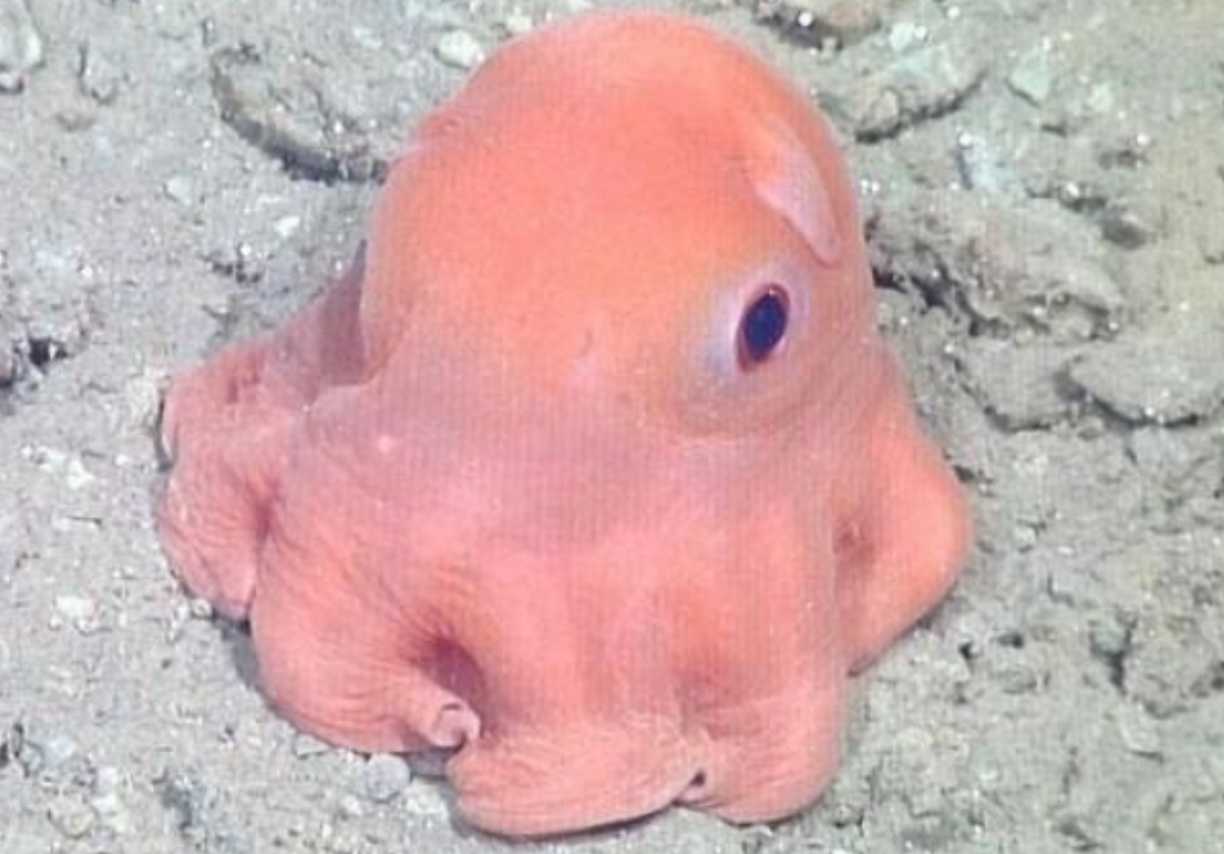
During one of their dives to a depth of around 450 meters, the ROV's high - definition cameras captured something extraordinary. There, in the dimly lit deep - sea environment, were several small octopuses with a distinct appearance. Their bodies were a soft, enchanting shade of pink, which immediately set them apart from the more commonly known octopus species. What was even more captivating were their large, puppy - like eyes that seemed to reflect the mystery of the deep.


The lead scientist, Dr. Stephanie Bush, was overseeing the operation from the research vessel. As soon as the images of these octopuses were relayed to the ship, she was astounded. "We had never seen anything like this before. Their cuteness was just overwhelming," she later recalled. The team carefully observed the behavior of these newfound creatures. They noticed that the octopuses had a pair of small, fin - like structures on their heads that flapped gently as they moved, adding to their charm. When they felt threatened by the presence of the ROV, they would instinctively bring their eight tentacles up to cover their faces, a behavior that made them even more endearing.


Back at the laboratory, the team analyzed the data collected from the ROV, including high - resolution images and video footage. They measured the size of these octopuses and found that they had a body diameter of approximately 18 centimeters. Their unique features and behavior indicated that they belonged to a species previously unknown to science. Given their irresistibly cute appearance, Dr. Bush proposed the name "adorable octopus," or in a more scientific context, they considered the name "Opisthotheusis Adorabilis."


These "adorable octopuses" were then transferred to a specially designed aquarium at the Monterey Bay Aquarium, where they could be studied more closely in a controlled environment. To mimic their natural deep - sea habitat, the aquarium was maintained at a low temperature, and a special lighting system was installed to replicate the dim light conditions of 450 - meter - deep waters. To everyone's delight, one of the octopuses soon laid eggs, providing further opportunities for research into their reproductive biology. Although it was estimated that the eggs would take a staggering three years to hatch, the discovery of these octopuses had already opened up new avenues for understanding the diversity of deep - sea life and the unique adaptations that allow creatures to thrive in such extreme environments.
Latest Stories
Feline News2 minute readThe Kurilian Bobtail Longhair, a captivating breed hailing from Russia’s Sakhalin Island and the Kuril Archipelago, has emerged as a fascinating subject in the international feline community. With its distinctive bobbed tail and striking appearance, this natural breed is garnering recognition for its unique history, robust health, and affectionate demeanor.
Life News2 minute readOn the streets and alleys of Italy, gelato is more than just a refreshing dessert; it is a vivid embodiment of the country's culinary philosophy. Compared to the common American ice cream, this Italian classic has become an irreplaceable culinary symbol in the hearts of food lovers worldwide, thanks to its unique craftsmanship and texture.
Feline News2 minute readIn 1982, a bald kitten with an unusual genetic mutation emerged in a barn on an Oregon cherry farm, marking the accidental birth of one of the world’s most distinctive feline breeds—the LaPerm. This curly-coated wonder, named for its "wavy" or "rippled" fur, has since captivated cat lovers globally with its unique appearance and playful personality .
Feline News1 minute readThe Brazilian Shorthair, a distinctive feline breed native to Brazil, has captivated cat enthusiasts with its charming personality and adaptable nature. Originating from the country's street cats, the breed was formally recognized in the 1980s after decades of selective breeding to preserve its unique traits.
Feline News1 minute readIn recent days, a cat named Marguerite has quietly risen to fame in a suburban community. The 3-year-old orange-and-white feline, once a street stray, has now become a "heartwarming bond" connecting neighbors.
Feline News2 minute readOriginating from the city of Rostov-on-Don in Russia, the Donskoy cat, also known as the Don Sphynx, has captivated feline enthusiasts worldwide with its unique appearance and affectionate demeanor. First discovered in 1987 when Professor Elena Kovaleva rescued a hairless kitten named Varvara, the breed emerged from a natural genetic mutation that resulted in a lack of fur. Varvara’s subsequent litters produced both haired and hairless kittens, leading breeder Irina Nemykina to develop the Donskoy through selective breeding with European Shorthairs. Recognized by The International Cat Associat
Feline News2 minute readThe Nebelung, a captivating feline often mistaken for the Russian Blue, is a rare breed celebrated for its striking appearance and gentle demeanor. Originating in the U.S. during the 1980s, this breed emerged from intentional crossbreeding to replicate the elegance of Victorian-era long-haired blue cats. Named after the German word "nebel" (meaning "mist"), the Nebelung’s silvery-tipped blue-gray coat evokes a misty aura, while its green or yellow-green eyes add to its enigmatic charm.